
A hiatal hernia is a digestive condition in which a part of the stomach pushes upward through an opening in the diaphragm into the chest cavity. It often weakens the barrier between the stomach and the food pipe, allowing stomach acid to flow back into the esophagus (acid reflux). This can cause symptoms such as heartburn, chest discomfort, sour burps, regurgitation, difficulty swallowing, bloating, and a feeling of fullness after meals. While some hiatal hernias cause no symptoms, persistent or worsening symptoms should not be ignored, as they may be associated with GERD (Gastroesophageal Reflux Disease) or other digestive complications. Early diagnosis and appropriate treatment can help manage symptoms and improve quality of life.
At Spiritual Homeopathy, we believe in treating the individual rather than simply managing symptoms. Our experienced homeopathic doctors carefully evaluate each patient’s symptoms, medical history, digestive health, eating habits, lifestyle, and overall well-being before preparing an individualized treatment plan. Our holistic approach focuses on supporting digestive health, reducing recurring acid reflux symptoms, and promoting long-term wellness through safe and personalized homeopathic care. Homeopathy should not replace conventional medical treatment or surgery when these are recommended by a healthcare professional.
We provide personalized homeopathic care for hiatal hernia in Hyderabad to patients of all age groups through our clinics, as well as online homeopathy consultations for patients across India and in more than 100 countries worldwide. If you are looking for experienced homeopathic doctors for supportive hiatal hernia care and long-term digestive wellness, Spiritual Homeopathy is committed to providing compassionate, patient-centered care wherever you are.
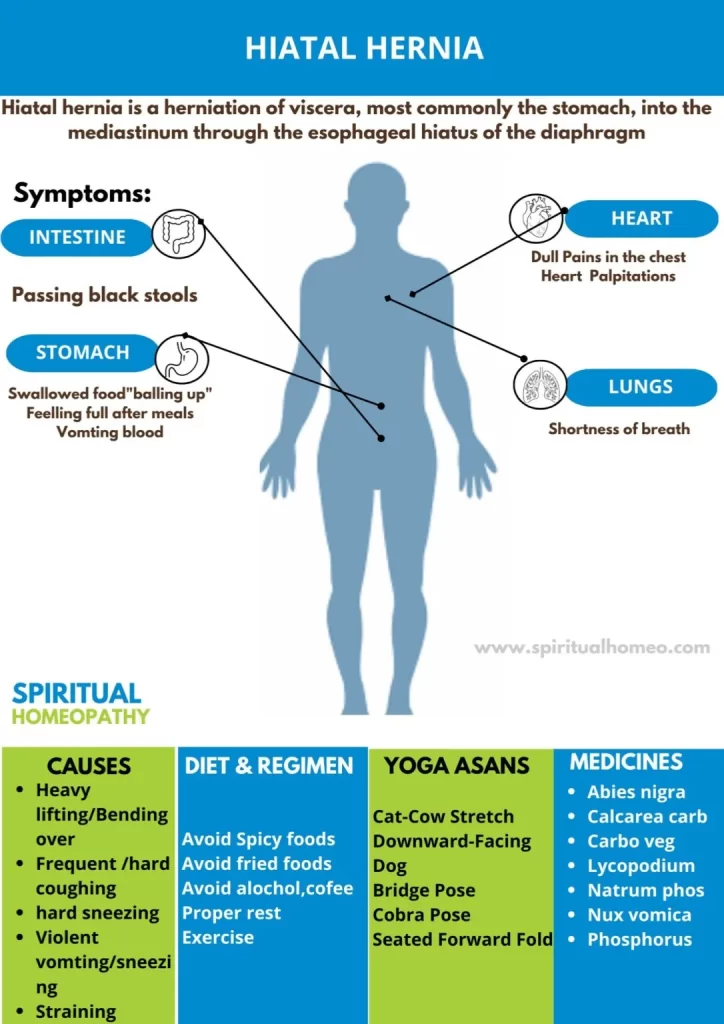
A hiatal hernia can contribute to gastroesophageal reflux disease (GERD) or laryngopharyngeal reflux (LPR), leading to symptoms such as heartburn, an acidic taste in the mouth, and difficulty swallowing. In some individuals, it may also cause chest discomfort or pain. If left unmanaged, a hiatal hernia can result in complications including iron deficiency anemia, volvulus, or bowel obstruction.
Timely evaluation and appropriate management are important to control symptoms, reduce the risk of complications, and support overall well-being and quality of life. Consultation is available at Spiritual Homeopathy Clinic through multiple branches in Hyderabad, as well as online and international consultation options, allowing individualized guidance based on symptom severity and overall health status.
A hiatal hernia may develop due to increased pressure within the abdomen, which can push a portion of the stomach upward into the chest cavity. Common contributing factors include:
Heavy lifting or frequent bending
Recurrent or forceful coughing
Severe sneezing
Violent or repeated vomiting
Straining during bowel movements, such as during the Valsalva maneuver
In addition, obesity and age-related weakening of the diaphragm are important risk factors that can increase susceptibility to a hiatal hernia.
Understanding these causes helps guide individualized care and lifestyle recommendations, which may support symptom management and reduce further strain on the abdominal region.
Hiatal hernias are classified into four types, based on anatomical features and clinical significance:
A Type I hiatal hernia, also known as a sliding hiatal hernia, occurs when a portion of the stomach slides upward through the esophageal hiatus of the diaphragm. This movement causes the cardia of the stomach to herniate into the posterior mediastinum. It is the most common type, accounting for nearly 95% of hiatal hernia cases, and is frequently associated with gastroesophageal reflux disease (GERD).
In a Type II hiatal hernia, the fundus and greater curvature of the stomach roll upward through the diaphragm and form a pocket alongside the esophagus. This occurs due to a defect in the phrenoesophageal ligament, while the gastroesophageal junction remains in its normal position. Although reflux symptoms may be present, the primary concern with this type is the risk of mechanical complications.
A Type III hiatal hernia combines features of both Type I and Type II hernias. Progressive enlargement causes the gastroesophageal junction to shift above the diaphragm, along with herniation of the stomach. This results in both a sliding component and a paraesophageal component.
A Type IV hiatal hernia involves a large defect in the phrenoesophageal ligament, allowing additional abdominal organs, such as the colon, spleen, pancreas, or small intestine, to herniate into the chest cavity. In advanced cases of Types I or II hernias, the entire stomach may migrate into the thoracic cavity, sometimes rotating up to 180 degrees, leading to an intrathoracic stomach.
Clinical Note: Identifying the type of hiatal hernia is important for determining the most appropriate individualized management and monitoring approach, based on symptom severity and associated risks.
A hiatal hernia is sometimes described as a “great mimic” because its symptoms can resemble those of several other medical conditions. The severity and combination of symptoms vary among individuals and may range from mild to more pronounced. Common signs and symptoms include:
Chest pain: Often dull or aching and may be mistaken for heart-related discomfort.
Shortness of breath: May occur due to the hernia’s effect on diaphragmatic movement.
Heart palpitations: Can be triggered by irritation of the vagus nerve.
Difficulty swallowing: Food may feel as though it is “sticking” or balling up in the lower esophagus, causing discomfort until it passes into the stomach.
A feeling of fullness or early satiety after meals.
Vomiting blood or passing black stools: These may indicate gastrointestinal bleeding and require prompt medical attention.
Heartburn: A common symptom, often related to reflux, with or without associated chest discomfort.
Advisory: If symptoms are frequent, severe, or progressively worsening, timely consultation with a healthcare professional is recommended for appropriate evaluation and guidance.
If you have a hiatal hernia, certain foods and beverages can aggravate symptoms such as heartburn and acid reflux. Dietary adjustments play an important role in symptom control. Below is a list of foods and drinks that may worsen symptoms, along with options that are generally better tolerated.
To help reduce reflux and discomfort, it may be beneficial to limit or avoid:
Onions and garlic
Citrus fruits such as limes, oranges, and grapefruit
Tomatoes and tomato-based products (e.g., salsa, spaghetti sauce)
Spicy foods
Fried foods
Foods high in sodium
Cocoa and chocolate
Peppermint and mint
Beverages to avoid:
Alcohol (wine, beer, spirits)
Coffee and caffeinated teas
Carbonated drinks (soda, seltzer)
Whole milk
Choosing foods that are less likely to trigger reflux can support digestive comfort. Emphasis should be on whole, minimally processed foods that are rich in fiber.
Non-citrus fruits: Apples, pears, melons, berries
Vegetables: Artichokes, carrots, sweet potatoes, asparagus, squash, green beans, leafy greens, peas
Whole grains: Oats, brown rice, quinoa
Nuts and seeds: Almonds, chia seeds
Lean proteins: Chicken, turkey, tofu
Yogurt: Preferably unsweetened and low-fat
Plant-based milks: Almond milk, soy milk
Certain juices: Aloe vera, carrot, and cabbage juice
Note: Dietary tolerance can vary between individuals. Personalized dietary guidance, based on symptom pattern and overall health, may help improve day-to-day comfort.
Yoga practices can serve as supportive measures to improve posture, reduce abdominal pressure, and promote relaxation. These practices may help ease discomfort related to hiatal hernia when performed gently and under appropriate guidance. They are not a replacement for medical care.
Benefits: Helps release tension in the diaphragm, chest, and abdominal region; promotes relaxation and supports digestion.
How to Do It: Lie on your back, bring the soles of your feet together, and allow the knees to fall open. Rest your hands on your abdomen or beside you, breathing slowly and deeply.
Benefits: Improves spinal flexibility and supports digestion by gently massaging the abdominal organs, helping reduce pressure on the stomach and diaphragm.
How to Do It: Begin on all fours with wrists under shoulders and knees under hips. Inhale as you arch your back and lift your head (Cow), then exhale as you round your spine and tuck your chin (Cat).
Benefits: Stretches the body, engages core muscles, and helps release tension in the chest and diaphragm.
How to Do It: From a tabletop position, lift your hips upward to form an inverted V shape. Keep hands shoulder-width apart and feet hip-width apart, gently pressing heels toward the floor.
Benefits: Opens the chest and throat, stretches the diaphragm, and may help ease reflux-related discomfort.
How to Do It: Lie on your back with legs extended. Place hands under your hips and lift your chest, allowing the head to rest gently back while opening the chest.
Benefits: Strengthens the lower back, hips, and legs while gently lifting the chest and diaphragm, which may help reduce reflux symptoms.
How to Do It: Lie on your back with knees bent and feet flat on the floor. Press into your feet and lift your hips upward, keeping arms relaxed by your sides.
Benefits: A restorative pose that helps relieve abdominal pressure and promotes relaxation.
How to Do It: Sit beside a wall and gently swing your legs upward as you lie back. Rest your arms comfortably and focus on slow breathing.
Benefits: Stretches the back and supports digestion, helping relieve abdominal pressure.
How to Do It: Sit with legs extended. Inhale to lengthen the spine, then exhale as you fold forward gently, reaching toward your feet or ankles.
Benefits: Improves digestion, stretches the torso, and strengthens abdominal muscles, which may help reduce diaphragmatic pressure.
How to Do It: Stand with legs wide apart. Reach one hand toward your ankle while extending the opposite arm upward, maintaining a straight line through the torso.
Benefits: Stretches the legs, improves circulation, and may help ease abdominal discomfort.
How to Do It: Lie on your back and raise one leg upward, holding the big toe or calf. Keep the other leg extended and focus on relaxed breathing.
Benefits: Supports stress management, promotes relaxation, and may help reduce reflux symptoms linked to tension.
How to Do It: Practice slow, controlled breathing in a comfortable seated or lying position, focusing on steady inhalation and exhalation.
Homeopathy is a gentle, natural system of healing that focuses on treating the root cause of illness, not just the symptoms. It works in harmony with your body’s innate ability to heal itself—without causing side effects. Safe for all ages and tailored to each individual, homeopathy supports long-term health and well-being.
Whether you’re managing a chronic condition or seeking relief from acute symptoms, homeopathy offers a holistic, personalized path to recovery.
At Spiritual Homeopathy, we are deeply committed to helping you achieve true wellness—physically, emotionally, and spiritually. Our mission is to provide compassionate, individualized care using time-tested homeopathic principles and modern clinical insight.
We don’t just treat symptoms; we focus on identifying and resolving the underlying imbalances that cause illness, so you can enjoy lasting health and vitality.
At the heart of our practice is a unique approach that blends classical homeopathy with a deep respect for the spiritual and emotional dimensions of healing. Here’s what sets us apart:
✅ Root-Cause Healing: We look beyond surface symptoms to identify and treat the root cause.
✅ Personalized Treatment: Every remedy and plan is uniquely tailored to your body, lifestyle, and emotional needs.
✅ Experienced Team: Our skilled and empathetic homeopathy doctors in Hyderabad offer both in-clinic and online consultations for your convenience.
✅ Safe & Non-Toxic: Our remedies are gentle, non-addictive, and free from harmful chemicals.
✅ Spiritual Care: We understand the mind-body-spirit connection and integrate it into every treatment.
We take time to listen—really listen. During your initial session, our experts assess your health history, lifestyle, emotional state, and current symptoms to develop a treatment plan that’s customized just for you.
We offer a wide range of homeopathic medicines, carefully selected to suit your individual condition—whether you’re dealing with an acute illness like bronchitis or a long-standing issue like digestive problems, skin disorders, or allergies.
Healing is a journey, and we’re with you every step of the way. Regular follow-ups help us monitor your progress, fine-tune your treatment, and ensure you’re getting the best possible outcome.
At Spiritual Homeopathy, your well-being is our highest priority. Whether you’re seeking relief from specific health issues or aiming to boost your overall vitality, we’re here to guide you with care, empathy, and clinical excellence.
Ready to experience the power of natural, root-cause healing?
Book your consultation with Spiritual Homeopathy now — in person or online — and take the first step toward balanced, vibrant health.
You should consult a healthcare professional if hiatal hernia symptoms become frequent, persistent, or begin to interfere with daily activities or sleep. Early evaluation helps identify contributing factors and reduces the risk of complications.
Seek consultation if you experience:
Recurrent or persistent heartburn or acid reflux
Difficulty or pain while swallowing
Ongoing chest discomfort or a burning sensation
Symptoms that worsen at night or disturb sleep
Shortness of breath or a feeling of pressure in the chest
Unexplained weight loss or reduced appetite
Vomiting blood or passing black stools
Symptoms that do not improve with dietary and lifestyle measures
At Spiritual Homeopathy Clinic, consultations are available across multiple branches in Hyderabad, including Kukatpally, Chandanagar, Dilsukhnagar, and Nallagandla. Online and international consultations are also available for patients who are unable to visit in person. Professional evaluation supports an individualized care approach based on symptoms, medical history, and overall health.
For appointments or guidance, contact 9069 176 176.
Treatment focuses on managing acid reflux symptoms and preventing the stomach from slipping through the diaphragm. Most people find relief through lifestyle adjustments and over-the-counter medications. Surgery is typically reserved for severe cases or complications.
No, a hiatal hernia cannot heal or disappear on its own because the stretched muscle tissue of the diaphragm cannot repair itself naturally. However, surgery is rarely necessary. Most people have no symptoms, and for those who do, the condition can be successfully managed without surgery.
Diagnosis. Because the hiatal hernia protrudes into the chest rather than abdominal wall, there is no visible bulge as with an abdominal hernia. Diagnosis of a hiatal hernia requires upper GI endoscopy, a barium swallow study, an MRI, or computerized tomography (CT) scan.
There is no single "best" treatment for a hiatal hernia, as the approach depends on your symptoms. Most people experience mild or no symptoms and are treated effectively with lifestyle modifications and over-the-counter medications. Surgery is typically reserved for severe or complicated cases
Hiatal hernias are very common and their prevalence increases steadily with age, affecting about 10-20% of adults under 40 and up to 50-70% of people over 70. This occurs because the diaphragm muscles and supporting tissues gradually lose their elasticity and weaken over time.
A hiatal hernia originates when the upper part of the stomach pushes up through the esophageal hiatus—the opening in the diaphragm where your food pipe passes from the chest to the abdomen.