
WhatsAppCall

Hirsutism

Hirsutism: Causes, Symptoms, Diagnosis & Effective Treatment Options

Hirsutism

Can Homeopathy Help in the Treatment of Hirsutism?

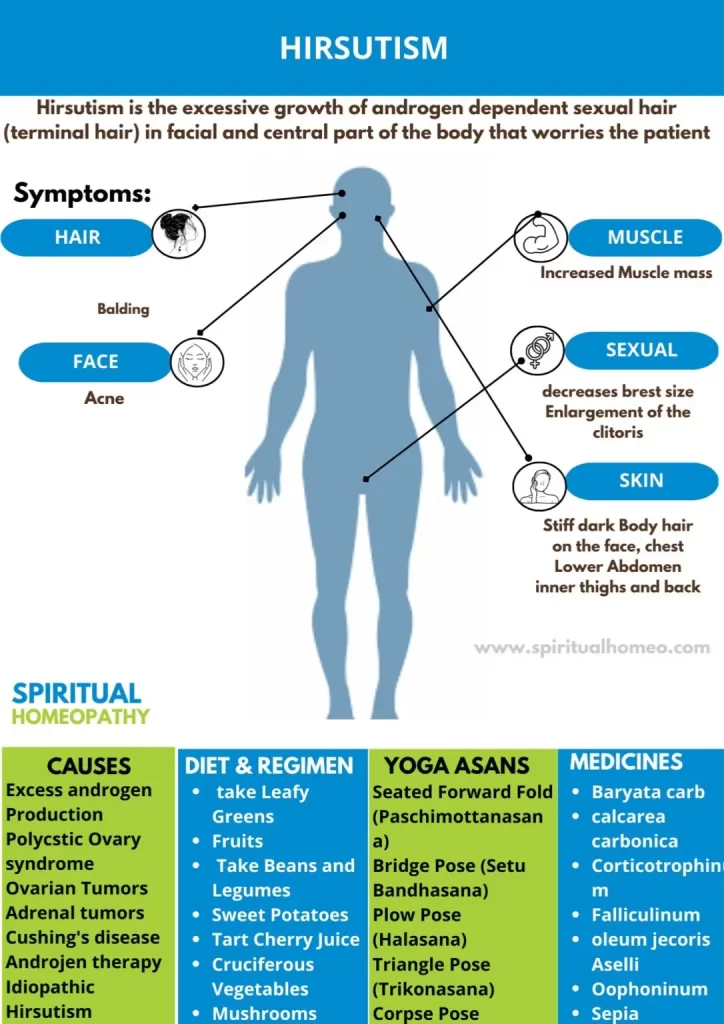
Hirsutism is a condition in which women develop excessive, coarse, and dark hair in areas where men typically grow hair, such as the face, chin, chest, abdomen, and back. It is commonly caused by increased levels of male hormones (androgens) or increased sensitivity of hair follicles to these hormones. Hirsutism is often associated with conditions such as PCOS (Polycystic Ovary Syndrome), hormonal imbalances, adrenal gland disorders, or certain medications. In addition to unwanted hair growth, some women may experience irregular periods, acne, oily skin, or thinning hair on the scalp. While hirsutism is not usually a serious medical condition, it can significantly affect self-confidence and emotional well-being. Early diagnosis and appropriate treatment can help identify the underlying cause and improve long-term hormonal health.

At Spiritual Homeopathy, we believe in treating the root cause rather than simply managing visible symptoms. Our experienced homeopathic doctors carefully evaluate each patient’s symptoms, medical history, hormonal health, menstrual cycle, lifestyle, stress levels, and overall well-being before preparing an individualized treatment plan. Our holistic approach focuses on supporting hormonal balance, improving overall health, and promoting long-term wellness through safe and personalized homeopathic care. Homeopathy should not replace conventional medical evaluation or treatment when an underlying hormonal or endocrine disorder requires specialist care.

We provide personalized homeopathic care for hirsutism in Hyderabad to women of all age groups through our clinics, as well as online homeopathy consultations for patients across India and in more than 100 countries worldwide. If you are looking for experienced homeopathic doctors for supportive hirsutism care and long-term hormonal wellness, Spiritual Homeopathy is committed to providing compassionate, patient-centered care wherever you are.
Everything You Need to Know

Overview

Hypertrichosis
Hypertrichosis is a condition characterized by excessive hair growth beyond what is typical for an individual’s age, sex, and race. Unlike hirsutism, which primarily involves androgen-dependent hair growth in women, hypertrichosis may involve both androgen-dependent and independent hair growth. It can be generalized, affecting the entire body, or localized to specific areas. Hypertrichosis can be congenital (present at birth) or acquired later in life due to factors such as medications, metabolic disorders, or systemic illnesses.

Hyperandrogenism
Hyperandrogenism refers to elevated levels of androgens (male hormones such as testosterone) in the body, affecting both men and women. In women, common symptoms include irregular menstrual cycles, acne, excessive hair growth (hirsutism), and male-pattern baldness. Causes include conditions like polycystic ovary syndrome (PCOS), adrenal disorders, and certain medications.

Virilism
Virilism is a more severe form of hyperandrogenism, marked by the development of male secondary sexual characteristics in women. Signs may include deepening of the voice, temporal hair thinning, clitoral enlargement (clitoromegaly), breast atrophy, and absence of menstruation (amenorrhea). It often arises from adrenal hyperplasia or tumors in the adrenal glands or ovaries.

Causes of Hirsutism

Hirsutism is characterized by excessive growth of androgen-dependent terminal hair in areas where men typically grow hair, such as the face, chest, and back. It can result from increased androgen production or heightened sensitivity of hair follicles to normal androgen levels.

  1. Ovarian and Adrenal Disorders

    • Polycystic Ovary Syndrome (PCOS): A common cause of hirsutism, PCOS leads to elevated androgen levels, contributing to excessive hair growth.

    • Non-Classical Adrenal Hyperplasia (NCAH): An inherited disorder causing the adrenal glands to overproduce androgens, leading to hirsutism and irregular menstrual cycles.

    • Adrenal Tumors: Rare tumors in the adrenal glands can produce excess androgens, resulting in virilization and hirsutism.

  2. Increased Androgen Sensitivity
    Some individuals have hair follicles that are abnormally sensitive to androgens, causing hirsutism even with normal androgen levels.

  3. Racial and Familial Factors
    Hirsutism prevalence varies among ethnic groups, with higher rates in individuals with darker skin types. A familial predisposition is also noted, suggesting a genetic component.

  4. Hormonal Changes

    • Puberty: Increased androgen levels can lead to the development of secondary sexual characteristics, including hirsutism.

    • Pregnancy: Hormonal fluctuations during pregnancy may cause temporary increases in androgen levels, potentially leading to hirsutism.

    • Menopause: Decreased estrogen levels during menopause can increase androgen relative to estrogen, contributing to hair growth.

  5. Obesity and Insulin Resistance
    Obesity, particularly with abdominal fat accumulation (android pattern), is associated with insulin resistance, which can increase androgen production and contribute to hirsutism.

  6. Idiopathic Hirsutism
    In some cases, no underlying medical condition is identified. Individuals may have normal androgen levels and regular menstrual cycles but still experience excessive hair growth.

Understanding the underlying cause is important for individualized care, which can guide appropriate management through homeopathy. Spiritual Homeopathy Clinic offers consultation in Hyderabad branches, online, and international sessions for assessment and guidance.

Types of Hirsutism

Hirsutism is characterized by excessive terminal hair growth in areas where men typically grow hair, such as the face, chest, and back. It can be categorized based on underlying causes:

  1. Idiopathic Hirsutism
    This type occurs in women with normal menstrual cycles and androgen levels, without identifiable hormonal abnormalities. It is believed to result from increased sensitivity of hair follicles to normal androgen levels or heightened activity of certain enzymes. Idiopathic hirsutism accounts for approximately 5–10% of hirsutism cases.

  2. Androgenic (Hormonal) Hirsutism
    The most common type, accounting for 70–80% of cases, is caused by excess androgen production. Conditions associated with androgenic hirsutism include:

    • Polycystic Ovary Syndrome (PCOS): A prevalent endocrine disorder in women of reproductive age, marked by hyperandrogenism, ovulatory dysfunction, and polycystic ovarian morphology.

    • Congenital Adrenal Hyperplasia (CAH): A genetic enzyme deficiency causing the adrenal glands to overproduce androgens.

    • Cushing’s Syndrome: High cortisol levels, often due to tumors or steroid use, leading to hirsutism along with weight gain, stretch marks, and elevated blood pressure.

    • Androgen-secreting Tumors: Rare tumors in ovaries or adrenal glands producing excess androgens, resulting in rapid hirsutism and other virilizing features.

    • Hyperthecosis: A severe form of PCOS where ovarian stromal cells produce high androgen levels, more common in postmenopausal women.

  3. Drug-Induced Hirsutism
    Certain medications can trigger hirsutism, including anabolic steroids, testosterone, danazol, cyclosporine, minoxidil, and phenytoin. Discontinuation of the offending drug often reduces hair growth over time.

  4. Non-Androgenic Hirsutism
    Rare cases may occur due to non-androgenic factors, such as:

    • Systemic Illnesses: Conditions like hypothyroidism or chronic kidney disease may lead to excessive hair growth despite normal androgen levels.

    • Chronic Skin Irritation: Persistent irritation can stimulate localized hair growth.

    • Medications: Certain drugs may cause generalized hair growth, typically of the vellus type rather than terminal hair.

Identifying the type of hirsutism is important for individualized care. Spiritual Homeopathy Clinic provides guidance through Hyderabad branches, online, and international consultations for evaluation and management.

Signs and Symptoms of Hirsutism

Hirsutism is characterized by excessive dark or coarse hair growth in areas where women typically have minimal or no hair, such as the face, chest, lower abdomen, inner thighs, and back. This condition often results from elevated androgen (male hormone) levels and may be associated with various underlying causes.

Key Symptoms:

  • Excessive Hair Growth: Development of thick, dark hair in male-pattern areas.

  • Acne: Increased occurrence of acne due to higher androgen levels.

  • Oily Skin: Skin may become oilier, contributing to acne and other skin concerns.

  • Irregular Menstrual Cycles: Periods may become less frequent or absent.

  • Male-Pattern Baldness: Thinning or loss of scalp hair resembling male-pattern baldness.

  • Enlarged Clitoris: Increased clitoral size, which may indicate virilization.

  • Deepening of the Voice: Voice may become lower in tone, another sign of virilization.

  • Increased Muscle Mass: Greater muscle development, often linked to elevated testosterone levels.

If these symptoms are frequent, worsening, or causing concern, it is advisable to consult a healthcare professional. Spiritual Homeopathy Clinic offers evaluation and guidance through Hyderabad branches, online, and international consultations.

Hirsutism Diet Plan & Daily Regimen

For individuals managing hirsutism—excess hair growth often linked to hormonal imbalances such as PCOS—daily routines and diet can help support hormone balance and overall well-being. While these guidelines may assist in symptom management, personalized advice is recommended through a healthcare professional. Spiritual Homeopathy Clinic offers consultations in Hyderabad branches, online, and internationally.

General Dietary Guidelines

  • Eat 3 balanced meals and 1–2 healthy snacks daily.

  • Focus on whole, unprocessed foods to help stabilize blood sugar.

  • Prioritize low-glycemic carbohydrates, lean proteins, and healthy fats.

  • Stay hydrated, aiming for 2–3 liters of water per day.

  • Avoid skipping meals to prevent blood sugar fluctuations and hormonal spikes.

Sample Hirsutism-Friendly Daily Plan

Morning Routine + Breakfast (8:00 AM)

  • Herbal tea (e.g., spearmint, known for mild anti-androgen effects)

  • Scrambled eggs with spinach and avocado

  • Whole-grain toast or steel-cut oats with cinnamon and flaxseeds

Mid-Morning Snack (10:30 AM)

  • Handful of almonds or walnuts

  • Green tea or warm lemon water

Lunch (1:00 PM)

  • Grilled chicken or chickpea salad with leafy greens, cucumbers, tomatoes, olive oil, and lemon

  • Small serving of quinoa or brown rice

Afternoon Snack (4:00 PM)

  • Unsweetened yogurt with berries

  • Or a protein smoothie with almond milk, spinach, flaxseeds, and berries

Dinner (7:00 PM)

  • Grilled salmon or tofu

  • Steamed vegetables (broccoli, cauliflower)

  • Small serving of sweet potato or lentils

  • Optional herbal tea after dinner

Evening Routine

  • Gentle yoga or stretching

  • Limit screen time 1 hour before bed to support sleep quality

Lifestyle Tips for Hormone Balance

  • Exercise: 30–45 minutes daily, including strength training, brisk walking, or gentle cardio. Yoga and Pilates help regulate stress hormones.

  • Sleep: Aim for 7–9 hours and maintain a consistent schedule.

  • Stress Management: Meditation, deep breathing, or journaling can reduce cortisol levels that may affect androgen balance.

Dietary and lifestyle guidance may vary based on individual health, underlying causes, and hormone levels, so professional consultation is recommended.

Yoga / Lifestyle for Hirsutism

Yoga can be supportive for hormonal balance, stress reduction, and overall well-being, but it is not a replacement for medical care or professional consultation. Spiritual Homeopathy Clinic provides guidance for integrating lifestyle practices alongside individualized homeopathic care.

  1. Supta Baddha Konasana (Reclining Bound Angle Pose)

    • Benefits: Opens hips, stimulates ovaries, calms the nervous system.

    • How to do: Lie on your back, bring soles of your feet together, let knees drop to the sides, hands on belly or chest. Hold for 3–5 minutes.

  2. Bhujangasana (Cobra Pose)

    • Benefits: Stimulates abdominal organs, supports thyroid and adrenal function.

    • How to do: Lie on your stomach, hands under shoulders, press into hands and lift chest while keeping pelvis grounded.

  3. Setu Bandhasana (Bridge Pose)

    • Benefits: Improves circulation, supports thyroid regulation, strengthens lower back.

    • How to do: Lie on back, knees bent, feet flat and hip-width apart; lift hips toward ceiling, clasp hands under back.

  4. Balasana (Child’s Pose)

    • Benefits: Relieves stress, balances hormones, calms the mind.

    • How to do: Sit back on heels, fold forward with arms stretched out or alongside the body.

  5. Viparita Karani (Legs-Up-The-Wall Pose)

    • Benefits: Calms adrenal glands, improves circulation, supports hormonal balance.

    • How to do: Lie on your back with legs extended up a wall, arms relaxed at sides. Hold for 5–10 minutes.

  6. Paschimottanasana (Seated Forward Bend)

    • Benefits: Stimulates ovaries, aids digestion, relieves anxiety.

    • How to do: Sit with legs extended forward, inhale and lengthen spine, exhale and fold from hips toward feet.

  7. Marjaryasana-Bitilasana (Cat-Cow Pose)

    • Benefits: Improves spinal flexibility, massages reproductive organs, reduces stress.

    • How to do: On hands and knees, alternate arching (cow) and rounding (cat) your spine with breath.

  8. Ustrasana (Camel Pose)

    • Benefits: Stimulates endocrine system, opens chest, improves posture.

    • How to do: Kneel with knees hip-width apart, hands on lower back or heels, gently arch back while lifting chest.

Yoga Practice Tips:

  • Practice 3–5 times a week for supportive results.

  • Focus on breath awareness during each pose.

  • Combine yoga with meditation or pranayama (e.g., alternate nostril breathing or belly breathing) to further support hormonal balance.

Yoga is supportive and works best when combined with individualized homeopathic consultation and lifestyle guidance.

Why Choose Homeopathy?

Homeopathy is a natural system of medicine that focuses on addressing the underlying causes of illness, not just the visible symptoms. It works in harmony with the body’s natural ability to maintain balance and support long-term health. Homeopathy is generally well-tolerated under professional guidance and can be adapted to individual needs.

It can be used for both chronic conditions and acute symptoms, providing a personalized and holistic approach to care.

Spiritual Homeopathy Clinic: Individualized Care for Your Health

At Spiritual Homeopathy Clinic, our approach emphasizes compassionate, individualized care. We consider the physical, emotional, and lifestyle factors that may contribute to conditions such as hirsutism, and create tailored homeopathic care plans.

Key Features of Our Care:

  • Root-Cause Focus: We aim to identify and address the underlying imbalances that contribute to symptoms.

  • Personalized Treatment: Every treatment plan is adapted to your health profile, lifestyle, and specific symptoms.

  • Experienced Team: Our qualified homeopathy doctors provide in-clinic, online, and international consultations.

  • Safe & Gentle: Remedies are natural and generally well-tolerated.

  • Holistic Support: We integrate mind-body-spirit considerations into care for overall well-being.

Our Treatment Process

  1. Comprehensive Consultation
    Our experts review your health history, lifestyle, and current symptoms to develop an individualized treatment plan.

  2. Holistic Homeopathic Approach
    Remedies are selected based on your unique condition, supporting long-term management and addressing contributing factors.

  3. Ongoing Follow-Up & Support
    Regular follow-ups allow monitoring of progress and adjustment of the treatment plan as needed.

At Spiritual Homeopathy Clinic, care is available at multiple Hyderabad branches and via online or international consultations for patients unable to visit in person.

When to Consult a Doctor

You should consult a healthcare professional if signs of hirsutism are frequent, worsening, or affecting daily life. Early evaluation helps identify underlying causes, supports individualized care, and guides appropriate management.

Seek consultation if you experience:

  • Rapid or excessive hair growth in male-pattern areas (face, chest, back, or abdomen)

  • Irregular, infrequent, or absent menstrual cycles

  • Signs of virilization, such as deepening of the voice, enlarged clitoris, or increased muscle mass

  • Persistent acne or oily skin linked to hormonal changes

  • Symptoms that interfere with self-esteem or daily activities

At Spiritual Homeopathy Clinic, consultations are available at multiple Hyderabad branches, including Kukatpally, Chandanagar, Dilsukhnagar, and Nallagandla. Online and international consultations are also offered for patients unable to visit in person. A professional assessment allows for individualized care tailored to your symptoms and overall health.

For appointments or guidance, contact 9069 176 176.

Frequently Asked Questions – Homeopathy Treatment For Hirsutism.

To reduce hirsutism, combine medical and cosmetic treatments. First, manage underlying hormonal conditions (like PCOS) using  recommendations such as anti-androgen drugs, oral contraceptives, or weight loss. Then, remove existing thick hair with laser therapy, electrolysis, or prescription creams like eflornithine. 

Hirsutism—excessive, coarse body hair in a male-like pattern on women—is primarily caused by an excess of male hormones (androgens) or an increased sensitivity of hair follicles to these hormones. The exact underlying causes can range from common hormonal disorders to specific medications. 

Hirsutism (excessive, coarse body hair in women) requires ongoing management and will not completely go away on its own. Because it is usually driven by underlying hormonal imbalances or conditions like PCOS, you need to address the root cause to stop new hair from growing. 

53 HIRSUTISMM is prescribed in the symptoms associated with abnormal hair growth on the face of women, sanguineous vesicles in internal surface of upper lip, menses too late or too short.

Evidence shows that vitamin D (Vit D) insufficiency is associated with some hormonal disorders. Hirsutism is a prevalent hormonal condition, which is usually associated with excess of androgenic hormones. Disturbance of Vit D level affects the regulation of these hormones and may be associated with hirsutism.

The primary cause of hirsutism is an excess of male hormones called androgens (such as testosterone) or an increased sensitivity of the hair follicles to normal androgen levels.