
Impulse Control Disorder (ICD) is a group of mental health conditions marked by chronic impulsivity — the inability to resist urges, temptations, or impulses that may lead to harmful behaviors toward oneself or others. These disorders often involve repeated actions that are difficult to control, despite knowing the negative consequences.
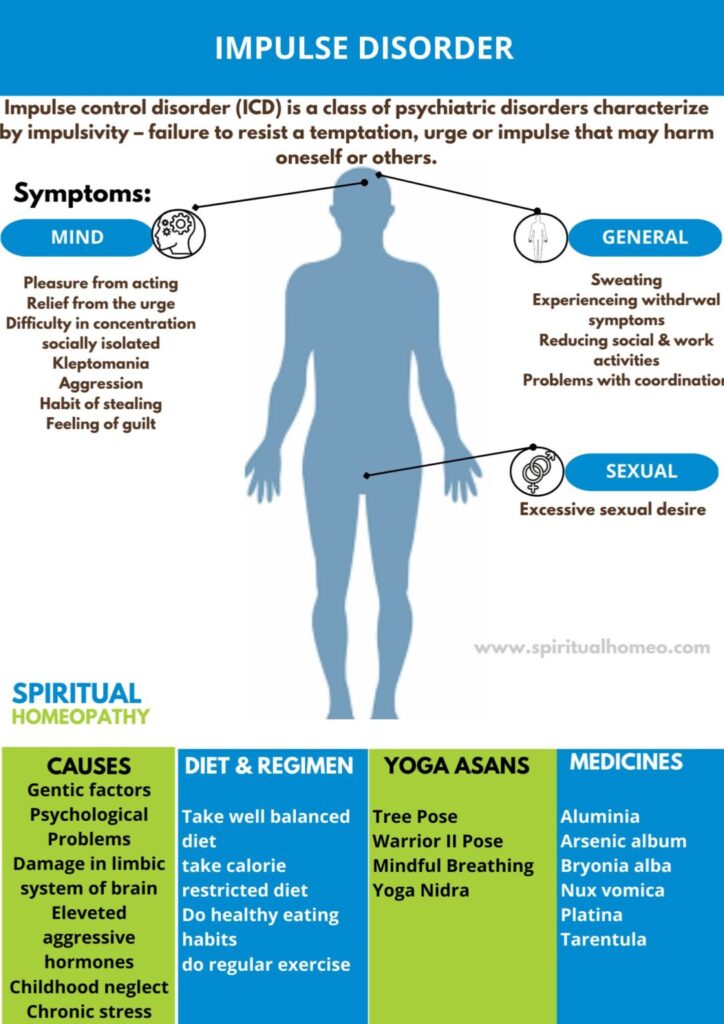
Impulsivity is a common symptom observed across several psychiatric conditions, including substance use disorders, Attention Deficit Hyperactivity Disorder (ADHD), antisocial personality disorder, borderline personality disorder, conduct disorder, and certain mood disorders. These conditions are often associated with difficulty in self-control, leading to impulsive behaviors that may interfere with daily functioning, decision-making, and interpersonal relationships.
Impulsivity can vary in severity and presentation depending on the underlying condition and individual factors. Proper clinical evaluation helps in understanding the contributing causes and guiding appropriate, individualized management. Consultation support is available through in-clinic visits at multiple branches in Hyderabad, as well as online and international consultations at Spiritual Homeopathy Clinic.
Impulse Control Disorders (ICDs) can develop due to a combination of biological, psychological, and environmental factors. Understanding these underlying causes is important for accurate assessment and appropriate management. The key contributing factors include:
Genetic Factors:
A family history of mental health conditions may increase the likelihood of developing an impulse control disorder, suggesting a possible genetic predisposition.
Neurobiological Imbalances:
Imbalances in brain chemicals such as dopamine and serotonin can affect the brain’s ability to regulate impulses, emotions, and decision-making.
Brain Injuries:
Injury or damage to areas of the brain involved in judgment and impulse regulation, particularly the frontal lobe, may contribute to impulsive behavior.
Emotional Dysregulation:
Individuals who experience difficulty managing emotions such as anger, anxiety, or stress may be more prone to impulsive actions.
Childhood Trauma or Abuse:
Adverse childhood experiences, including emotional trauma, neglect, or abuse, are commonly associated with the development of impulse control difficulties later in life.
Poor Coping Mechanisms:
A lack of effective coping strategies for handling frustration, boredom, or emotional distress can increase impulsive responses.
Chronic Stress:
Prolonged stress related to work, academics, or personal relationships may gradually reduce impulse control.
Peer Pressure and Social Influence:
Social environments where impulsive or risky behaviors are common can increase vulnerability to impulse control issues.
Substance Abuse:
Alcohol or drug use can impair judgment and self-control, often intensifying impulsive tendencies.
Impulse control disorders frequently coexist with other psychiatric conditions, which may influence symptom severity and presentation, including:
Mood disorders, such as depression and bipolar disorder
Anxiety disorders
Attention-Deficit/Hyperactivity Disorder (ADHD)
Personality disorders, particularly borderline and antisocial personality disorders
Identifying these contributing factors allows for a more individualized approach to care, which may be explored through professional consultation at Spiritual Homeopathy Clinic, available across multiple branches in Hyderabad, as well as through online and international consultations.
Impulse Control Disorders involve repeated impulsive behaviors that are difficult to resist and may lead to negative personal, social, or emotional consequences. The following are commonly recognized types of ICDs:
Intermittent Explosive Disorder is characterized by sudden episodes of aggressive behavior, such as shouting, verbal arguments, road rage, or physical aggression, that are disproportionate to the situation. These episodes are often preceded by increasing tension and followed by feelings of relief, guilt, or remorse.
Kleptomania involves a recurrent urge to steal items that are not needed for personal use or financial gain. The act is typically impulsive and may provide temporary relief or satisfaction, followed by feelings of guilt, shame, or distress.
Pyromania is marked by a recurrent and compulsive urge to set fires without external motives such as revenge or financial benefit. Individuals often experience heightened tension before the act and a sense of relief afterward. Due to potential safety risks, professional evaluation is important.
Previously referred to as pathological gambling, this condition involves a persistent inability to resist gambling impulses despite negative financial, personal, or social outcomes. Gambling behavior is often linked to emotional stress, anxiety, or compulsive patterns and may follow a chronic course.
Trichotillomania is characterized by repetitive hair pulling, commonly from the scalp, eyebrows, or eyelashes, leading to noticeable hair loss. The behavior is often associated with stress or anxiety and can be difficult to control without structured support.
Also known as excoriation disorder, dermatillomania involves repetitive skin picking that may result in sores, scabs, or scarring. The behavior is frequently triggered by emotional tension and may cause both physical discomfort and psychological distress.
This group includes compulsive sexual behaviors such as excessive pornography use, compulsive masturbation, or engagement in risky or inappropriate sexual activities. These behaviors are driven by persistent urges and may interfere with daily functioning, emotional well-being, and relationships.
Understanding the specific type of impulse control disorder helps guide individualized care and long-term management, which can be discussed through professional consultation at Spiritual Homeopathy Clinic, available across multiple branches in Hyderabad and through online and international consultations.
Impulse Control Disorders are characterized by difficulty resisting urges that may result in harmful or disruptive behaviors. Although symptoms vary depending on the specific disorder, most individuals experience a pattern of rising tension before the act, a sense of gratification during the behavior, and feelings of guilt or regret afterward. The common signs and symptoms by type include:
Sudden aggressive outbursts: Episodes of rage, yelling, or physical aggression that are disproportionate to the situation.
Build-up of tension: Increasing irritability or internal pressure before an outburst.
Sense of relief afterward: Temporary calm or satisfaction following the episode, often followed by guilt or remorse.
Frequent episodes: Recurrent outbursts occurring over a period of time.
Compulsive stealing: Repeated theft of items that are not needed for personal use or financial reasons.
Tension before stealing: Emotional buildup or anxiety prior to the act.
Relief or pleasure post-theft: Temporary satisfaction after stealing, typically followed by shame or regret.
Lack of motive: Items taken are usually of little value and not stolen out of necessity.
Uncontrollable urge to set fires: Recurrent fire-setting behavior without an external motive.
Emotional tension before the act: Heightened arousal or anxiety prior to setting a fire.
Satisfaction after ignition: A sense of relief or pleasure after starting a fire.
Not driven by gain: Unlike arson, the behavior is not motivated by revenge, financial benefit, or ideology.
Inability to resist gambling: Persistent urges to gamble despite negative personal or financial consequences.
Increased risk-taking: Gradually betting larger amounts to achieve the same level of excitement.
Preoccupation with gambling: Frequent thoughts or planning related to gambling activities.
Withdrawal symptoms: Irritability, restlessness, or anxiety when attempting to reduce or stop gambling.
Repeated hair pulling: Commonly from the scalp, eyebrows, eyelashes, or other body areas.
Emotional release: A feeling of relief or satisfaction after pulling hair.
Noticeable hair loss: Thinning hair or bald patches caused by repeated behavior.
Lack of control: Difficulty stopping the behavior despite repeated efforts.
Compulsive skin picking: Often involving the face, arms, or legs, leading to wounds or scarring.
Tension before the act: Emotional distress or internal discomfort prior to picking.
Temporary calmness after: Short-term relief following the behavior.
Physical damage: Repeated picking may result in infections, scars, or tissue damage.
Uncontrolled sexual urges: Compulsive behaviors such as excessive masturbation, risky sexual activities, or persistent intrusive fantasies.
Difficulty resisting urges: Strong impulses that interfere with daily functioning and decision-making.
Negative outcomes: Strained relationships, emotional distress, or social consequences.
Feelings of guilt or shame: Ongoing difficulty stopping the behavior despite awareness of consequences.
If these symptoms are frequent, severe, or interfere with daily life, professional evaluation is advised and may be discussed through in-clinic consultations at Spiritual Homeopathy Clinic’s Hyderabad branches or via online and international consultations.
A balanced diet and a structured daily routine can play a supportive role in managing Impulse Control Disorders (ICDs). Appropriate nutrition and lifestyle habits may help support brain function, stabilize mood, and encourage emotional regulation, which can contribute to better day-to-day coping.
Goals:
Support stable blood sugar levels
Assist neurotransmitter balance (such as dopamine and serotonin)
Reduce stress and support emotional balance
Beginning the day with balanced nutrition may help support concentration and sustained energy.
Include:
Complex carbohydrates: Oats, quinoa, or whole-grain toast to provide steady energy
Lean protein: Eggs, Greek yogurt, or tofu to support neurotransmitter function
Healthy fats: Chia seeds, flaxseeds, or avocado for brain health
Fruits and vegetables: Blueberries or spinach for antioxidant support
Example breakfast:
Oatmeal with chia seeds, blueberries, and almond butter
Scrambled eggs with spinach and tomato
Unsweetened green tea
A balanced lunch can help prevent energy fluctuations and support emotional regulation.
Include:
Protein: Chicken, lentils, or tofu
Leafy greens: Spinach or kale for mineral support
Whole grains: Brown rice or quinoa to help maintain blood sugar balance
Example lunch:
Grilled chicken salad with mixed greens, avocado, and olive oil dressing
Quinoa with pumpkin seeds
A small portion of dark chocolate (moderation advised)
Light, nutritious snacks may help reduce sudden cravings and maintain focus.
Include:
Nuts and seeds: Almonds, walnuts, sunflower seeds
Fruits: Apples, bananas, or berries
Example snack:
A small handful of almonds and sunflower seeds
Greek yogurt with flaxseeds
A lighter dinner may support relaxation and sleep quality.
Include:
Lean protein: Fish or lentils
Vegetables: Broccoli, carrots, or leafy greens
Complex carbohydrates: Sweet potato or brown rice
Example dinner:
Baked fish with sweet potatoes and steamed broccoli
Side salad with olive oil dressing
Herbal tea before bedtime
Aim to drink adequate water throughout the day
Limit excessive caffeine and sugary beverages, as these may worsen restlessness or mood fluctuations
Morning routine
Maintain a consistent wake-up time
Begin the day with a few minutes of deep breathing or mindfulness
Practice simple gratitude or positive reflection
Physical activity
Engage in regular physical activity such as walking, yoga, or light aerobic exercise
Physical movement may help reduce stress and support emotional regulation
Mental and emotional well-being
Mindfulness or meditation practices may help increase awareness of impulses
Relaxation techniques such as breathwork can help calm the nervous system
Psychological therapies, when recommended, may support long-term coping strategies
Sleep habits
Follow a regular sleep schedule
Reduce screen exposure before bedtime
Maintain a quiet and comfortable sleep environment
Daily structure and boundaries
Take short breaks during the day
Set reasonable boundaries around work, screen time, and social commitments
Long-term supportive measures
Keeping a food and mood journal may help identify patterns
Seek professional guidance if symptoms interfere with daily functioning
Support groups may provide shared coping strategies
Dietary and routine recommendations may vary based on individual health needs and should be adapted accordingly. For personalized guidance, consultation is available at Spiritual Homeopathy Clinic through its Hyderabad branches, as well as via online and international consultations.
Yoga practices may support relaxation, emotional regulation, and self-awareness in individuals experiencing impulse control difficulties. These practices are intended as supportive measures and should not replace professional medical or psychological care.
Benefits:
Helps calm the mind and reduce stress and fatigue
Encourages inward focus and emotional grounding
How to Do:
Kneel on the mat, sit back on the heels, fold forward, and extend the arms in front
Hold the position for 1–3 minutes while breathing slowly and deeply
Benefits:
Supports relaxation and emotional balance
May help reduce physical tension and restlessness
How to Do:
Lie on your back, bend the knees, keep feet hip-width apart, and gently lift the hips
Hold for 30 seconds to 1 minute while maintaining steady breathing
Benefits:
Promotes relaxation and mental calmness
Helps reduce mental overactivity
How to Do:
Lie on your back with legs resting vertically against a wall
Remain in this position for 5–10 minutes, focusing on relaxed breathing
Benefits:
Encourages balance between mental and emotional states
May support improved awareness and impulse regulation
How to Do:
Close the right nostril and inhale through the left, then switch and exhale through the right
Continue for about 5 minutes at a slow, comfortable pace
Benefits:
Helps soothe the nervous system
Encourages introspection and calm focus
How to Do:
Sit with legs extended, bend forward from the hips, and reach toward the feet
Hold for 1–2 minutes without strain
Benefits:
Enhances balance, focus, and patience
Supports mental steadiness
How to Do:
Stand on one leg, place the other foot on the calf or inner thigh, and raise the arms
Hold for 30–60 seconds, then repeat on the other side
Benefits:
Encourages deep relaxation of the body and mind
Allows integration of the practice
How to Do:
Lie comfortably on your back with arms relaxed and eyes closed
Focus on natural breathing for 5–10 minutes
Practice regularly, ideally daily or at least 3–4 times per week
Combine yoga with breathing exercises or mindfulness practices
Choose a quiet, comfortable environment
Guided sessions may be helpful, especially for those new to yoga
These lifestyle practices may support emotional balance when used consistently and under appropriate guidance. Individuals with persistent or severe symptoms are advised to seek professional consultation, which is available at Spiritual Homeopathy Clinic through its Hyderabad branches, as well as via online and international consultations.
Homeopathy is a holistic system of care that focuses on understanding the individual as a whole rather than addressing isolated symptoms. In the context of impulse control disorder, the homeopathic approach aims to explore emotional patterns, behavioral triggers, mental stressors, and lifestyle factors that may contribute to impulsive behavior.
The approach emphasizes individualized care, where treatment planning is based on a detailed understanding of the person’s mental, emotional, and physical state. This method is commonly used as part of long-term management and may help support emotional balance and self-regulation when guided by a qualified professional.
At Spiritual Homeopathy Clinic, the focus is on a structured and patient-centered consultation process. Care is planned after reviewing personal history, symptom patterns, emotional responses, and contributing factors that may influence impulse control difficulties.
Homeopathic care for impulse control disorder aims to:
Address contributing emotional and behavioral factors
Support long-term management rather than short-term symptom suppression
Encourage balance in emotional responses and coping mechanisms
Be generally well-tolerated under professional guidance
The treatment process typically begins with an in-depth consultation, followed by periodic follow-ups to assess progress and adjust the care plan as needed. Ongoing review helps ensure that management remains aligned with the individual’s changing needs and overall well-being.
Consultations are available at multiple branches of Spiritual Homeopathy Clinic in Hyderabad, as well as through online and international consultation options. This allows continuity of care for individuals who are unable to visit the clinic in person.
Homeopathic treatment is intended to complement overall mental health care and should be undertaken with appropriate professional supervision, especially when symptoms significantly affect daily life.
You should consult a healthcare professional if symptoms of impulse control disorder become frequent, persistent, or begin to interfere with daily functioning, relationships, work, or emotional well-being. Early evaluation helps identify contributing factors and supports appropriate long-term management.
Seek consultation if you experience:
Repeated difficulty controlling urges or behaviors
Impulsive actions leading to emotional distress or guilt
Anger outbursts, risky behaviors, or compulsive habits affecting relationships
Symptoms that worsen over time or occur more frequently
Interference with work, academics, or social responsibilities
Limited improvement despite lifestyle or behavioral efforts
At Spiritual Homeopathy Clinic, consultations are available across multiple branches in Hyderabad, including Kukatpally, Chandanagar, Dilsukhnagar, and Nallagandla. Online and international consultations are also available for individuals who are unable to visit in person. Professional assessment supports an individualized care approach based on symptoms, triggers, and overall health status.
For appointments or guidance, contact 9069 176 176.
Impulse control disorders are mental health conditions in which individuals experience difficulty resisting urges or impulses that may result in harmful or disruptive behaviors affecting themselves or others.
Impulse control disorders may develop due to a combination of genetic, biological, psychological, and environmental factors, including emotional stress, trauma, brain chemistry imbalance, and co-existing mental health conditions.
Common types include:
Intermittent Explosive Disorder (IED)
Kleptomania
Pyromania
Gambling Disorder
Trichotillomania (hair-pulling disorder)
Dermatillomania (skin-picking disorder)
Diagnosis is usually based on clinical evaluation, symptom history, behavioral patterns, and standardized mental health assessment criteria conducted by a qualified professional.
Impulse control disorders can be managed using a structured approach that may include behavioral therapies, lifestyle modifications, emotional support strategies, and individualized care planning.
Some individuals may require ongoing monitoring and long-term management, especially when symptoms are persistent or associated with other mental health concerns.
Balanced nutrition, regular physical activity, adequate sleep, and structured daily routines may support emotional regulation and overall mental well-being.
No. While both involve repetitive behaviors, impulse control disorders are typically driven by urges followed by relief, whereas obsessive-compulsive disorder involves behaviors performed to reduce anxiety from intrusive thoughts.
Yes. Children and adolescents may show signs of impulse control difficulties, often through behavioral challenges or emotional outbursts. Early assessment can be helpful.
Professional consultation is advised if impulsive behaviors are frequent, distressing, lead to negative consequences, or interfere with daily functioning, relationships, or academic or work performance.
WhatsApp us