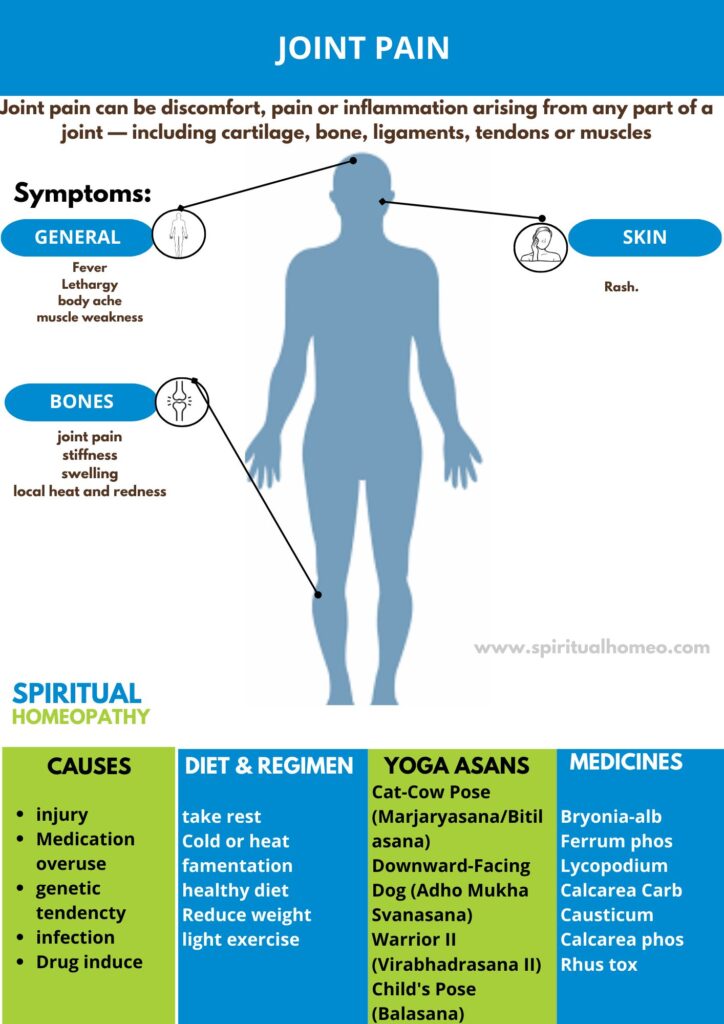
Joint Pain

Effective Solutions for Joint Pain Relief: Causes, Treatments & Prevention Tips

Joint Pain

Effective Homeopathic Treatment for Joint Pain

Joint pain refers to discomfort, pain, or inflammation affecting any part of a joint, including cartilage, bones, ligaments, tendons, or muscles. It is often associated with arthritis or arthralgia, which involves inflammation or pain within the joint itself. Common causes of joint pain include injury, overuse, or conditions like osteoarthritis, rheumatoid arthritis, and bursitis. Effective management involves understanding the underlying cause and seeking appropriate treatment options.

Everything You Need to Know

Overview

Joint pain can range from mild soreness after certain activities to severe discomfort that limits even basic movements, especially weight-bearing ones. Musculoskeletal disorders affect people of all ages and ethnic groups, with approximately 25% of new consultations in general practice in the UK related to musculoskeletal symptoms.

These conditions may involve bones, joints, muscles, and connective tissues such as tendons and ligaments, leading to pain, stiffness, and reduced mobility. Musculoskeletal disorders are more common in women and generally increase with age. Osteoarthritis, the most prevalent form of arthritis, affects up to 80% of individuals over 75, while osteoporosis—one of the leading bone diseases—affects about 50% of women and 20% of men by their 80s.

Musculoskeletal disorders are a major cause of physical disability in older adults and account for roughly one-third of disabilities across all age groups. Proper evaluation of joint pain involves assessing whether it is:

  • Articular (originating from the joint) or non-articular

  • Inflammatory or non-inflammatory

  • Acute or chronic

  • Localized (mono-articular) or widespread (poly-articular)

At Spiritual Homeopathy Clinic, consultations are available at multiple Hyderabad branches, as well as online and international options, allowing for individualized assessment and care tailored to your symptoms and overall health.

Causes of Joint Pain

Joint pain can arise from a variety of factors, often overlapping in individuals. Common causes include:

  1. Injuries and Physical Strain
    Physical trauma from accidents, falls, or sports-related activities can strain or damage ligaments, tendons, or cartilage. Repetitive movements or overuse—common in athletes or physically active individuals—may also lead to chronic joint discomfort.

  2. Viral Infections
    Certain viral infections can trigger inflammation in the joints. In some cases, this may contribute to longer-term joint issues or the development of rheumatic conditions affecting multiple joints.

  3. Autoimmune and Chronic Conditions
    Autoimmune diseases, where the immune system mistakenly attacks healthy tissues, are significant contributors to joint pain. These conditions often cause widespread discomfort, fatigue, swelling, and reduced mobility.

  4. Types of Arthritis
    Arthritis encompasses more than 100 conditions causing joint inflammation, including:

  • Degenerative Joint Disease: Gradual cartilage breakdown, common in older adults.

  • Inflammatory Arthritis: Immune system attacks on joint tissues, leading to pain and swelling.

  • Crystalline Arthritis: Sudden flare-ups caused by crystal accumulation in joints.

  • Infectious Arthritis: Bacterial infection entering a joint can cause rapid inflammation and structural damage if untreated.

Understanding the underlying cause of joint pain is essential for selecting the right approach. At Spiritual Homeopathy Clinic, individualized assessments—available at multiple Hyderabad branches, as well as online and international consultations—help guide personalized care.


Natural Homeopathic Approach to Joint Pain

Homeopathy focuses on holistic, individualized care for joint pain, aiming to support the body’s natural healing processes rather than simply alleviating symptoms. Treatments are tailored according to the origin of the pain—whether from injury, overuse, inflammation, or degeneration—and address contributing factors like stiffness, swelling, and discomfort.

This approach emphasizes long-term management and is generally well-tolerated under professional guidance. Many patients find that consistent homeopathic care, combined with lifestyle adjustments, can improve joint flexibility, mobility, and overall well-being.

Types of Joint Pain and Their Causes

Joint pain can affect people of all ages and may arise from a variety of conditions. Understanding the different types of joint pain and their underlying causes is important for effective management. Below is a breakdown of common types of joint pain, their symptoms, causes, and natural strategies to support joint health.

  1. Osteoarthritis (OA)

  • Cause: Gradual wear and tear of cartilage over time.

  • Pain Type: Dull, persistent ache that worsens with activity and improves with rest.

  • Common Areas Affected: Knees, hips, hands, spine.

  • Natural Support:

    • Maintain an anti-inflammatory diet rich in leafy greens and healthy fats

    • Keep a healthy weight to reduce joint stress

    • Engage in low-impact activities like swimming or cycling

    • Include nutrients supportive of joint health through diet

  1. Rheumatoid Arthritis (RA)

  • Cause: Autoimmune disorder where the immune system attacks joint tissues.

  • Pain Type: Morning stiffness, swelling, symmetrical joint pain.

  • Common Areas Affected: Hands, wrists, knees, feet.

  • Natural Support:

    • Follow an anti-inflammatory, immune-supportive diet

    • Practice gentle stretching and low-impact exercises

    • Manage stress through meditation, yoga, or relaxation techniques

    • Include omega-3-rich foods like flaxseeds and walnuts

  1. Gout

  • Cause: Uric acid buildup forming crystals in the joints.

  • Pain Type: Sudden, intense pain, often at night, with redness and heat.

  • Common Areas Affected: Big toe, knees, ankles.

  • Natural Support:

    • Stay hydrated throughout the day

    • Limit red meat, alcohol, and sugary foods

    • Favor plant-based meals and antioxidant-rich fruits

    • Include cherries or tart cherry juice, which may help reduce flare-ups

  1. Bursitis

  • Cause: Inflammation of small fluid-filled sacs (bursae) cushioning the joints.

  • Pain Type: Localized tenderness and swelling worsened by movement or pressure.

  • Common Areas Affected: Shoulders, elbows, hips, knees.

  • Natural Support:

    • Rest the affected joint and apply cold compresses

    • Avoid repetitive motions that trigger inflammation

    • Eat anti-inflammatory foods such as ginger and turmeric

    • Practice gentle stretching to maintain mobility

  1. Tendinitis

  • Cause: Inflammation or irritation of tendons due to overuse.

  • Pain Type: Sharp pain during movement or after activity.

  • Common Areas Affected: Elbows, shoulders, knees, heels.

  • Natural Support:

    • Allow time for rest and gentle healing

    • Engage in stretching and flexibility exercises

    • Include anti-inflammatory nutrients in the diet

    • Support joint health with minerals like magnesium

  1. Infectious (Septic) Arthritis

  • Cause: Joint infection caused by bacteria or viruses.

  • Pain Type: Severe, rapid-onset pain with swelling, warmth, and fever.

  • Important Note: Requires immediate medical attention.

  • Natural Support:

    • Support immune recovery with vitamin C-rich foods like citrus fruits

    • Include garlic, ginger, and herbal teas to enhance immunity

    • Rest and maintain hydration during recovery

  1. Psoriatic Arthritis

  • Cause: Autoimmune condition often linked with psoriasis.

  • Pain Type: Swollen fingers or toes, joint stiffness, and skin irritation.

  • Common Areas Affected: Hands, feet, spine.

  • Natural Support:

    • Follow an anti-inflammatory diet; consider reducing gluten if needed

    • Include foods rich in healthy fats such as seeds and fatty fish

    • Manage stress with mindful breathing, stretching, or yoga

  1. Post-Traumatic Arthritis

  • Cause: Previous joint injury, such as fractures or dislocations.

  • Pain Type: Persistent pain, stiffness, or swelling long after healing.

  • Common Areas Affected: Any previously injured joint.

  • Natural Support:

    • Engage in physical therapy to restore strength and mobility

    • Maintain a healthy weight to reduce joint stress

    • Support tissue repair with nutrient-dense foods

  1. Fibromyalgia (Widespread Pain Syndrome)

  • Cause: Nervous system dysfunction; not caused by joint damage itself.

  • Pain Type: Generalized pain, fatigue, mental fog, and tender points.

  • Common Areas Affected: Entire body.

  • Natural Support:

    • Eat a whole-food, anti-inflammatory diet

    • Limit processed sugars and additives

    • Include magnesium-rich foods like leafy greens and nuts

    • Engage in gentle movement such as walking or stretching


Natural Homeopathy-Inspired Approaches for Joint Pain Relief

Homeopathy offers individualized care focused on the body’s natural ability to heal, addressing underlying causes rather than just symptoms. This approach is often used in combination with lifestyle measures to support long-term joint health, reduce stiffness, and improve mobility.

At Spiritual Homeopathy Clinic, patients can receive in-clinic, online, or international consultations to develop a personalized care plan based on the type and severity of their joint pain. This holistic approach is generally well-tolerated under professional guidance and may be combined with diet, exercise, and stress management for optimal results.

Common Symptoms That Accompany Joint Pain and Natural Ways to Ease Them

Joint pain can involve more than just soreness—it may present alongside additional symptoms that affect daily activities, mobility, and overall well-being. Recognizing these signs can help guide effective care and support, including natural approaches inspired by homeopathy. Consultation is advised if symptoms are frequent, severe, or worsening.

Common Symptoms Associated with Joint Pain

  1. Joint Tenderness
    Increased sensitivity when the joint is touched or pressed often indicates underlying inflammation or irritation in surrounding tissues.

  2. Joint Stiffness
    Stiffness commonly occurs after waking up or prolonged inactivity, limiting free movement. Cold weather or inactivity may worsen stiffness.

  3. Joint Swelling
    Swelling results from inflammation in or around the joint and may be accompanied by warmth or redness, making the joint feel tight or heavy.

  4. Limited Range of Motion
    Inflammation or structural changes can reduce flexibility, making it difficult to bend, stretch, or rotate the joint fully.

  5. Weakness or Instability
    Some joints may feel weak or unstable, potentially affecting weight-bearing ability and increasing the risk of injury.

  6. Fatigue
    Chronic joint pain can lead to overall tiredness or low energy, partly due to the body’s ongoing response to inflammation or tissue repair.


Natural and Holistic Approaches Inspired by Homeopathy

Homeopathy-inspired care focuses on individualized support that addresses both symptoms and underlying causes, promoting long-term joint health. These strategies are generally well-tolerated under professional guidance and can complement conventional care.

  • Support for Pain and Swelling: Gentle natural approaches aim to reduce inflammation, ease discomfort, and assist the body in recovering from injuries or overuse.

  • Relief for Stiffness and Mobility Issues: Warm compresses, gentle stretching, and movement help maintain flexibility. Personalized homeopathy-inspired care may further support joint function.

  • Help for Inflammation and Redness: Cooling foods, proper hydration, and natural anti-inflammatory approaches can assist in managing acute inflammation.

  • Support for Chronic Conditions: For conditions like arthritis or long-term joint discomfort, combining lifestyle modifications, diet, and emotional wellness strategies helps manage recurring symptoms.

  • General Wellness and Immune Support: Boosting overall vitality through a whole-food diet, hydration, stress management, and light yoga or deep breathing can complement joint care.

At Spiritual Homeopathy Clinic, patients can access in-clinic, online, or international consultations to develop a personalized plan addressing their joint pain, symptoms, and overall wellness.

Diet for Joint Pain: Natural Support to Reduce Inflammation and Improve Mobility

Managing joint pain effectively requires a holistic approach, including a diet that reduces inflammation, supports bone and cartilage health, and promotes joint mobility. These dietary strategies are often combined with lifestyle guidance and homeopathy-inspired care for best results. Consultation with a professional is recommended to tailor diet and regimen to individual needs.

Key Goals

  • Reduce inflammation

  • Support cartilage and bone health

  • Improve mobility and reduce stiffness

Foods to Include for Joint Health

  1. Anti-Inflammatory Power Foods
    These foods help decrease inflammation and support joint comfort:

  • Fatty Fish: Salmon, sardines, mackerel – rich in omega-3 fatty acids.

  • Leafy Greens: Spinach, kale, collards – packed with antioxidants.

  • Berries: Blueberries, strawberries, cherries – contain compounds that combat oxidative stress.

  • Turmeric & Ginger: Use in cooking or teas for natural anti-inflammatory support.

  • Olive Oil: Contains polyphenols that may help reduce inflammation.

  1. Joint-Building Nutrients
    Support cartilage and joint structure with:

  • Vitamin C-Rich Foods: Oranges, bell peppers, kiwi, broccoli – essential for collagen production.

  • Calcium & Vitamin D Sources: Yogurt, chia seeds, fortified plant milk, eggs – support bone strength.

  1. Whole Grains & Healthy Carbs
    Provide energy and fiber for overall health:

  • Brown rice, quinoa, oats, sweet potatoes – reduce systemic inflammation and support digestion.

  1. Nuts & Seeds
    Healthy fats and essential nutrients:

  • Almonds, walnuts, flaxseeds, chia – contain omega-3s, magnesium, and antioxidants for joint support.

  1. Hydration
    Maintaining hydration helps reduce stiffness and supports joint lubrication:

  • Water: 8–10 glasses daily.

  • Herbal Teas: Ginger, green tea, turmeric tea can support inflammation management.

Foods to Limit or Avoid

Certain foods may aggravate joint discomfort:

  • Processed Meats: Bacon, sausages – high in saturated fats.

  • Fried and Fast Foods: Contribute to inflammation.

  • Sugary Drinks and Sweets: Excess sugar can worsen inflammation.

  • Refined Carbs: White bread, pastries – may increase inflammatory responses.

  • High Salt and Soda: Can worsen swelling and stiffness.

  • Alcohol: Especially beer, which may trigger flare-ups.

Sample Daily Regimen for Joint Support

  • Morning: Gentle stretching (5–10 min), warm water with lemon and turmeric, breakfast with oats, berries, and nuts.

  • Midday: Low-impact exercise (walking, swimming, cycling), lunch with lean protein, whole grains, and vegetables, hydration with water or herbal tea.

  • Afternoon: Nutritious snack, short rest or meditation, optional warm or cold compress for affected joints.

  • Evening: Dinner rich in anti-inflammatory ingredients, light stretching or yoga, herbal tea, proper sleep with supportive mattress/pillow.

At Spiritual Homeopathy Clinic, in-clinic, online, and international consultations are available to create a personalized plan that combines diet, lifestyle, and homeopathy-inspired guidance for joint health.

Yoga Asanas for Joint Pain Relief

Yoga can help relieve joint pain by improving flexibility, strengthening muscles around the joints, and enhancing overall mobility. Regular practice of gentle yoga poses can support joint health and reduce stiffness. Consult a healthcare professional before starting, especially if pain is severe or chronic. Spiritual Homeopathy Clinic offers guidance through in-clinic, online, and international consultations.

Recommended Yoga Poses

  1. Cat-Cow Pose (Marjaryasana-Bitilasana)
    Benefits: Improves spinal flexibility and stretches the back, neck, and shoulders.
    How to Do:

  • Start on hands and knees in a tabletop position.

  • Inhale and arch your back, lifting your tailbone and chest (Cow Pose).

  • Exhale and round your back, tucking your chin (Cat Pose).

  • Repeat for 10–15 breaths.

  1. Child’s Pose (Balasana)
    Benefits: Gently stretches hips, knees, and ankles while relieving lower back tension.
    How to Do:

  • Kneel with big toes touching, knees apart.

  • Lower your hips toward your heels, extend arms forward, and rest forehead on the mat.

  • Hold for 30 seconds to 1 minute.

  1. Downward-Facing Dog (Adho Mukha Svanasana)
    Benefits: Stretches hamstrings, calves, spine, and strengthens arms and shoulders.
    How to Do:

  • Begin in a tabletop position.

  • Lift hips up and back, forming an inverted V shape.

  • Press heels toward the mat and keep arms straight.

  • Hold 30 seconds to 1 minute.

  1. Tree Pose (Vrikshasana)
    Benefits: Improves balance and strengthens legs and hips.
    How to Do:

  • Stand with feet hip-width apart.

  • Shift weight to one leg, placing the other foot on inner thigh or calf (avoid the knee).

  • Bring hands together in prayer or raise overhead.

  • Hold 30 seconds per side.

  1. Warrior II Pose (Virabhadrasana II)
    Benefits: Strengthens legs, hips, and joints; improves flexibility and balance.
    How to Do:

  • Stand and step feet wide apart.

  • Turn right foot out 90°, bend right knee, keep left leg straight.

  • Extend arms parallel to the floor, palms down.

  • Hold 30 seconds to 1 minute, then switch sides.

  1. Seated Forward Fold (Paschimottanasana)
    Benefits: Stretches hamstrings, calves, and lower back, easing tight joints.
    How to Do:

  • Sit with legs extended.

  • Inhale, lengthen spine; exhale, fold forward, reaching for feet or ankles.

  • Hold 30 seconds to 1 minute.

  1. Bridge Pose (Setu Bandhasana)
    Benefits: Strengthens back, glutes, thighs, and opens hips.
    How to Do:

  • Lie on back, knees bent, feet flat, hip-width apart.

  • Press feet into the floor, lift hips, engage glutes and thighs.

  • Hold 30 seconds to 1 minute.

  1. Cobra Pose (Bhujangasana)
    Benefits: Stretches chest, abdomen, and spine; promotes shoulder and lower back mobility.
    How to Do:

  • Lie on stomach, hands under shoulders.

  • Press into palms, lift chest, extend back.

  • Keep elbows slightly bent, shoulders relaxed.

  • Hold 15–30 seconds.

  1. Pigeon Pose (Eka Pada Rajakapotasana)
    Benefits: Opens hips, stretches knees and ankles, relieves lower back tension.
    How to Do:

  • Begin in tabletop.

  • Bring one knee forward, bend it in front, extend the other leg behind.

  • Lower hips toward the floor, extend arms forward.

  • Hold 30 seconds to 1 minute per side.

  1. Legs-Up-The-Wall Pose (Viparita Karani)
    Benefits: Reduces leg swelling, relieves joint pressure, and relaxes the nervous system.
    How to Do:

  • Sit next to a wall, lie on back.

  • Extend legs up against the wall.

  • Relax arms by your sides, hold 5–10 minutes.

Note: Yoga is supportive for joint health but is not a replacement for professional medical care. Combining gentle yoga with a balanced diet, lifestyle measures, and individualized homeopathy-inspired guidance can help improve joint function and overall well-being.

🌿 Why Choose Homeopathy for Joint Pain

Homeopathy is a gentle, natural system of care that focuses on addressing the root causes of joint pain rather than only relieving symptoms. It works in harmony with the body’s innate healing abilities and emphasizes long-term joint health. Individualized treatment plans are designed to support flexibility, reduce discomfort, and improve overall well-being.

Whether you are dealing with acute flare-ups or chronic joint discomfort, homeopathy offers a holistic, personalized approach to managing pain and supporting joint function.

🌟 Spiritual Homeopathy Clinic: Comprehensive Care for Joint Health

At Spiritual Homeopathy Clinic, we are committed to helping you achieve improved joint mobility and overall wellness. Our approach blends classical homeopathy with careful clinical assessment to provide individualized care that considers both physical and emotional factors affecting joint health.

We focus on addressing underlying causes of joint pain, promoting long-term management, and improving your quality of life through safe, gentle, and non-invasive methods.

💫 Key Features of Our Approach

  • Root-Cause Assessment: We evaluate joint pain comprehensively, considering musculoskeletal, inflammatory, and lifestyle-related factors.

  • Personalized Care: Each treatment plan is tailored to your symptoms, daily activities, and overall health.

  • Experienced Team: Our skilled homeopathy doctors offer in-clinic, online, and international consultations, providing flexibility and continuity of care.

  • Holistic Support: We integrate lifestyle, diet, and gentle therapies into the care plan to support joint function and overall well-being.

🔍 Our Treatment Process

  1. Comprehensive Consultation
    We conduct an in-depth assessment of your health history, joint pain patterns, and lifestyle factors to create an individualized management plan.

  2. Holistic Homeopathic Care
    Treatments focus on reducing discomfort, addressing contributing factors, and supporting long-term joint health.

  3. Ongoing Monitoring & Support
    Regular follow-ups ensure your treatment remains effective and can be adjusted as your joint health improves.

❤️ Our Commitment

At Spiritual Homeopathy Clinic, your joint health and overall well-being are our top priorities. We provide gentle, tailored care that complements your lifestyle and helps you maintain mobility, comfort, and vitality.

📞 Book Your Consultation
Appointments are available at our Hyderabad branches (Kukatpally, Chandanagar, Dilsukhnagar, Nallagandla) or via online and international consultations.
Call 9069 176 176 to schedule your professional assessment and individualized care plan.

When to Consult a Doctor for Joint Pain

You should seek professional consultation if joint pain becomes frequent, persistent, or begins to interfere with daily activities, sleep, or mobility. Early evaluation helps identify underlying causes and allows for a tailored management plan.

Seek consultation if you experience:

  • Persistent or worsening joint pain

  • Swelling, redness, or warmth around the joint

  • Stiffness that limits movement or flexibility

  • Weakness or instability in the affected joint

  • Sudden onset of severe pain, especially after an injury

  • Fatigue accompanied by joint discomfort

  • Symptoms that do not improve with diet, exercise, or supportive measures

At Spiritual Homeopathy Clinic, consultations are available at multiple Hyderabad branches, including Kukatpally, Chandanagar, Dilsukhnagar, and Nallagandla. Online and international consultations are also offered for patients unable to visit in person. A professional assessment ensures an individualized care approach tailored to your joint health and overall well-being.

For appointments or guidance, contact 9069 176 176.

Frequently Asked Questions (FAQs) about Joint Pain

  1. What causes joint pain?
    Joint pain can arise from multiple factors, including injury, inflammation, infections, arthritis, and autoimmune conditions. Common causes include osteoarthritis, rheumatoid arthritis, gout, and bursitis. Understanding the underlying cause helps guide individualized care.

  2. How do I know if my joint pain is serious?
    Pain that is persistent, severe, or accompanied by swelling, redness, or fever should be evaluated by a healthcare professional. Pain affecting your ability to move or bear weight also warrants consultation.

  3. Is joint pain common in older adults?
    Yes. Joint pain increases with age, particularly due to osteoarthritis, which affects cartilage in joints like the knees, hips, and spine.

  4. Can joint pain be a sign of an autoimmune disease?
    Yes. Conditions such as rheumatoid arthritis, lupus, and psoriatic arthritis can cause joint pain, as the immune system attacks healthy joint tissues, leading to inflammation and discomfort.

  5. How can I relieve joint pain naturally?
    Natural strategies include maintaining an anti-inflammatory diet (rich in omega-3s and antioxidants), staying hydrated, practicing gentle exercises like yoga, and using heat or cold therapy. Lifestyle adjustments and movement can support joint health.

  6. When should I see a doctor for joint pain?
    Consult a healthcare professional if pain is severe, persistent, or does not improve with natural remedies. Other warning signs include swelling, redness, warmth, fever, or difficulty performing daily activities. Spiritual Homeopathy Clinic offers in-clinic and online consultations for personalized care.

  7. Can physical therapy help with joint pain?
    Yes. Physical therapy strengthens muscles around the joint, improves flexibility, and enhances posture. Therapists can design a personalized plan to reduce pain and improve function.

  8. Are there foods that can help with joint pain?
    Yes. Anti-inflammatory foods such as fatty fish, leafy greens, berries, nuts, and seeds may help support joint health. Reducing processed foods, sugary drinks, and excess alcohol may prevent flare-ups.

  9. Can joint pain affect my mobility?
    Yes. Persistent or severe joint pain can limit movement, cause stiffness, reduce range of motion, and even weaken the affected joint over time.

  10. Can joint pain be prevented?
    While not all joint pain is preventable, maintaining a healthy weight, staying active, practicing strength and flexibility exercises, and avoiding joint injuries can lower the risk.

  11. What is the difference between arthritis and arthralgia?
    Arthritis involves inflammation of one or more joints, often with swelling and stiffness. Arthralgia refers to joint pain without inflammation. Both can cause discomfort, but arthritis typically involves more pronounced symptoms.

  12. How does yoga help with joint pain?
    Yoga can improve flexibility, strengthen muscles supporting the joints, enhance posture, and reduce stiffness. Specific asanas focus on joint mobility and overall functional movement.

  13. Is joint pain related to bone health?
    Yes. Conditions like osteoarthritis cause cartilage breakdown, which may lead to bone-on-bone friction. Bone health issues such as osteoporosis can also contribute to joint discomfort.

  14. How long will joint pain last?
    The duration depends on the cause. Acute pain from injury may resolve in days or weeks, whereas chronic conditions like osteoarthritis or rheumatoid arthritis may require long-term management.

  15. Can joint pain be managed without medication?
    Yes. Many people manage joint pain through lifestyle changes, physical therapy, dietary measures, and natural remedies. Persistent or severe pain should be evaluated for a comprehensive care plan.

  16. Is there a cure for joint pain?
    There is no universal cure, but joint pain can often be managed effectively with early intervention, appropriate lifestyle adjustments, physical therapy, and individualized homeopathic care.