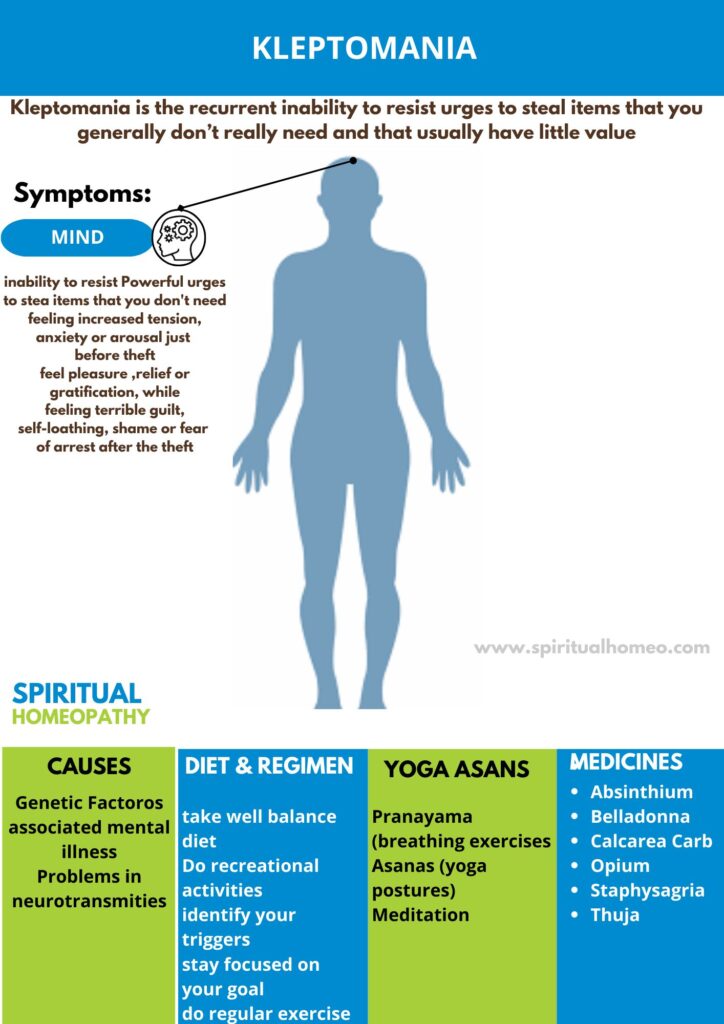
Kleptomania

Kleptomania: Understanding Symptoms, Causes, and Treatment Options

Kleptomania

Effective Homeopathic Treatment for Kleptomania

Kleptomania is a behavioral disorder characterized by an irresistible urge to steal items that are often not needed and hold little value. Individuals with kleptomania experience strong impulses to steal, which can lead to feelings of tension or anxiety before committing the act, followed by relief or pleasure afterward. This condition is different from ordinary theft, as the items stolen are not for personal gain but driven by emotional urges. Treatment options include therapy and behavioral interventions.

Everything You Need to Know

Overview

Kleptomania is a rare but significant mental health disorder that can cause emotional distress for both the individual and their family if left unaddressed. It is classified as an impulse control disorder, marked by difficulty resisting the urge to perform repetitive or harmful acts, such as compulsive stealing. Individuals with kleptomania often experience intense feelings of shame, guilt, or anxiety, which may prevent them from seeking help.

Although there is no single cure, professional interventions—such as therapy and structured behavioral approaches—can help manage impulses and reduce compulsive behaviors over time. Kleptomania affects approximately 0.3 to 0.6% of the population, with a slightly higher prevalence in females.

At Spiritual Homeopathy Clinic, patients can access in-clinic, online, and international consultations, allowing for individualized assessment and care tailored to the severity of symptoms and overall well-being.

Causes

The exact cause of kleptomania remains unclear, but research suggests a combination of genetic, neurological, and psychological factors. A genetic component may exist, as the disorder sometimes runs in first-degree relatives. Neurotransmitter imbalances in the brain—particularly involving serotonin, dopamine, and the opioid systems—are believed to contribute to compulsive behaviors.

  • Serotonin regulates mood and emotions and is often lower in individuals prone to impulsive actions.

  • Dopamine triggers pleasurable sensations, which may reinforce repeated urges to steal.

  • Opioid system imbalances can make it harder to resist compulsive behaviors.

Kleptomania frequently co-occurs with other mental health conditions, such as anxiety disorders, eating disorders, substance use disorders, personality disorders, and depression, which can complicate management.

Understanding these causes is essential for creating a personalized treatment plan. At Spiritual Homeopathy Clinic, consultations—available in Hyderabad branches, online, and internationally—allow for individualized care based on each patient’s unique symptoms and health profile.

Types and Variations of Kleptomania

Episodic Kleptomania

  • Pattern: Stealing occurs in waves or episodes.

  • Triggers: Stress, anxiety, trauma, or depression.

  • Example: A person may steal during emotionally intense periods but may go through long stretches without any stealing behaviors.

Chronic Kleptomania

  • Pattern: Frequent and persistent stealing episodes over a prolonged period.

  • Tied to: Deep-seated psychological issues, often accompanied by comorbidities like mood or personality disorders.

  • Note: Effective management usually requires long-term therapy and professional guidance.

Kleptomania with Comorbidity

  • Features: Occurs alongside other mental health conditions.

  • Common Co-occurring Conditions:

    • Depression

    • Obsessive-Compulsive Disorder (OCD)

    • Bipolar Disorder

    • Anxiety

    • Substance use disorders

  • Treatment Approach: Focuses on addressing both kleptomania and the co-occurring conditions through individualized care plans.

Situational Kleptomania

  • Pattern: Stealing occurs only in specific situations or environments.

  • Example: A person may steal during high-stress situations, such as relationship conflicts, financial difficulties, or while intoxicated.

  • Overlap: May involve impulse control or dissociative episodes triggered by moments of trauma.

Adolescent-Onset Kleptomania

  • Age of Onset: Typically begins during teenage years.

  • Confusion: Often mistaken for typical teenage behavior or peer-influenced shoplifting.

  • Note: Requires proper psychological evaluation to distinguish from common adolescent risk-taking or rebellion.

Subclinical or “Mild” Kleptomania

  • Pattern: Individuals may occasionally act on stealing urges without significantly disrupting daily life.

  • Emotional Impact: Often experience guilt or distress but may not seek treatment unless confronted or faced with consequences.

At Spiritual Homeopathy Clinic, personalized assessments available at our Hyderabad branches, online, and international consultations can help identify the type and severity of kleptomania, allowing for tailored management strategies.

Symptoms and Features of Kleptomania

Symptoms:

  • Inability to Resist Urges: An overpowering compulsion to steal items, even when they are not needed.

  • Tension and Anxiety: Increased anxiety or inner tension before the act of theft.

  • Gratification During Theft: A sense of relief, pleasure, or satisfaction while stealing.

  • Post-Theft Guilt: Intense feelings of guilt, remorse, self-loathing, shame, or fear of being caught after the theft.

  • Cycle of Urges: Recurrent stealing urges leading to a repetitive cycle of compulsive behavior.

Features:

  • Not for Personal Gain: Unlike typical shoplifting, kleptomania is not motivated by profit, revenge, rebellion, or personal use; the act is driven by an irresistible internal urge.

  • Spontaneous Episodes: Episodes often occur impulsively, without planning, and usually involve the individual alone.

  • Common Locations for Theft: Public places such as stores, supermarkets, or social settings may be common sites of theft.

  • Items Have No Value: Stolen items are often of little or no personal value, even when the person could afford them.

  • Unwanted Stolen Goods: Stolen items may be hoarded, discarded, returned, or given away.

  • Fluctuating Urges: The intensity of stealing urges may vary over time, sometimes increasing and at other times decreasing.

Note: Individuals experiencing frequent or intense urges, distress, or impairment in daily life should seek professional assessment. At Spiritual Homeopathy Clinic, consultations are available at multiple Hyderabad branches, as well as online and international options, to provide personalized care and support.

Diet & Regimen for Kleptomania: Supporting Mental Stability & Impulse Control

Overall Goals:

  • Balance blood sugar levels

  • Support neurotransmitter function (dopamine, serotonin)

  • Reduce anxiety and stress

  • Promote brain health and mood regulation

Foods to Focus On:

NutrientHelps WithBest Sources
Omega-3sImpulse control, brain healthSalmon, flaxseeds, chia seeds, walnuts
MagnesiumAnxiety, calmingSpinach, pumpkin seeds, bananas, almonds
Tryptophan + B6Serotonin productionEggs, turkey, oats, sunflower seeds
Complex CarbsStable mood, energyQuinoa, brown rice, sweet potatoes
Fermented FoodsGut-brain connectionYogurt, kefir, kimchi, sauerkraut
Dark Leafy GreensFolate, B-vitaminsKale, spinach, Swiss chard
HydrationCognitive clarityWater, herbal teas, coconut water

Foods to Avoid or Limit:

  • Refined Sugar: Can spike impulsivity and affect mood

  • Processed Junk Food: Chips, soda, instant noodles may worsen impulsive behaviors

  • Excessive Caffeine: Can increase anxiety and restlessness

  • Alcohol: Lowers inhibitions and may trigger impulsive urges

  • Artificial Sweeteners: May disrupt dopamine balance and increase cravings

Daily Regimen / Routine to Support Mental Health:

A structured and calming daily routine helps reduce stress and manage impulses. Suggested schedule:

Morning (7–9 am):

  • Wake up at the same time daily to maintain rhythm.

  • Drink a glass of water; engage in light stretching or a short walk in sunlight to support serotonin.

  • Breakfast: Balanced meal (e.g., eggs with avocado toast or oatmeal with fruit and seeds).

  • 5–10 minutes of deep breathing or meditation to center the mind.

Midday (12–2 pm):

  • Lunch: Protein-rich meal with whole grains and vegetables (e.g., grilled chicken, quinoa, spinach).

  • Avoid long fasting; blood sugar dips may increase impulsivity.

  • Take a few minutes to journal: “How am I feeling? What triggered me today?”

Afternoon (3–5 pm):

  • Snack: Healthy options like Greek yogurt with berries or banana with peanut butter.

  • Light movement or a short walk.

  • Practice “urge surfing”: notice impulses without acting, acknowledging the feeling, and letting it pass.

Evening (6–9 pm):

  • Dinner: Veggie-loaded soup or stir-fry with lean protein (chicken, tofu, etc.).

  • Reduce screen time 1 hour before bed to help the mind unwind.

  • Calming herbal tea (e.g., chamomile or lavender).

  • 10-minute wind-down session: read, journal, or reflect on gratitude.

Note: Guidance may vary based on individual needs, mental health status, and lifestyle. A professional assessment at Spiritual Homeopathy Clinic, through in-clinic, online, or international consultations, can help tailor a personalized diet and routine plan.

Yoga & Lifestyle Practices for Kleptomania: Supporting Mental Balance

Incorporating gentle yoga and mindful breathing into daily routines can help reduce stress, improve focus, and support emotional regulation. These practices are supportive and should not replace professional care. Patients are encouraged to combine them with personalized guidance from Spiritual Homeopathy Clinic, available at multiple Hyderabad branches, as well as online and international consultations.

1. Sukhasana (Easy Pose)

  • Benefits: Calms the mind, reduces stress and anxiety, encourages deep breathing.

  • How to do it: Sit comfortably with legs crossed, hands on knees. Keep your spine straight, shoulders relaxed, and breathe deeply for 3–5 minutes, focusing on your breath.

2. Balasana (Child’s Pose)

  • Benefits: Relieves stress, provides a sense of calm, stretches the back.

  • How to do it: Kneel, sit on your heels, and fold forward, resting your forehead on the floor. Extend your arms forward or rest them by your sides. Breathe deeply for 3–5 minutes.

3. Setu Bandhasana (Bridge Pose)

  • Benefits: Opens the chest, reduces anxiety, strengthens the lower back, enhances mental clarity.

  • How to do it: Lie on your back, knees bent, feet flat, hip-width apart. Press into the feet, lift hips toward the ceiling, engaging glutes and core. Hold 30 seconds to 1 minute.

4. Viparita Karani (Legs Up the Wall Pose)

  • Benefits: Relieves stress, calms the nervous system, improves circulation.

  • How to do it: Sit near a wall, lie back, extend legs up the wall, arms relaxed by your sides. Breathe deeply for 5–10 minutes.

5. Adho Mukha Svanasana (Downward-Facing Dog)

  • Benefits: Reduces stress, improves circulation, stretches the body.

  • How to do it: Start on all fours, wrists under shoulders, knees under hips. Tuck toes, lift hips to form an inverted “V.” Hold 30 seconds to 1 minute.

6. Tadasana (Mountain Pose)

  • Benefits: Promotes mindfulness, improves posture, increases body awareness.

  • How to do it: Stand tall, feet together, arms at sides. Engage thighs, imagine a straight line from heels to head. Breathe deeply for 1–2 minutes.

7. Utkatasana (Chair Pose)

  • Benefits: Strengthens legs and core, builds focus and determination.

  • How to do it: Stand, feet hip-width apart. Bend knees as if sitting in a chair, chest lifted, arms overhead. Hold 30 seconds to 1 minute.

8. Nadi Shodhana Pranayama (Alternate Nostril Breathing)

  • Benefits: Calms the nervous system, reduces anxiety, enhances focus.

  • How to do it: Sit comfortably. Close the right nostril, inhale through left. Close left, exhale through right. Repeat for 5–10 rounds.

9. Savasana (Corpse Pose)

  • Benefits: Deep relaxation, restores mind and body, reduces mental tension.

  • How to do it: Lie flat, arms at sides, palms up. Close eyes, focus on breath, relax fully. Stay 5–10 minutes.

Note: Yoga and lifestyle practices are supportive measures and should be tailored to individual needs. Professional guidance from Spiritual Homeopathy Clinic can help integrate these practices safely into a comprehensive care plan.

Homeopathic Treatment for Kleptomania

Homeopathic care for kleptomania focuses on individualized treatment that addresses the underlying emotional, mental, and behavioral factors contributing to impulsive stealing. The approach emphasizes long-term management rather than immediate suppression of symptoms, helping patients gradually regain self-control and emotional balance.

Key aspects of the homeopathic approach include:

  • Individualized Care: Treatment is tailored to each person’s unique emotional profile, triggers, and overall mental health.

  • Addressing Contributing Factors: Therapy may target underlying anxiety, stress, or co-occurring mental health conditions that reinforce compulsive behaviors.

  • Supportive and Well-Tolerated: Homeopathic interventions are generally well-tolerated under professional guidance, and can be combined with behavioral strategies for comprehensive care.

  • Ongoing Monitoring: Regular follow-ups help assess progress, adjust the treatment plan, and provide support for managing urges in daily life.

At Spiritual Homeopathy Clinic, patients can access care at multiple branches in Hyderabad, including Kukatpally, Chandanagar, Dilsukhnagar, and Nallagandla. Online and international consultations are also available for those unable to attend in person, ensuring professional guidance and an individualized care plan.

When to Consult a Doctor

You should consult a healthcare professional if kleptomania urges become frequent, uncontrollable, or begin to interfere with daily life, relationships, or work. Early evaluation helps identify underlying causes and supports an individualized care plan.

Seek consultation if you experience:

  • Overwhelming or repeated urges to steal

  • Anxiety, tension, or agitation before acting on urges

  • Intense guilt, shame, or distress after theft

  • Impulsive stealing that affects personal, social, or professional life

  • Difficulty controlling impulses despite awareness of consequences

At Spiritual Homeopathy Clinic, consultations are available at multiple branches in Hyderabad, including Kukatpally, Chandanagar, Dilsukhnagar, and Nallagandla. Online and international consultations are also available for those unable to visit in person. A professional assessment supports an individualized care approach based on symptoms and overall mental health.

For appointments or guidance, contact 9069 176 176.

Frequently Asked Questions (FAQ) about Kleptomania

1. What is kleptomania?
Kleptomania is a mental health disorder classified as an impulse control disorder. Individuals experience a recurrent inability to resist urges to steal items, often unnecessary or of little value, despite potential negative consequences.

2. What are the symptoms of kleptomania?
Common symptoms include:

  • Strong, irresistible urges to steal items not needed

  • Increased tension or anxiety before stealing

  • Pleasure, relief, or gratification during the act

  • Guilt, remorse, or shame afterward, with fear of being caught

  • A recurring cycle of stealing urges over time

If symptoms are frequent or begin affecting daily life, professional consultation is advised.

3. What causes kleptomania?
The exact cause is unknown but may involve genetic, biological, and environmental factors. Neurotransmitter imbalances in serotonin and dopamine systems are implicated, and a family history may increase risk. Co-occurring mental health conditions like depression or anxiety are common. Causes vary by individual, highlighting the need for personalized care.

4. Is kleptomania treatable?
Yes, kleptomania is manageable. Treatment focuses on reducing stealing urges and addressing emotional and psychological factors through therapy, support strategies, and professional guidance. Long-term management often provides the best results.

5. How does kleptomania differ from regular shoplifting?
Unlike typical shoplifting, kleptomania is driven by an uncontrollable urge rather than personal gain or rebellion. Stolen items usually have little value, and actions are followed by guilt or remorse.

6. Can medication help manage kleptomania?
Certain medications may support treatment by helping regulate neurotransmitter imbalances and reduce impulsivity. Medication is typically used alongside therapy and behavioral interventions for more effective management.

7. Can yoga and meditation help with kleptomania?
Yes, yoga and meditation can support emotional regulation, reduce stress, and improve self-awareness, which may help manage impulses. These practices are supportive but not a replacement for professional care.

8. How common is kleptomania?
Kleptomania is rare, affecting approximately 0.3%–0.6% of the population. It is more frequently observed in females and usually begins in adolescence or early adulthood. Underreporting is common due to shame or secrecy.

9. Can someone with kleptomania stop stealing on their own?
Self-management is often difficult, as the urge to steal can be overwhelming. Professional treatment, including therapy and supportive interventions, is usually necessary to reduce compulsive episodes.

10. Is kleptomania linked to other mental health conditions?
Yes, it often co-occurs with depression, anxiety disorders, OCD, eating disorders, substance use, or personality disorders. Addressing these conditions alongside kleptomania can enhance treatment effectiveness.