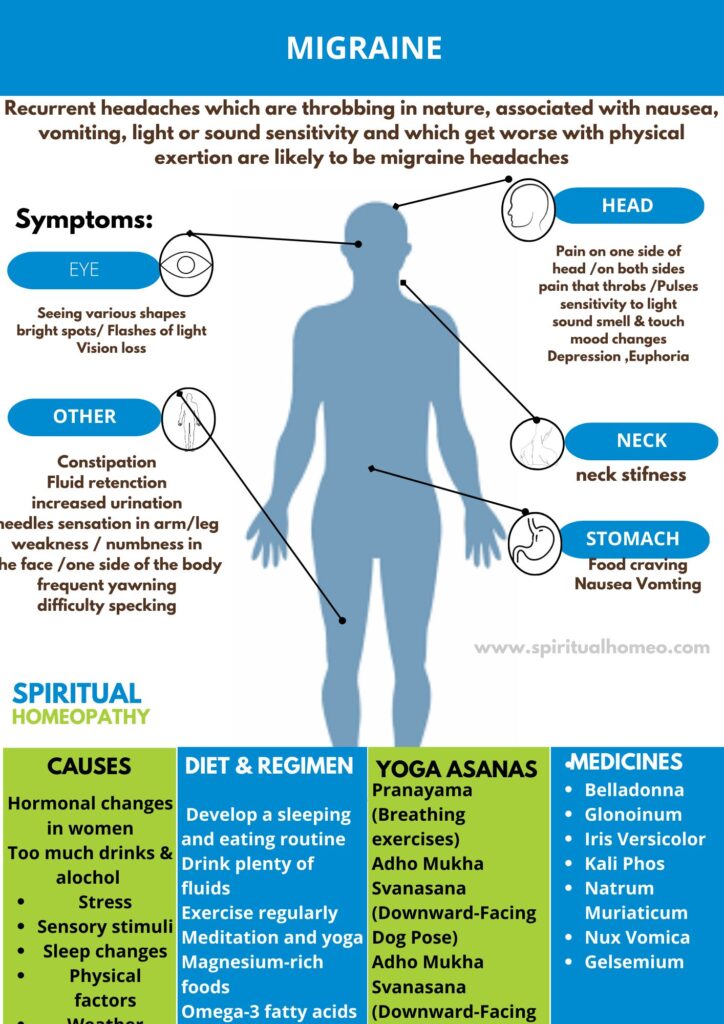
Yoga and Lifestyle Support for Migraine Management
Yoga and gentle lifestyle practices can support migraine management by reducing stress, improving circulation, and relieving muscle tension. These approaches are supportive measures and not a replacement for medical care. Spiritual Homeopathy Clinic offers guidance on integrating such practices alongside professional migraine management through in-clinic, online, or international consultations.
1. Child’s Pose (Balasana)
Benefits: Calms the mind, reduces stress, and promotes relaxation.
How to do it: Kneel on the floor with knees wide apart and big toes touching. Lower your torso toward the floor, bringing your forehead to the mat and extending your arms in front or by your sides. Hold for 1–2 minutes, breathing deeply.
Tip: Maintain slow, steady breathing to relax the nervous system.
2. Seated Forward Bend (Paschimottanasana)
Benefits: Relieves tension in the neck, back, and shoulders, which may contribute to migraine pain.
How to do it: Sit with legs extended straight. Inhale to lengthen the spine, then exhale as you fold forward, bringing your chest toward your thighs. Hold feet or legs and rest your forehead on shins for 30 seconds to 1 minute.
Tip: Keep the spine long and bend gently, avoiding rounding your back.
3. Legs Up the Wall Pose (Viparita Karani)
Benefits: Reduces stress, improves circulation, and helps relieve tension headaches.
How to do it: Sit next to a wall, lie on your back, and extend legs up against the wall to form an L-shape. Rest arms at your sides with palms up. Hold for 5–10 minutes.
Tip: Place a cushion or blanket under hips if needed for comfort.
4. Cat-Cow Pose (Marjaryasana-Bitilasana)
Benefits: Releases tension in the neck, shoulders, and upper back.
How to do it: Begin on hands and knees with wrists under shoulders and knees under hips. Inhale, arch the back (cow), lifting head and tailbone; exhale, round the spine (cat), tucking chin and pelvis. Repeat for 5–10 rounds.
Tip: Move slowly and coordinate with your breath.
5. Corpse Pose (Savasana)
Benefits: Promotes deep relaxation and calms the nervous system.
How to do it: Lie flat on your back with arms at your sides, palms up, and legs extended. Close eyes and focus on breathing, relaxing completely for 5–10 minutes.
Tip: Use a cushion under the knees for extra support if desired.
6. Reclining Bound Angle Pose (Supta Baddha Konasana)
Benefits: Opens the chest and hips, improves relaxation and blood flow.
How to do it: Lie on your back, bring soles of feet together, and allow knees to drop outward. Relax arms at sides. Hold for 1–2 minutes.
Tip: Cushions under knees can enhance comfort.
7. Standing Forward Bend (Uttanasana)
Benefits: Relieves tension in the neck and spine and encourages blood flow to the brain.
How to do it: Stand with feet hip-width apart and fold forward from the hips, keeping knees slightly bent. Let the head hang and relax the neck. Hold for 30 seconds to 1 minute.
Tip: Use blocks or rest hands on legs if floor reach is difficult.
8. Bridge Pose (Setu Bandhasana)
Benefits: Opens the chest, relieves tension in the back and neck, and supports relaxation.
How to do it: Lie on your back, knees bent, feet hip-width apart. Place arms at sides, palms down. Press through feet, lift hips toward the ceiling, and hold for 30 seconds before lowering slowly.
Tip: Keep head, neck, and shoulders relaxed throughout.
9. Head-to-Knee Forward Bend (Janu Sirsasana)
Benefits: Stretches hamstrings and relieves tension in head and neck.
How to do it: Sit with legs extended. Bend the right knee, placing foot against inner left thigh. Inhale to lengthen spine, exhale as you fold over left leg. Hold 30 seconds to 1 minute, then switch sides.
Tip: Maintain a long spine and avoid rounding your back.