
Motion sickness is a common condition that occurs when the brain receives conflicting signals from the eyes, inner ear, and other parts of the body during movement. It is commonly triggered while traveling by car, bus, train, airplane, or boat, and can affect both children and adults. Motion sickness may cause symptoms such as nausea, vomiting, dizziness, cold sweats, headache, excessive salivation, fatigue, and a general feeling of discomfort. While occasional motion sickness is common, frequent or severe episodes can interfere with travel, work, and daily activities. Seeking early motion sickness treatment and proper evaluation can help identify underlying triggers and improve overall comfort during travel.
At Spiritual Homeopathy, we believe in treating the root cause of motion sickness rather than simply suppressing symptoms. Our experienced homeopathic doctors carefully evaluate each patient’s symptoms, medical history, travel patterns, sensitivity to motion, lifestyle, and overall health before preparing an individualized treatment plan. Our holistic approach focuses on providing natural motion sickness treatment, improving the body’s balance mechanism, reducing nausea and dizziness during travel, and offering long-term relief through safe and personalized homeopathic care. We specialize in homeopathic treatment for motion sickness, travel sickness, nausea, vertigo, and balance-related disorders.
We provide personalized homeopathic treatment for motion sickness in Hyderabad to patients of all age groups through our clinics in Hyderabad, as well as online homeopathy consultations for patients across India and in more than 100 countries worldwide. If you are looking for the best homeopathy doctor for motion sickness, natural travel sickness treatment, relief from nausea and dizziness, or long-term balance disorder management, Spiritual Homeopathy is committed to delivering expert, patient-centered care wherever you are.
Overview
Motion sickness, also called travel sickness or seasickness when occurring on boats, arises when the central nervous system receives conflicting signals from the sensory systems—inner ear, eyes, and skin pressure receptors. For instance, when sitting in a moving car without looking outside, the inner ear senses motion (up, down, or side to side), while the eyes focus on a stationary scene. This mismatch can trigger nausea, dizziness, and general discomfort.
Demographics of Motion Sickness:
Motion sickness is more common in certain populations. Studies indicate that Tibetans and Northeast Indians report a slightly higher prevalence (28%) compared to Northwest Indians (26%). Females (27.3%) are generally more susceptible than males (16.8%). Certain medical groups, such as patients with schizophrenia, may also experience higher rates of motion sickness (up to 30%), whereas athletes like rowers have a lower incidence (0%).
Buses and trucks are reported as the most common passive transport modes to trigger motion sickness. However, voluntary stabilization strategies—such as controlling head and neck movements or focusing the gaze—can reduce symptoms, with approximately 38% of individuals using such techniques successfully.
For individuals experiencing frequent or severe motion sickness, consultation with Spiritual Homeopathy Clinic can provide guidance through in-clinic, online, or international homeopathy consultations tailored to individual needs.
Causes
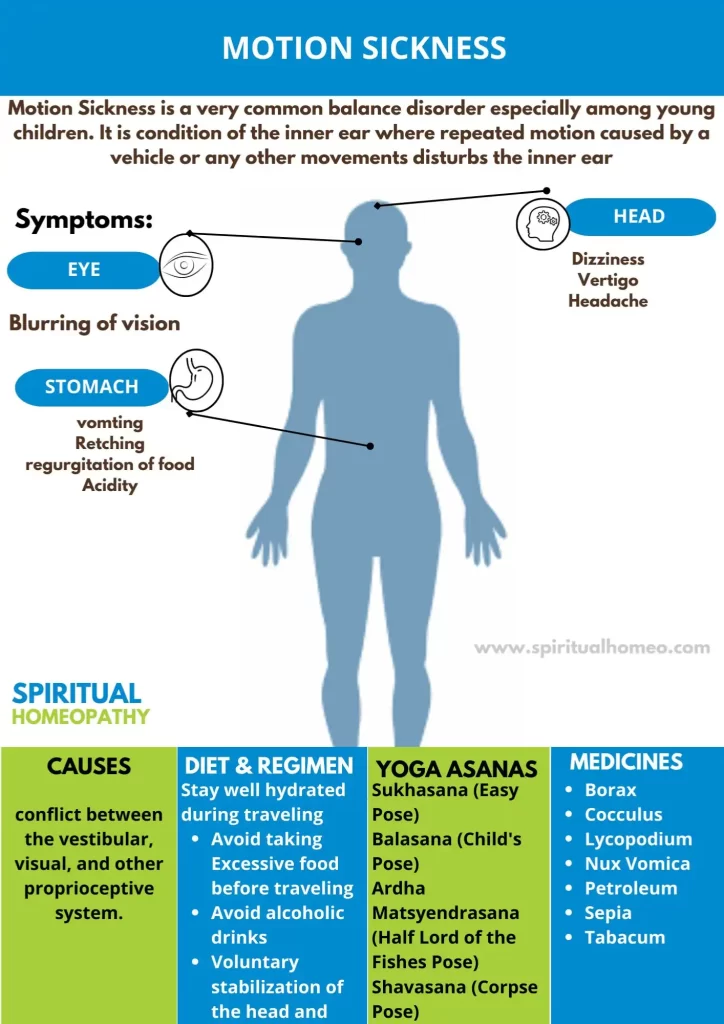
The exact mechanism of motion sickness is not fully understood, but it is generally believed to result from a conflict between the vestibular system (responsible for balance), visual input, and other proprioceptive systems that provide sensory signals to the brain. When these signals do not match, the brain interprets the mismatch as a form of disturbance, which can trigger nausea, dizziness, and general discomfort.
Certain types of motion—such as rotational, vertical, and low-frequency movements—tend to produce more pronounced symptoms compared to linear, horizontal, or high-frequency motions. These movements create a larger sensory mismatch, increasing the likelihood of discomfort.
Understanding the underlying causes helps guide individualized care at Spiritual Homeopathy Clinic, with in-clinic, online, and international consultations available to tailor management strategies for each person.
Types of Motion Sickness: Causes, Symptoms, and Triggers
Motion sickness occurs when the body’s visual and sensory systems send conflicting signals to the brain, leading to nausea, dizziness, and general discomfort. Different environments and conditions can contribute to various forms of motion sickness. Below are the main types:
Travel Motion Sickness
Car Sickness: Common when riding in a car, particularly in the backseat or while reading or using a screen. The eyes focus on a stationary object inside the car while the inner ear senses movement, creating a sensory mismatch.
Sea Sickness: Triggered by boat or ship motion, especially in rough waters. The rocking motion can disturb the balance system, leading to dizziness and nausea.
Air Sickness: Experienced during turbulence on airplanes, where the movement of the plane causes sensory confusion similar to car or sea sickness.
Train Sickness: Occurs when traveling by train, particularly if the body is unaccustomed to swaying motions or when seated facing backward.
Virtual Reality (VR) Motion Sickness
VR Sickness: Arises when the eyes perceive movement in a virtual environment while the body remains stationary. This mismatch can cause nausea, dizziness, sweating, or headaches.
Space Motion Sickness (Space Sickness)
Occurs in outer space due to microgravity, which affects the vestibular system and balance. Astronauts may experience nausea, dizziness, or vomiting as the body adapts to weightlessness.
Vestibular Disorders (Inner Ear-Related Motion Sickness)
Benign Paroxysmal Positional Vertigo (BPPV): Dislodged crystals in the inner ear cause dizziness or vertigo when the head changes position.
Labyrinthitis: Inflammation or infection of the inner ear may lead to dizziness and imbalance, which can worsen with movement.
Meniere’s Disease: Abnormal fluid buildup in the inner ear can cause vertigo episodes, hearing loss, or ringing in the ears.
Visual Motion Sickness (Visual-Induced Dizziness)
Movie Sickness (Cinemasickness): Watching fast-paced or 3D movies can trigger dizziness when the eyes detect rapid motion while the body remains still.
Video Game Motion Sickness: First-person perspective games can cause sensory conflict, especially when controlling on-screen character movements.
Motion Sickness in Children
Children, particularly under 2 years old, are more prone due to developing sensory systems that may struggle to process conflicting signals from the inner ear, eyes, and surroundings.
Motion Sickness During Pregnancy
Many pregnant women experience motion sickness because of hormonal changes, digestive system shifts, and increased sensitivity to movement. Fatigue, body position changes, and stress can worsen symptoms.
For persistent or severe symptoms, consultation at Spiritual Homeopathy Clinic—in-clinic, online, or international—is recommended to develop an individualized management plan.
Signs & Symptoms
The signs and symptoms of motion sickness can vary in intensity depending on the individual and the type of motion. Common symptoms include:
Nausea: A feeling of queasiness or upset stomach, often the earliest and most noticeable symptom.
Dizziness or Vertigo: A sensation of spinning or imbalance, sometimes accompanied by unsteadiness.
Sweating: Excessive perspiration, often on the palms, face, or neck.
Paleness: A noticeable change in skin color due to the body’s stress response.
Fatigue or Drowsiness: A feeling of tiredness or lethargy, which may follow prolonged motion exposure.
Headache: Mild to moderate discomfort, sometimes occurring along with nausea or dizziness.
Vomiting: In more severe cases, the body may respond with vomiting to relieve sensory conflict.
Rapid Breathing or Shortness of Breath: A common response to discomfort or anxiety during motion exposure.
If these symptoms occur frequently or become severe, consultation with Spiritual Homeopathy Clinic—available in Hyderabad branches, online, and internationally—can help assess underlying factors and guide individualized management.
Diet and Lifestyle Tips to Manage Motion Sickness
Managing motion sickness can be supported by dietary adjustments and practical lifestyle practices. These measures can help reduce symptoms and make travel more comfortable. Guidance may vary for each individual, so consultation with Spiritual Homeopathy Clinic—available in Hyderabad, online, and internationally—can provide personalized recommendations.
Diet for Motion Sickness
Anti-Nausea Foods:
Ginger: Known to calm nausea and digestive discomfort. Can be consumed as tea, chews, or small raw slices.
Peppermint: Helps relieve stomach discomfort. Can be used as tea, candies, or gum.
Bland, Easily Digestible Foods:
Light, non-greasy foods can help prevent nausea. Examples include plain crackers, dry toast, rice, boiled potatoes, bananas, applesauce, and plain pasta.
Hydration:
Drink fluids regularly in small amounts to stay hydrated. Water, coconut water, or clear broths are suitable. Hydrating foods like watermelon, cucumber, and celery can also help.
Small, Frequent Meals:
Eating smaller meals every 2–3 hours prevents nausea from large meals, especially before traveling. Snacks like fruit, nuts, or plain toast are recommended.
Avoid Trigger Foods:
Limit greasy, fried, or spicy foods, excessive caffeine, and certain dairy products, as they may worsen nausea.
Vitamin B6-Rich Foods:
Foods like bananas, potatoes, chickpeas, fortified cereals, and spinach may help reduce nausea.
Light Proteins:
Consuming easily digestible proteins can stabilize blood sugar and reduce dizziness. Examples: grilled chicken, turkey, tofu, or eggs.
Regimen to Prevent and Manage Motion Sickness
Positioning:
Car: Sit in the front seat, face forward, and focus on a stable point like the horizon.
Boat: Stay near the center and look at the horizon.
Airplane: Choose seats over the wings; looking outside or closing eyes can help.
Virtual Reality: Take frequent breaks and adjust settings to minimize discomfort.
Acupressure:
Applying gentle pressure to the inner wrist (about two finger widths below the base of the palm) may reduce nausea and dizziness.
Aromatherapy:
Essential oils such as lavender, ginger, or peppermint may help alleviate nausea when inhaled.
Fresh Air:
Exposure to fresh air or opening a window can reduce symptoms. Moving toward an aisle or open space on planes or buses may help.
Relaxation Techniques:
Slow deep breathing or progressive muscle relaxation can help calm the body and reduce discomfort.
Avoid Strong Odors:
Perfumes, food smells, or exhaust fumes can worsen nausea—avoid these when possible.
Lifestyle Tips
Sleep Well: Ensure adequate rest before travel, as fatigue can increase susceptibility.
Travel in Off-Peak Times: Choose trips when feeling rested and stress-free to reduce motion sensitivity.
Gradual Exposure: Build tolerance to new types of motion with shorter trips before longer journeys.
Yoga / Lifestyle for Motion Sickness
Yoga and mindful lifestyle practices can help reduce symptoms of motion sickness by calming the nervous system, improving circulation, and enhancing balance. These practices are supportive and should be used alongside medical care or individualized guidance from Spiritual Homeopathy Clinic.
Sukhasana (Easy Pose)
Benefits: Calms the nervous system, supports steady breathing, and reduces stress.
How to Do: Sit cross-legged with a tall spine and relaxed shoulders. Place hands on knees, palms up or in a mudra. Focus on deep, steady breathing.
Duration: 2–5 minutes.
Adho Mukha Svanasana (Downward-Facing Dog)
Benefits: Increases blood flow to the brain, reduces dizziness, and improves circulation.
How to Do: From hands and knees, lift hips to form an inverted V. Keep head between arms, gaze toward feet.
Duration: 30 seconds to 1 minute, repeat 2–3 times.
Setu Bandhasana (Bridge Pose)
Benefits: Enhances upper body circulation and may reduce nausea.
How to Do: Lie on your back, knees bent, feet flat. Lift hips while keeping arms at sides or clasped under the back.
Duration: 30 seconds to 1 minute.
Bhujangasana (Cobra Pose)
Benefits: Stimulates the nervous system, improves blood flow, and can relieve nausea.
How to Do: Lie on the stomach, hands under shoulders, lift chest gently, elbows slightly bent.
Duration: 20–30 seconds, repeat 2–3 times.
Trikonasana (Triangle Pose)
Benefits: Improves stability and balance, supporting inner ear function.
How to Do: Stand wide, arms extended. Reach toward right foot with right hand, gaze upward to left hand, keeping torso aligned.
Duration: 30 seconds per side.
Viparita Karani (Legs Up the Wall Pose)
Benefits: Calms the mind, relieves stress, and may reduce nausea through improved circulation.
How to Do: Sit next to a wall, lie back, swing legs up the wall, arms relaxed by sides.
Duration: 5–10 minutes.
Balasana (Child’s Pose)
Benefits: Promotes relaxation and may help alleviate nausea.
How to Do: Kneel, sit back on heels, lower forehead to the floor, stretch arms forward or keep by sides, breathe deeply.
Duration: 1–3 minutes.
Uttanasana (Standing Forward Fold)
Benefits: Relieves tension in the neck and back, can reduce dizziness.
How to Do: Stand hip-width apart, hinge forward from hips, let head hang. Bend knees slightly if needed.
Duration: 30 seconds to 1 minute.
Pranayama (Breathing Exercises)
Benefits: Controlled breathing calms the nervous system, reducing nausea and dizziness.
How to Do: Sit in Sukhasana. Practice Nadi Shodhana (Alternate Nostril Breathing) for several rounds.
Duration: 5–10 minutes.
Savasana (Corpse Pose)
Benefits: Deep relaxation, helping reduce motion sickness symptoms.
How to Do: Lie flat on your back, legs extended, arms by sides, eyes closed, focus on breath.
Duration: 5–10 minutes.
Note: These yoga and breathing practices support symptom management but are not a substitute for medical consultation or individualized care.
🌿 Homeopathic Approach to Motion Sickness
Homeopathy is a gentle, natural system of healing that focuses on individualized care, addressing contributing factors rather than just symptoms. For motion sickness, this approach considers your overall health, lifestyle, and susceptibility to nausea or dizziness during travel. Homeopathic management aims at long-term symptom control and is generally well-tolerated under professional guidance.
Whether symptoms are occasional or frequent, homeopathy supports a holistic approach, combining natural remedies with lifestyle guidance, diet adjustments, and supportive practices like yoga and breathing techniques.
🌟 Spiritual Homeopathy Clinic: Your Partner in Motion Sickness Management
At Spiritual Homeopathy Clinic, we offer personalized care for motion sickness through in-clinic, online, and international consultations. Our team of experienced homeopathy doctors in Hyderabad evaluates your symptoms, triggers, and overall health to develop a plan tailored to your needs.
Our Approach Includes:
In-Depth Consultation
We assess your travel habits, symptoms, medical history, and lifestyle to understand your susceptibility to motion sickness and provide personalized guidance.
Holistic Management
Remedies are chosen to support your body’s natural balance and reduce motion-related discomfort. Our approach also includes practical lifestyle, dietary, and yoga recommendations.
Ongoing Support & Follow-Up
Motion sickness management may require adjustments based on your response. Regular follow-ups help fine-tune your care plan and improve comfort during travel.
Professional, Individualized Care
At Spiritual Homeopathy, your well-being is our priority. We aim to reduce the impact of motion sickness on daily life while promoting overall health.
📞 Book Your Consultation
Appointments are available at multiple Hyderabad branches, including Kukatpally, Chandanagar, Dilsukhnagar, and Nallagandla.
When to Consult a Doctor
You should consult a healthcare professional if motion sickness symptoms become frequent, severe, or interfere with daily activities, work, or travel. Early evaluation can help identify contributing factors and support an individualized management plan.
Seek consultation if you experience:
Persistent nausea or vomiting during travel
Severe dizziness, vertigo, or imbalance
Excessive sweating, paleness, or fatigue affecting daily life
Symptoms that worsen over time or do not improve with dietary or lifestyle adjustments
Motion sickness during pregnancy or in young children with frequent discomfort
At Spiritual Homeopathy Clinic, consultations are available at multiple branches in Hyderabad, including Kukatpally, Chandanagar, Dilsukhnagar, and Nallagandla. Online and international consultations are also offered for patients unable to visit in person. Professional assessment helps provide individualized care based on your symptoms, health status, and lifestyle.
For appointments or guidance, contact 9069 176 176.
Relieve motion sickness fast by stopping all reading, fixing your gaze on the horizon, and breathing deeply. For immediate relief, sip cold water, eat bland crackers, or try ginger or peppermint. If symptoms persist, consider over-the-counter medications like dimenhydrinate or meclizine, which work best when taken 30 to 60 minutes before travel.
Motion sickness is caused by sensory conflict. It happens when your brain receives contradictory messages about your body's movement from three sensory systems: your inner ears (which sense balance and motion), your eyes, and your body's sensory nerves.
Motion sickness occurs when your brain receives conflicting signals from your sensory systems—your inner ears (vestibular system), eyes, and muscles—regarding movement. This neural mismatch triggers a stress response leading to nausea, dizziness, and cold sweats.
Motion sickness is generally not dangerous and usually resolves once the movement stops. However, in rare cases, severe or prolonged vomiting can lead to dehydration or low blood pressure, particularly in children.
A Vitamin B12 deficiency is most closely linked to feelings of motion sickness and dizziness. A lack of B12 can impair nerve function and reduce oxygen supplied to the brain, manifesting as light-headedness, wooziness, or nausea.
Yes, motion sickness is often worse on an empty stomach. Without food, excess stomach acid can irritate the stomach lining, and low blood sugar increases dizziness and nausea.
WhatsApp us