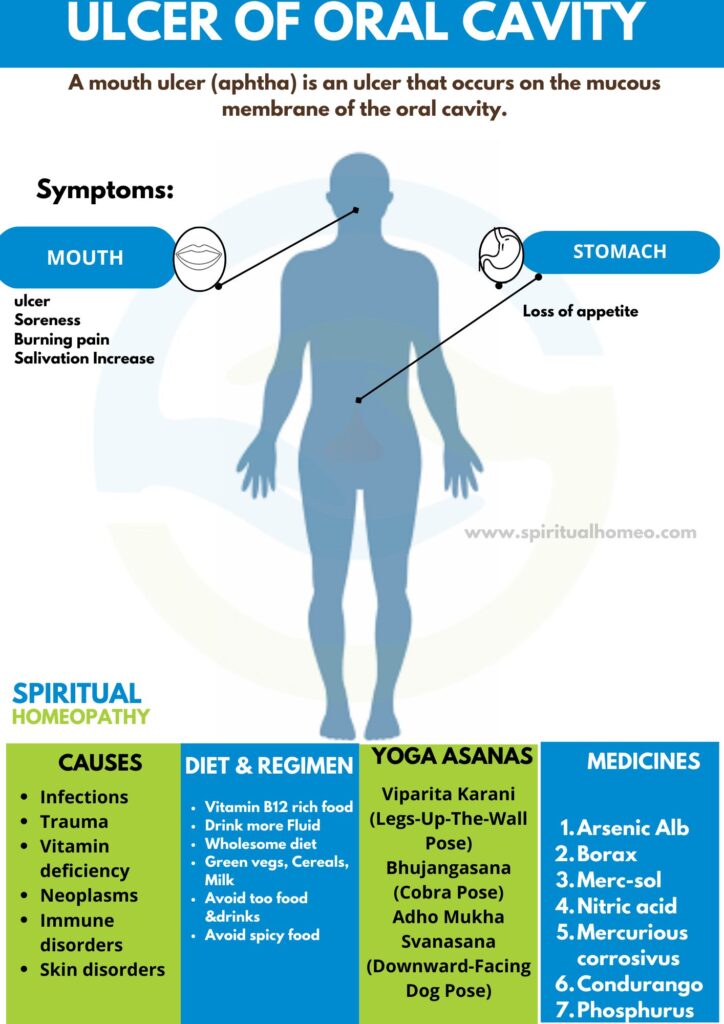
Mouth Ulcer

Mouth Ulcers: Causes, Symptoms, Treatment, and Home Remedies

Mouth Ulcer

Effective Homeopathic Treatment for Mouth Ulcer

A mouth ulcer, also called an aphthous ulcer, is a small, painful sore that appears on the mucous membranes inside the mouth. Commonly found on the inner cheeks, lips, tongue, or gums, these ulcers can make eating, drinking, and speaking uncomfortable. While usually harmless and healing on their own, frequent or severe mouth ulcers may indicate an underlying health issue and should be evaluated by a healthcare provider.

Everything You Need to Know

Overview

Mouth ulcers are a common condition that can develop for various reasons, often without any serious underlying cause. They may appear singly or in clusters and usually heal on their own. However, a persistent ulcer that does not heal or recurs frequently may require professional evaluation to rule out more serious conditions, including oral cancer.

Common causes include local trauma, such as accidentally biting the inside of the cheek, and aphthous stomatitis, which involves recurring ulcers with unclear triggers. These ulcers can cause pain, discomfort, and difficulty eating or speaking during the healing process.

At Spiritual Homeopathy Clinic, patients can access individualized consultations at multiple Hyderabad branches, as well as online and international appointments, for tailored guidance and long-term management of recurrent or severe mouth ulcers.

Common Causes of Oral Ulcers and Lesions

  1. Infections

    • Viral Infections: Conditions such as Herpangina, Herpes Simplex, and Hand, Foot, and Mouth Disease can lead to painful oral ulcers and lesions.

    • Bacterial Infections: Infections including Vincent’s Infection, Tuberculosis (TB), and Syphilis may affect the oral cavity, causing sores and inflammation.

    • Fungal Infections: Candidiasis (oral thrush) commonly produces white patches and discomfort in the mouth.

  2. Immune Disorders

    • Conditions like Aphthous Ulcers (canker sores) and Behçet’s Syndrome can cause recurring oral ulcers due to immune system dysfunction.

  3. Trauma

    • Physical Trauma: Accidental cheek bites, sharp teeth, or poorly fitted dentures can injure the mouth.

    • Chemical Trauma: Exposure to chemicals such as Silver Nitrate or Phenol, and even some common products like Aspirin, can damage the oral lining.

    • Thermal Trauma: Burns from hot food or drinks, or habits like reverse smoking, may lead to painful lesions.

  4. Neoplasms

    • Oral growths, both benign and malignant, can present as ulcers or lesions in the mouth.

  5. Skin Disorders

    • Conditions such as Erythema Multiforme, Lichen Planus, Benign Mucous Membrane Pemphigoid, Bullous Pemphigoid, and Lupus Erythematosus can cause oral lesions as part of systemic skin disorders.

  6. Blood Disorders

    • Disorders like Leukemia, Agranulocytosis, Pancytopenia, Cyclic Neutropenia, and Sickle Cell Anemia may lead to mouth sores due to reduced white blood cell counts or related issues.

  7. Drug Allergies

    • Allergic reactions to oral care products (toothpastes, mouthwashes) or systemic medications can cause irritation and sores in the mouth.

  8. Vitamin Deficiencies

    • Deficiencies in essential vitamins such as Vitamin B12, Vitamin C, or Folate can result in painful mouth sores.

  9. Miscellaneous Causes

    • Other factors include radiation mucositis, chemotherapy, diabetes mellitus, and uremia, which may impair oral tissue healing and promote ulcer formation.

Understanding the specific cause of oral ulcers is important for tailored care. At Spiritual Homeopathy Clinic, patients can receive individualized consultations at multiple Hyderabad branches, as well as online or international appointments, to identify contributing factors and guide long-term management.

Common Types of Oral Ulcers and Lesions

  1. Canker Sores (Aphthous Stomatitis)

    • Appearance: Small, round or oval ulcers with a white or yellowish center and a red border.

    • Location: Typically on the inner cheeks, lips, tongue, or soft palate.

    • Cause: Exact cause is unknown, though triggers may include stress, hormonal changes, food sensitivities, or a weakened immune system.

    • Symptoms: Painful, especially when eating acidic or spicy foods.

    • Management: Usually self-limiting. Symptom relief and supportive care can help ease discomfort.

  2. Cold Sores (Herpes Simplex Virus – HSV)

    • Appearance: Clusters of fluid-filled blisters that burst and form crusty lesions.

    • Location: Often on the lips or around the mouth; may occasionally appear inside the mouth.

    • Cause: Caused by the herpes simplex virus, commonly HSV-1.

    • Symptoms: Tingling or itching followed by blister formation; painful.

    • Management: Symptom-focused care and supportive measures can reduce discomfort.

  3. Traumatic Ulcers

    • Appearance: Single, white or gray ulcer with a red border.

    • Location: Typically at the site of injury, such as cheek bites, dental procedures, braces, dentures, or sharp teeth.

    • Cause: Physical injury or irritation.

    • Symptoms: Painful, especially when chewing or speaking.

    • Management: Healing occurs once the irritant is removed; supportive care may help relieve pain.

  4. Oral Lichen Planus

    • Appearance: White, lacy patches or lesions, sometimes with painful sores.

    • Location: Inner cheeks, gums, and tongue.

    • Cause: Likely an autoimmune reaction where the immune system affects the oral lining.

    • Symptoms: Pain or burning sensation when eating or drinking.

    • Management: Supportive measures and regular monitoring help manage symptoms over time.

  5. Candida (Oral Thrush)

    • Appearance: White, creamy lesions resembling cottage cheese.

    • Location: Tongue, inner cheeks, and roof of the mouth.

    • Cause: Overgrowth of the fungus Candida albicans, often due to immune changes, antibiotics, or underlying conditions like diabetes.

    • Symptoms: Pain, burning sensation, or difficulty swallowing.

    • Management: Symptom relief and maintaining oral hygiene support healing.

  6. Syphilitic Ulcers (Chancre)

    • Appearance: Painless, round, firm sores.

    • Location: Can appear in the mouth or genital area.

    • Cause: Infection with Treponema pallidum, the bacterium responsible for syphilis.

    • Symptoms: Initially painless; may become infected if untreated.

    • Management: Requires professional evaluation to address the underlying infection.

  7. Vitamin Deficiency Ulcers

    • Appearance: Multiple small, round lesions.

    • Location: Can appear anywhere in the mouth.

    • Cause: Deficiencies in vitamins such as B12, folic acid, or iron.

    • Symptoms: Painful, especially during eating or drinking.

    • Management: Addressing nutritional deficiencies and supportive care can reduce recurrence.

  8. Pemphigus Vulgaris

    • Appearance: Blisters that rupture, forming painful ulcers.

    • Location: Inner cheeks, gums, and soft palate.

    • Cause: Autoimmune condition where the immune system attacks healthy cells, leading to blister formation.

    • Symptoms: Painful, often recurrent ulcers with blistering.

    • Management: Requires medical supervision; supportive care can ease discomfort.

Understanding the type of oral ulcer helps guide individualized care. At Spiritual Homeopathy Clinic, patients can consult our experienced homeopathy doctors at multiple Hyderabad branches or via online and international consultations to receive a tailored management approach.

Symptoms of Painful Mouth Sores

  • Painful Sores: One or more ulcers may develop on the lining of the mouth, causing discomfort that can affect daily activities.

  • Swelling: Surrounding tissue may become swollen, making the area tender and sensitive to touch.

  • Difficulty Eating and Brushing: Chewing food or brushing teeth may be painful, sometimes leading to changes in eating habits or oral hygiene routines.

  • Food Sensitivity: Salty, spicy, or sour foods can irritate the sores and increase discomfort.

  • Loss of Appetite: Pain and irritation from the ulcers may reduce the desire to eat, affecting nutrition.

If these symptoms are frequent, severe, or persistent, consulting a healthcare professional is recommended. At Spiritual Homeopathy Clinic, patients can access individualized assessment and care at multiple Hyderabad branches or via online and international consultations.

Diet and Regimen for Managing Mouth Ulcers

Mouth ulcers, also known as canker sores, can be painful and disruptive. A suitable diet and daily regimen can support healing, reduce discomfort, and help lower the risk of recurrence. Thoughtful dietary choices and consistent oral care habits can assist the body’s natural recovery process. Dietary guidance may vary based on individual sensitivity and overall health.

Diet for Mouth Ulcers

1. Hydration

  • Water: Adequate fluid intake helps maintain oral moisture, which supports tissue healing.

  • Coconut Water: Often used for hydration and comfort, it may help soothe the oral lining.

2. Soft, Non-Irritating Foods

  • Soft foods such as mashed vegetables, mild soups, and yogurt are easier to consume and less likely to irritate ulcers.

  • Oatmeal and puddings: Gentle textures that reduce friction while eating.

  • Cottage cheese: A mild option that provides nutrition without causing irritation.

3. Non-Acidic Fruits

  • Bananas: Soft and non-acidic, making them easier to tolerate.

  • Melons: Hydrating fruits with low acidity.

  • Applesauce: A softer alternative to raw apples, which may be irritating.

4. Cooked Vegetables

  • Boiled or steamed vegetables: Well-cooked vegetables such as carrots, spinach, and zucchini are generally easier on the mouth.

  • Potatoes: Soft preparations like mashed or boiled potatoes are usually well tolerated.

5. Herbal Teas

  • Warm herbal infusions: Mild, non-hot herbal teas may provide soothing comfort for the oral tissues.

6. Lean Protein

  • Soft protein sources such as well-cooked eggs, tofu, fish, or chicken support tissue repair.

  • Smooth nut spreads, taken in moderation, can be included if tolerated.

Foods to Avoid with Mouth Ulcers

1. Spicy Foods
Highly spiced foods may increase irritation and pain.

2. Acidic Foods
Citrus fruits, tomatoes, and vinegar-based items can aggravate ulcers.

3. Salty Foods
Excessively salty snacks may worsen discomfort.

4. Crunchy and Hard Foods
Hard or sharp foods can scrape the ulcer surface and delay healing.

5. Alcohol
Alcoholic drinks and alcohol-containing oral products can irritate the oral lining.

6. Caffeinated Drinks
Excess caffeine may contribute to dryness and irritation in sensitive mouths.

Regimen for Mouth Ulcers

1. Oral Hygiene

  • Gentle brushing: Use a soft-bristled toothbrush and mild technique to avoid trauma.

  • Mouth rinsing: Mild, non-irritating rinses can help maintain cleanliness and comfort.

  • Low-irritant toothpaste: Toothpastes without harsh foaming agents may be better tolerated by some individuals.

2. Local Care

  • Non-irritating topical care measures may be used to provide comfort and protect the ulcer surface, under professional guidance.

3. Pain and Discomfort Management

  • Supportive measures to reduce discomfort can be considered, especially if eating or speaking becomes difficult.

4. Stress Management

  • Emotional stress is a known contributing factor. Relaxation practices such as breathing exercises, meditation, or gentle yoga may be supportive.

5. Rest

  • Adequate sleep allows the body’s natural repair mechanisms to function effectively.

6. Avoid Irritants

  • Continue avoiding foods and habits that trigger irritation until healing occurs.

7. Nutritional Balance

  • If mouth ulcers are recurrent, nutritional status may need assessment, as deficiencies can contribute to oral tissue sensitivity. Any supplementation should be undertaken only after professional evaluation.

If mouth ulcers are frequent, persistent, or slow to heal, a clinical assessment is advisable to identify contributing factors. Consultations are available at Spiritual Homeopathy Clinic, with multiple branches across Hyderabad, as well as online and international consultation options for patient convenience.

Yoga Asanas for Mouth Ulcers

Yoga practices can be supportive in managing stress and improving overall well-being, which may be helpful for individuals experiencing recurrent mouth ulcers. These practices are intended to complement medical care and should not replace professional evaluation or treatment.

1. Pranayama (Breathing Exercises)

Effect:
Pranayama helps calm the nervous system and reduce stress, which is a known contributing factor in some individuals with mouth ulcers. Regular breathing practice may support relaxation and overall balance.

Technique:
Anulom Vilom (Alternate Nostril Breathing) or gentle Ujjayi breathing may be practiced to promote calmness.

How to do Anulom Vilom:

  • Sit comfortably in Sukhasana or Padmasana.

  • Close the right nostril with the thumb and inhale through the left nostril.

  • Close the left nostril with the ring finger, release the right nostril, and exhale.

  • Inhale through the right nostril, then switch and exhale through the left.

  • Continue for 5–10 minutes with steady breathing.


2. Child’s Pose (Balasana)

Effect:
This posture encourages relaxation and may help ease physical and mental tension, which can indirectly support comfort during episodes of mouth ulcers.

How to do:

  • Kneel with big toes together and knees slightly apart.

  • Sit back on the heels and gently fold forward.

  • Rest the forehead on the mat and extend the arms forward.

  • Remain in the pose for 3–5 minutes with slow breathing.


3. Cobra Pose (Bhujangasana)

Effect:
This gentle backbend supports circulation and postural awareness, contributing to overall physical well-being.

How to do:

  • Lie on the abdomen with hands under the shoulders.

  • Inhale and gently lift the chest, keeping elbows slightly bent.

  • Hold for 15–30 seconds, then slowly release.

  • Repeat 2–3 times within comfort limits.


4. Supported Forward Fold (Paschimottanasana)

Effect:
A calming forward bend that helps release tension from the spine and shoulders, promoting relaxation.

How to do:

  • Sit with legs extended forward.

  • Inhale to lengthen the spine, then exhale and fold gently.

  • Hold for 1–2 minutes while maintaining relaxed breathing.


5. Seated Meditation (Sukhasana)

Effect:
Meditation supports emotional balance and stress regulation, which may be beneficial for individuals with stress-related ulcer episodes.

How to do:

  • Sit comfortably with legs crossed.

  • Rest hands on knees or lap.

  • Close the eyes and focus on slow, steady breathing.

  • Practice for 5–15 minutes.


6. Viparita Karani (Legs Up the Wall Pose)

Effect:
This restorative posture encourages relaxation and may help reduce physical fatigue and mental stress.

How to do:

  • Lie on the back and raise the legs against a wall.

  • Keep arms relaxed by the sides.

  • Remain in the position for 5–10 minutes with calm breathing.


7. Cat–Cow Pose (Marjaryasana–Bitilasana)

Effect:
This gentle movement sequence promotes spinal flexibility and body awareness, helping release accumulated tension.

How to do:

  • Begin on all fours.

  • Inhale into Cow Pose, gently arching the back.

  • Exhale into Cat Pose, rounding the spine.

  • Continue slowly for 1–2 minutes.


8. Shavasana (Corpse Pose)

Effect:
Shavasana promotes deep relaxation and nervous system calm, which can be supportive during recovery periods.

How to do:

  • Lie flat on the back with arms relaxed.

  • Close the eyes and observe the breath.

  • Remain for 5–10 minutes.


Key Benefits of Yoga for Mouth Ulcers

  • Supports Stress Reduction: Emotional stress is a common contributing factor in recurrent mouth ulcers.

  • Encourages Relaxation: Gentle practices help calm the body and mind.

  • Complements Medical Care: Yoga may support overall well-being when used alongside professional guidance.

🌿 Why Choose Homeopathy?

Homeopathy is a system of healthcare that focuses on understanding the individual as a whole, rather than addressing symptoms alone. It aims to support the body’s natural healing responses by considering physical, emotional, and lifestyle factors. The approach is commonly used across different age groups and is selected based on individual presentation and needs.

Homeopathy may be considered for both acute and long-standing health concerns, with care plans tailored to the person rather than the condition alone. Clinical guidance is important to ensure appropriate and responsible use.


🌟 Spiritual Homeopathy Clinic: A Patient-Centred Approach

At Spiritual Homeopathy Clinic, care is guided by classical homeopathic principles combined with structured clinical evaluation. The focus remains on understanding contributing factors, symptom patterns, and overall health status to support long-term management.

Consultations are available across multiple branches in Hyderabad, with options for online and international consultations where in-person visits are not feasible.


💫 Our Approach to Care

The clinic follows an individualized and structured approach to care, with attention to both clinical findings and patient experience.

  • Individual Assessment: Symptoms are evaluated in the context of overall health, lifestyle, and medical history.

  • Personalized Care Plans: Care is adapted to individual needs and may evolve based on response and follow-up.

  • Clinical Experience: The consulting team provides guidance through in-clinic and online consultations, depending on patient preference and suitability.

  • Professional Oversight: Homeopathic care is provided under professional supervision, with emphasis on safety and appropriateness.

  • Holistic Perspective: Emotional and lifestyle factors are considered as part of comprehensive care, alongside physical symptoms.


🔍 Our Treatment Process

🩺 1. Structured Consultation

Each consultation involves a detailed discussion of symptoms, health history, lifestyle patterns, and relevant concerns. This helps in forming an individualized understanding of the condition.

🔄 2. Ongoing Review

Follow-up consultations allow for monitoring of progress and adjustment of the care plan where required. This step supports continuity and long-term management rather than short-term symptom focus.


❤️ Patient Care Commitment

Spiritual Homeopathy Clinic places emphasis on ethical practice, clear communication, and patient involvement in care decisions. The aim is to support health management through informed, individualized guidance rather than generalized protocols.

For consultation availability, patients may choose in-clinic visits at Hyderabad branches or opt for online or international consultations based on convenience and need.

When to Consult

You should consult a healthcare professional if mouth ulcers become frequent, persistent, or begin to interfere with eating, speaking, or daily comfort. Early evaluation helps identify possible contributing factors and supports appropriate, individualized care.

Seek consultation if you experience:

  • Mouth ulcers that do not heal within 10–14 days

  • Recurrent or multiple ulcers occurring frequently

  • Severe pain affecting eating or oral hygiene

  • Ulcers associated with fever, fatigue, or general weakness

  • Difficulty swallowing or persistent oral discomfort

  • Unexplained weight loss or reduced appetite

  • Ulcers not improving despite dietary and oral care measures

At Spiritual Homeopathy Clinic, consultations are available at multiple branches in Hyderabad, including Kukatpally, Chandanagar, Dilsukhnagar, and Nallagandla. Online and international consultations are also available for individuals who are unable to visit in person. A professional assessment helps guide an individualized approach based on symptoms and overall health status.

For appointments or guidance, contact 9069 176 176.

Frequently Asked Questions (FAQs) About Mouth Ulcers

1. What causes mouth ulcers?

Mouth ulcers, also known as canker sores, may develop due to several contributing factors, including:

  • Stress: Emotional or physical stress can influence immune response and trigger ulcers in some individuals.

  • Injury: Accidental biting, friction from dental appliances, or minor oral trauma may lead to ulcer formation.

  • Dietary Factors: Certain foods, such as acidic, spicy, or salty items, can irritate the oral lining.

  • Nutritional Deficiency: Low levels of nutrients like vitamin B12, iron, or folic acid are commonly associated with recurrent ulcers.

  • Hormonal Changes: Hormonal fluctuations, particularly around menstrual cycles, may contribute in some individuals.

  • Underlying Health Conditions: Digestive or immune-related conditions can be associated with frequent or persistent mouth ulcers.

Identifying contributing factors helps guide individualized care and management.


2. Are mouth ulcers contagious?

No, mouth ulcers are not contagious. They usually arise due to internal or local factors and do not spread from one person to another.


3. How long do mouth ulcers last?

Most mouth ulcers resolve on their own within 1 to 2 weeks. Larger or recurrent ulcers may take longer, particularly if linked to underlying health or nutritional concerns.


4. What are the symptoms of mouth ulcers?

Common symptoms include:

  • Painful sores inside the mouth

  • Small round or oval lesions, often with a red border

  • Discomfort while eating, drinking, or speaking

  • Sensitivity to spicy, salty, or acidic foods

  • Localized swelling or tenderness

If symptoms are frequent or severe, professional evaluation is advised.


5. How can I reduce the risk of mouth ulcers?

Helpful preventive measures may include:

  • Maintaining good oral hygiene with gentle brushing

  • Avoiding foods that irritate the mouth

  • Managing stress through relaxation practices

  • Following a balanced diet to support nutritional needs

Individual recommendations may vary based on personal health factors.


6. How can mouth ulcers be managed at home?

Supportive care may help reduce discomfort while healing occurs:

  • Gentle rinsing with warm salt water

  • Maintaining adequate hydration

  • Avoiding foods that worsen irritation

  • Practicing careful oral hygiene

If ulcers persist, professional guidance is recommended.


7. When should I consult a doctor for mouth ulcers?

You should seek consultation if:

  • Ulcers do not heal within two weeks

  • Pain is severe or interferes with eating

  • Ulcers occur frequently

  • Symptoms are accompanied by fever or general unwellness

  • You have known digestive or immune-related conditions


8. Can stress cause mouth ulcers?

Yes, stress is a commonly reported trigger. Emotional strain can influence immune function, increasing susceptibility in some individuals. Stress management may help reduce recurrence.


9. Can mouth ulcers indicate an underlying health condition?

In some cases, recurrent mouth ulcers may be associated with:

  • Immune-related conditions

  • Digestive disorders

  • Nutritional deficiencies

Persistent or severe ulcers should be evaluated to rule out underlying causes.


10. Can certain foods cause or worsen mouth ulcers?

Yes, some foods may trigger or aggravate ulcers, especially in sensitive individuals, such as:

  • Acidic foods (citrus fruits, tomatoes)

  • Spicy foods

  • Salty or rough-textured foods

Avoiding these during active ulcers may reduce discomfort.


11. Is there any way to support faster healing of mouth ulcers?

While healing usually occurs naturally, supportive measures include:

  • Avoiding oral irritants

  • Maintaining oral cleanliness

  • Staying well hydrated

  • Eating soft, non-irritating foods

These steps support comfort during recovery.


12. Can mouth ulcers recur frequently?

Yes, some individuals experience recurrent ulcers due to ongoing triggers such as stress, dietary sensitivities, or underlying health factors. Identifying patterns can help in long-term management.


13. Is professional care helpful for recurrent mouth ulcers?

Yes, professional consultation can help assess contributing factors and guide an individualized care approach. At Spiritual Homeopathy Clinic, consultations are available through multiple branches in Hyderabad, as well as online and international consultation options. For guidance or appointments, contact 9069 176 176.