
Peptic ulcer disease (PUD) refers to open sores that develop in the lining of the stomach or the first part of the small intestine. The most common causes include Helicobacter pylori (H. pylori) infection and prolonged use of certain pain-relieving medicines such as NSAIDs. Common symptoms may include burning or aching pain in the upper abdomen, indigestion, bloating, nausea, early fullness, and reduced appetite. Some ulcers may cause no symptoms until complications occur. Warning signs such as black, tarry stools, vomiting blood, severe abdominal pain, or unexplained weight loss require prompt medical attention.
At Spiritual Homeopathy, we take a personalized approach to digestive wellness by reviewing each individual’s symptoms, medical history, eating patterns, lifestyle, stress levels, and general health. Homeopathic consultation may be considered as complementary support for overall digestive wellbeing, but it should not replace medical evaluation or proven treatment for an active ulcer. When an ulcer is caused by H. pylori or certain medicines, appropriate medical treatment is important to address the underlying cause and reduce the risk of complications.
We provide personalized homeopathy consultations for digestive concerns in Hyderabad through our clinics in KPHB, Chandanagar, Dilsukhnagar, and Nallagandla, along with online consultations for patients across India and internationally. If you experience recurring upper-abdominal discomfort, indigestion, nausea, or other persistent digestive symptoms, professional evaluation can help identify the cause and determine appropriate care.
Spiritual Homeopathy focuses on individualized digestive-wellness guidance while encouraging timely medical assessment and evidence-based treatment whenever necessary.
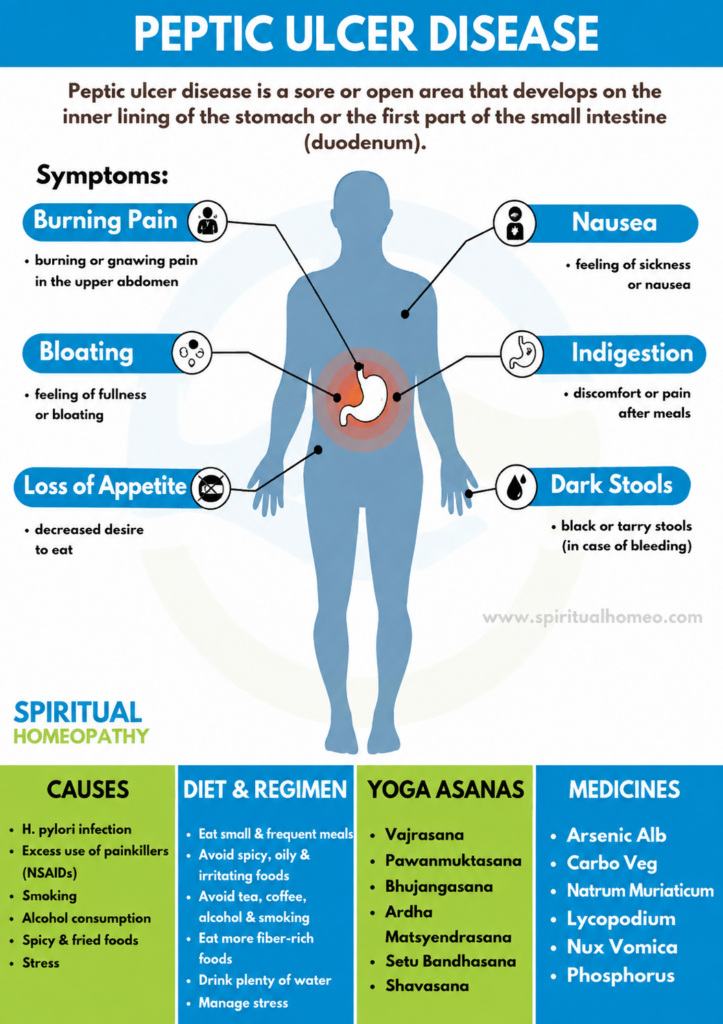
Peptic Ulcer Disease: Causes, Symptoms, Diagnosis, and Digestive Health
Peptic ulcer disease (PUD) develops when sores or open wounds form in the protective lining of the stomach or the first part of the small intestine. These ulcers can cause irritation and discomfort and may sometimes remain unnoticed until complications develop.
The two major causes of peptic ulcers are Helicobacter pylori (H. pylori) infection and regular or prolonged use of nonsteroidal anti-inflammatory drugs (NSAIDs) such as ibuprofen, aspirin, and naproxen. Other factors, including smoking, alcohol use, and certain health conditions, may increase the likelihood of developing or worsening an ulcer.
Typical symptoms can include burning or aching pain in the upper abdomen, indigestion, bloating, nausea, belching, early fullness, and reduced appetite. In some cases, an ulcer can result in gastrointestinal bleeding, which may appear as black, tarry stools or vomiting blood. Severe or sudden abdominal pain can also indicate a serious complication and requires urgent medical attention.
Diagnosis may involve a detailed medical history, physical examination, and tests for H. pylori. Depending on the symptoms and individual circumstances, a healthcare professional may recommend breath or stool testing, blood tests, or an upper gastrointestinal endoscopy to examine the stomach and duodenum.
At Spiritual Homeopathy Clinic, consultations focus on understanding individual digestive concerns, health history, lifestyle, dietary habits, and overall wellbeing. Our clinics in KPHB, Chandanagar, Dilsukhnagar, and Nallagandla provide consultation support, along with online options for patients across India and internationally.
Important: Persistent ulcer symptoms should be medically evaluated. When an ulcer is associated with H. pylori or NSAID use, appropriate evidence-based treatment is important to promote healing and reduce the risk of complications.
What Causes Peptic Ulcer Disease? Major Causes and Risk Factors to Know
Peptic ulcer disease develops when the protective lining of the stomach or duodenum becomes damaged, allowing an ulcer to form. Several factors can weaken this protective barrier or interfere with the stomach’s ability to heal. Identifying the underlying cause is important for effective treatment and preventing recurrence.
Common Causes and Risk Factors of Peptic Ulcer Disease:
1. H. pylori Infection:
Helicobacter pylori is one of the leading causes of peptic ulcers. This bacterium can inflame and weaken the stomach lining, making it more vulnerable to ulcer formation.
2. Long-Term NSAID Use:
Regular or prolonged use of painkillers such as ibuprofen, aspirin, naproxen, and other NSAIDs can reduce the stomach’s natural protective mechanisms and increase the risk of ulcers.
3. Smoking:
Tobacco use can interfere with the protective lining of the stomach and slow the healing of existing ulcers, increasing the possibility of complications.
4. Excessive Alcohol Consumption:
Frequent or heavy alcohol intake may irritate the stomach lining and can aggravate inflammation and ulcer-related symptoms.
5. Previous History of Ulcers:
People who have experienced peptic ulcers in the past may have a greater chance of developing them again, particularly when the underlying cause remains untreated.
6. Severe Physical Stress:
Serious illness, major injury, burns, or certain critical medical conditions can place significant stress on the body and may contribute to the development of stress-related ulcers.
7. Certain Medications:
Along with NSAIDs, some medicines may increase ulcer risk when combined with other risk factors. Discuss regular medication use with a healthcare professional.
8. Increasing Age:
The likelihood of peptic ulcer disease may increase with age, partly because older adults are more likely to use NSAIDs and may have other medical conditions that affect stomach health.
9. Family and Lifestyle Factors:
A history of H. pylori infection within a household, smoking, poor dietary habits, and other lifestyle factors may contribute to digestive problems, although they do not directly cause every peptic ulcer.
10. Underlying Medical Conditions:
Certain uncommon conditions, such as Zollinger-Ellison syndrome, can cause excessive production of stomach acid and lead to recurrent or multiple ulcers.
Understanding whether an ulcer is related to H. pylori, NSAID use, or another underlying factor is essential because treatment depends on the cause. Persistent upper-abdominal pain, vomiting, unexplained weight loss, black stools, or vomiting blood should be medically evaluated without delay.
Types of Peptic Ulcer Disease: Understanding Where Ulcers Develop
Peptic ulcers are open sores that form in areas exposed to stomach acid and digestive juices. They are mainly classified according to their location in the upper digestive tract. Although the symptoms can overlap, the location and underlying cause can influence diagnosis and treatment.
Common Types of Peptic Ulcers:
1. Gastric Ulcer:
A gastric ulcer develops on the inner lining of the stomach. It may cause upper abdominal pain, nausea, indigestion, bloating, or discomfort that changes in relation to meals.
2. Duodenal Ulcer:
This type occurs in the duodenum, the first section of the small intestine immediately beyond the stomach. Burning or aching abdominal pain may occur when the stomach is empty or between meals.
3. Esophageal Ulcer:
An esophageal ulcer forms in the lower part of the esophagus. It can sometimes be associated with severe acid reflux, certain infections, or medication-related irritation and may cause painful swallowing or chest discomfort.
4. H. pylori-Associated Ulcer:
An ulcer may develop as a result of Helicobacter pylori infection, which can damage the stomach’s protective lining and promote inflammation. H. pylori is a major cause of peptic ulcer disease.
5. NSAID-Related Ulcer:
Regular use of nonsteroidal anti-inflammatory drugs (NSAIDs), including ibuprofen, aspirin, or naproxen, can weaken the stomach’s protective defenses and contribute to ulcer formation.
6. Stress-Related Ulcer:
Severe physical stress associated with critical illness, major burns, serious injuries, or intensive medical conditions can sometimes lead to acute ulcers, particularly in hospitalized patients.
The symptoms and complications of peptic ulcers can vary from person to person. Bleeding, perforation, or blockage of the digestive tract are serious complications that require immediate medical care. Identifying the ulcer’s location and underlying cause helps healthcare professionals determine the appropriate management approach.
Peptic Ulcer Disease: Common Symptoms and Warning Signs You Should Know
Peptic ulcer disease can produce different symptoms depending on the location and severity of the ulcer. Some people may have mild digestive complaints, while others may experience significant pain or complications. Recognizing persistent symptoms can help in seeking timely medical evaluation.
Common Symptoms of Peptic Ulcer Disease:
1. Burning or Aching Abdominal Pain
Pain or a burning sensation in the upper abdomen is one of the most common symptoms. It may come and go and can sometimes occur when the stomach is empty.
2. Indigestion
Ulcers may cause recurring indigestion, discomfort after meals, belching, or a heavy sensation in the upper abdomen.
3. Bloating
A feeling of abdominal fullness or swelling may accompany ulcer-related digestive discomfort.
4. Nausea
Stomach irritation can lead to nausea, particularly around mealtimes. Some individuals may also experience occasional vomiting.
5. Feeling Full Quickly
You may feel satisfied after eating only a small quantity of food, which can sometimes be associated with stomach inflammation or ulcer symptoms.
6. Loss of Appetite
Persistent stomach discomfort or nausea may reduce the desire to eat and can affect normal eating patterns.
7. Unexplained Weight Loss
A noticeable reduction in body weight without intentionally changing diet or exercise habits should be medically assessed.
8. Pain Related to Meals
Some people notice that abdominal discomfort changes depending on when they eat. The pattern can vary between gastric and duodenal ulcers.
9. Gastrointestinal Bleeding
An ulcer that bleeds may cause black, tar-like stools or blood in the stool. This is an important warning sign that requires prompt medical attention.
10. Vomiting Blood
Blood in vomit, or vomit that appears dark and resembles coffee grounds, can indicate bleeding from an ulcer and requires urgent medical care.
Symptoms are not always reliable for identifying an ulcer, and some peptic ulcers cause no noticeable symptoms until a complication develops. Persistent abdominal pain, recurrent indigestion, unexplained weight loss, black stools, vomiting blood, or sudden severe abdominal pain should be evaluated by a healthcare professional promptly.
Diet and Regimen for Peptic Ulcer Disease: Foods and Habits to Support Stomach Health
Peptic ulcers can make the stomach more sensitive to certain foods, eating patterns, and lifestyle habits. While diet alone cannot heal every ulcer or eliminate its underlying cause, choosing well-tolerated foods and maintaining healthy routines can help reduce digestive discomfort and support the healing process.
Build meals around nutritious foods that are easy for you to tolerate:
There is no universal ulcer diet. However, some foods may increase discomfort in certain individuals:
Large meals may increase stomach discomfort and feelings of fullness. Eating smaller portions at regular intervals can be easier to tolerate than consuming very heavy meals.
Drink enough water throughout the day to maintain proper hydration. Choose safe, clean drinking water and limit beverages that consistently trigger stomach discomfort.
A balanced diet provides nutrients needed for general health and recovery. Include adequate protein, vegetables, fruits, whole grains, and other foods that you tolerate comfortably.
Smoking can interfere with ulcer healing and increase the risk of recurrence. Alcohol may irritate the stomach lining, so avoiding it is particularly important while an ulcer is active.
Medicines such as ibuprofen, naproxen, and aspirin can increase the risk of stomach ulcers or worsen an existing ulcer. Do not stop prescribed medicines without medical advice, but discuss regular painkiller use with your healthcare professional.
Try to follow a consistent eating schedule and avoid prolonged periods of overeating or skipping meals if these habits worsen your symptoms. Eat slowly and chew food thoroughly.
Stress does not directly cause most peptic ulcers, but it can make digestive symptoms harder to manage. Meditation, deep breathing, gentle yoga, walking, and adequate sleep can support overall wellbeing.
Dietary changes are supportive and cannot replace treatment for the cause of an ulcer. If H. pylori infection is responsible, appropriate eradication therapy is needed. If NSAIDs are contributing, a healthcare professional can advise on safer alternatives or adjustments.
Pro Tip: Keep a simple record of meals and symptoms. This can help you recognize personal food triggers without unnecessarily restricting your diet.
Important: If you develop vomiting blood, black or tarry stools, sudden severe abdominal pain, dizziness, or fainting, seek urgent medical attention. Dietary and lifestyle recommendations should be individualized according to your health condition and medical advice.
Yoga may be used as a gentle supportive practice for people dealing with peptic ulcer-related digestive discomfort. Relaxation-focused yoga can help reduce stress and promote general physical wellbeing. However, yoga does not heal the ulcer itself or treat causes such as H. pylori infection, so it should complement—not replace—medical care.
Vajrasana (Thunderbolt Pose):
This simple seated posture encourages an upright position and calm breathing. It can be practiced gently after meals if it feels comfortable and does not increase abdominal discomfort.
Sukhasana (Easy Pose):
A relaxed seated position that can be combined with slow breathing or meditation. It may help promote mental relaxation when digestive symptoms are associated with stress.
Balasana (Child’s Pose):
This restorative posture provides gentle relaxation for the back and body. Avoid it if bending forward creates abdominal pressure or increases pain.
Tadasana (Mountain Pose):
A simple standing posture that promotes balance, body awareness, and upright alignment without placing significant strain on the abdomen.
Marjaryasana-Bitilasana (Cat-Cow Pose):
Slow, controlled movement between these two positions encourages gentle spinal mobility. It should be performed comfortably without compressing or straining the abdominal area.
Shavasana (Corpse Pose):
A relaxation-focused posture that allows the body to rest while practicing slow, comfortable breathing. It can be useful for incorporating relaxation into a daily routine.
Avoid intense abdominal exercises, deep twists, strenuous backbends, or poses that cause abdominal pressure or pain, particularly during an active ulcer flare-up. If you experience severe abdominal pain, weakness, vomiting, or gastrointestinal bleeding, stop exercising and seek medical attention.
Yoga is a supportive wellness practice, not a treatment for peptic ulcer disease. Proper evaluation and treatment of the underlying cause—such as H. pylori infection or NSAID use—are essential for ulcer management.
Homeopathic Treatment for Peptic Ulcer Disease: An Individualized Digestive Wellness Approach
Peptic ulcer disease involves sores developing in the lining of the stomach or duodenum. Common underlying causes include H. pylori infection and prolonged use of NSAID painkillers. Symptoms may include upper abdominal pain, burning, indigestion, nausea, bloating, and reduced appetite.
Homeopathy uses an individualized consultation process in which the practitioner considers the person’s complete symptom pattern, health history, food habits, lifestyle, and general wellbeing. This broader assessment can help provide personalized support for digestive wellness.
However, homeopathy has not been proven to heal peptic ulcers or eradicate H. pylori infection. Confirmed ulcers require appropriate medical assessment and evidence-based treatment, particularly when H. pylori or NSAID use is involved.
Personalized Evaluation:
A practitioner may review the nature of abdominal discomfort, appetite, digestion, bowel habits, food tolerance, previous health concerns, and current medications.
Digestive Wellness Support:
Individualized lifestyle and dietary guidance may be provided to help maintain comfortable eating patterns and general digestive wellbeing.
Lifestyle Considerations:
Meal schedules, sleep, physical activity, smoking, alcohol consumption, and stress levels can be discussed as part of a comprehensive wellness approach.
Whole-Person Care:
The consultation considers the individual’s overall health rather than concentrating solely on ulcer-related symptoms.
Homeopathy should be viewed as complementary wellness support rather than a replacement for ulcer treatment. If an ulcer is caused by H. pylori, appropriate eradication therapy is important. When NSAIDs contribute to ulcer formation, a healthcare professional can review medication use and recommend suitable alternatives where appropriate.
Follow-up evaluation may also be necessary to ensure that the ulcer has healed and that the underlying cause has been addressed.
Healthy habits may help support digestive comfort:
If you experience recurring upper-abdominal pain, indigestion, nausea, loss of appetite, or unexplained weight loss, seek appropriate medical evaluation.
Spiritual Homeopathy Clinic offers personalized consultations through its branches in KPHB, Chandanagar, Dilsukhnagar, and Nallagandla, along with online consultations for patients across India and internationally.
Important: Vomiting blood, black or tarry stools, fainting, or sudden severe abdominal pain can indicate an ulcer complication and require urgent medical attention.
Peptic ulcer symptoms can sometimes resemble ordinary indigestion, but ongoing or worsening discomfort may indicate an ulcer that needs proper evaluation. Medical assessment is especially important because untreated ulcers can lead to bleeding, perforation, or blockage of the digestive tract.
If an ulcer is suspected, a healthcare professional may recommend testing for H. pylori, review your use of NSAID painkillers, or suggest further investigations such as an upper gastrointestinal endoscopy depending on your symptoms.
At Spiritual Homeopathy, our practitioners offer individualized consultations by considering your symptoms, medical history, dietary habits, lifestyle, and overall wellbeing. Consultations are available at our Hyderabad clinics in Kukatpally (KPHB), Chandanagar, Dilsukhnagar, and Nallagandla, as well as online consultations across India and in more than 100 countries worldwide.
Important: Homeopathy should not replace medical evaluation or evidence-based treatment for an active peptic ulcer. If you have signs of gastrointestinal bleeding or sudden severe abdominal pain, seek urgent medical care.
To schedule a consultation, call 9069 176 176.
The main cause of peptic ulcer disease is an infection by the bacterium Helicobacter pylori (H. pylori) or the regular, long-term use of nonsteroidal anti-inflammatory drugs (NSAIDs) like ibuprofen and aspirin.
Peptic ulcers are open sores that develop on the inner lining of the stomach or the upper part of the small intestine (the duodenum).
If you have a stomach ulcer, you should avoid foods and drinks that irritate the stomach lining or increase acid production.
Doctors diagnose peptic ulcers through a physical exam, medical history review, and specific tests like an upper endoscopy or checks for H. pylori bacteria.
Plain, room-temperature water is the safest and best drink to soothe an irritated stomach and dilute stomach acid.
Stomach ulcers heal fastest when you treat the root cause with prescription medications like proton pump inhibitors (PPIs) to lower acid and antibiotics to clear bacterial infections.