
WhatsAppCall

Thyroid

Thyroid Disorders Explained: Symptoms, Causes, Diagnosis, and Treatment Options

Thyroid

Effective Homeopathic Treatment for Thyroid?

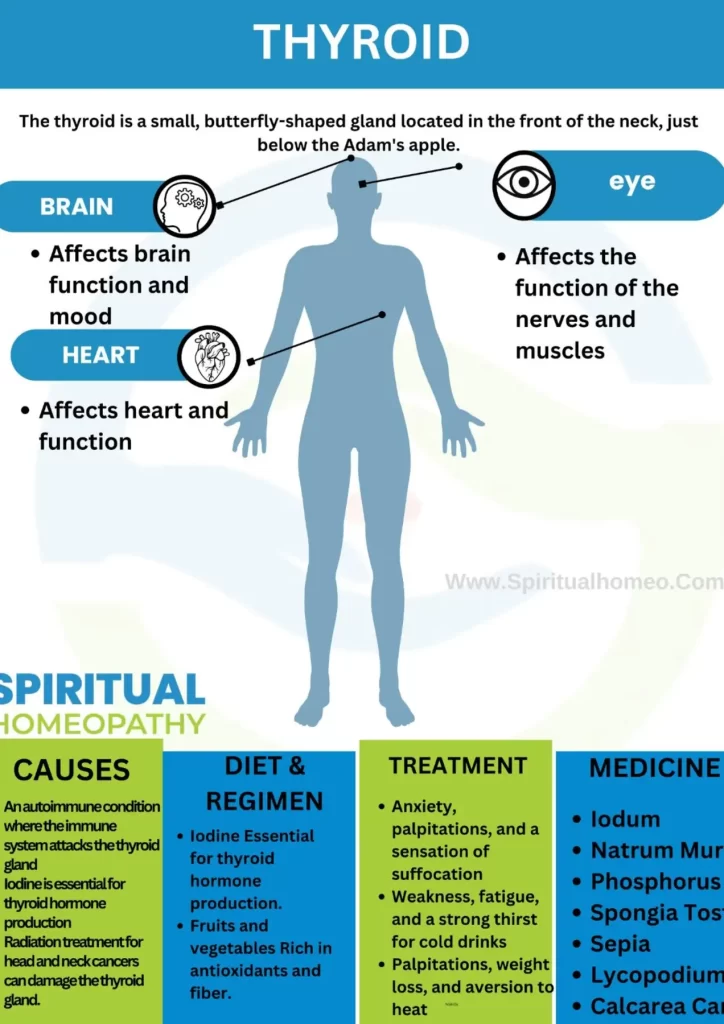
The thyroid is a small, butterfly-shaped gland located in the neck that plays an important role in maintaining the body’s overall health. It produces essential thyroid hormones that regulate metabolism, energy levels, growth, body temperature, and various vital functions. When the thyroid gland does not function properly, it can lead to conditions such as hypothyroidism, hyperthyroidism, and other thyroid-related disorders. Symptoms may include fatigue, weight changes, mood fluctuations, irregular periods, sleep problems, and changes in energy levels. Proper evaluation and timely care can help manage thyroid imbalances and support better hormonal health.

At Spiritual Homeopathy, we believe in addressing the root cause of thyroid concerns rather than simply managing symptoms. Our experienced homeopathic doctors carefully evaluate each patient’s symptoms, medical history, lifestyle habits, stress levels, diet, hormonal factors, and overall health before preparing an individualized treatment plan. Our holistic approach focuses on providing natural thyroid treatment, supporting hormonal balance, improving overall well-being, and offering long-term support for thyroid health through safe and personalized homeopathic care. We specialize in homeopathic treatment for thyroid disorders, hypothyroidism management, hyperthyroidism support, and hormonal health concerns.

We provide personalized homeopathic treatment for thyroid disorders in Hyderabad to patients of all age groups through our clinics in Hyderabad, along with online homeopathy consultations for patients across India and in more than 100 countries worldwide. If you are looking for the best homeopathy doctor for thyroid problems, natural thyroid treatment, hormonal balance support, or long-term wellness, Spiritual Homeopathy is committed to delivering expert and patient-centered care wherever you are.
thyroid

Everything You Need to Know

Overview

The thyroid gland, located at the front of the neck below the Adam’s apple, plays a vital role in regulating metabolism, growth, and development by producing thyroid hormones (T4 and T3). These hormones influence many bodily functions, including energy levels, heart rate, and temperature regulation. Disorders of the thyroid, such as hyperthyroidism (overproduction of hormones) and hypothyroidism (underproduction of hormones), can significantly affect overall health and may lead to symptoms like fatigue, weight changes, mood fluctuations, and altered metabolic activity.

Evaluation and management of thyroid-related concerns require proper clinical assessment. Consultations for thyroid disorders are available at Spiritual Homeopathy Clinic across multiple branches in Hyderabad, as well as through online and international consultation options for patient convenience.

Causes of Hypothyroidism (Underactive Thyroid)

  1. Hashimoto’s Thyroiditis:
    An autoimmune condition in which the immune system attacks the thyroid gland, leading to inflammation and reduced hormone production.

  2. Iodine Deficiency:
    Iodine is essential for thyroid hormone synthesis. A deficiency may result in decreased thyroid function and hypothyroidism.

  3. Thyroid Surgery:
    Partial or complete removal of the thyroid gland can lead to hypothyroidism due to reduced hormone production capacity.

  4. Radiation Therapy:
    Radiation treatment to the head or neck region may damage thyroid tissue, affecting hormone production.

  5. Certain Medications:
    Some medications can interfere with thyroid hormone production and contribute to hypothyroidism..


Causes of Hyperthyroidism (Overactive Thyroid)

  1. Graves’ Disease:
    An autoimmune disorder in which the immune system stimulates the thyroid to produce excessive hormones.

  2. Thyroiditis:
    Inflammation of the thyroid gland that may cause a temporary increase in hormone release. This can be associated with autoimmune conditions, infections, or postpartum changes .


Causes of Goiter (Enlarged Thyroid)

  1. Iodine Deficiency:
    Insufficient iodine intake can cause the thyroid gland to enlarge as it attempts to compensate for reduced hormone production, resulting in goiter formation.

Types of Thyroid Disorders

Hypothyroidism (Underactive Thyroid)
A condition where the thyroid gland does not produce enough thyroid hormones (T3 and T4), leading to slowed metabolic activity and symptoms such as fatigue, weight gain, and low mood.

Causes:

  • Hashimoto’s thyroiditis

  • Iodine deficiency

  • Thyroid surgery

  • Radiation therapy

  • Certain medications that affect thyroid function


Hyperthyroidism (Overactive Thyroid)
Occurs when the thyroid gland produces excess thyroid hormones, resulting in increased metabolic activity. Common symptoms include weight loss, palpitations, heat intolerance, and anxiety.

Causes:

  • Graves’ disease

  • Thyroiditis (including postpartum thyroiditis)

  • Thyroid nodules


Goiter
A visible enlargement of the thyroid gland, often related to iodine deficiency or underlying thyroid dysfunction. Goiters may be associated with either hypothyroidism or hyperthyroidism.

Causes:

  • Iodine deficiency

  • Hashimoto’s thyroiditis

  • Graves’ disease


Thyroid Nodules
Solid or fluid-filled lumps within the thyroid gland. Most nodules are benign, though some may affect hormone production or require further evaluation.

Causes:

  • Benign growths

  • Thyroid cancer (in rare cases)


Thyroid Cancer
A relatively uncommon condition where malignant cells develop in the thyroid gland. Early evaluation supports timely management and monitoring.

Types:

  • Papillary thyroid cancer

  • Follicular thyroid cancer

  • Medullary thyroid cancer

  • Anaplastic thyroid cancer (rare and aggressive)


Thyroiditis
Inflammation of the thyroid gland that may cause temporary hyperthyroidism, hypothyroidism, or both. Neck discomfort or swelling may be present.

Types:

  • Hashimoto’s thyroiditis (autoimmune)

  • Subacute thyroiditis (often post-viral)

  • Postpartum thyroiditis


Congenital Hypothyroidism
A condition present at birth in which the thyroid gland is underactive. Early detection is important to support normal growth and development.


Signs and Symptoms of Thyroid Disorders

Thyroid disorders can lead to a range of symptoms, depending on whether the thyroid is underactive (hypothyroidism), overactive (hyperthyroidism), or affected by conditions such as thyroiditis, goiter, or thyroid nodules. Below are common symptoms associated with various thyroid issues.

Symptoms of Hypothyroidism (Underactive Thyroid):

  • Fatigue and sluggishness

  • Weight gain

  • Cold intolerance

  • Dry skin and hair

  • Hair loss

  • Constipation

  • Low mood or depressive symptoms

  • Memory and concentration difficulties

  • Muscle weakness and joint pain

  • Bradycardia (slow heart rate)

  • Hoarseness of voice

  • Puffy face

  • Elevated blood cholesterol levels

  • Irregular or heavy menstrual periods

The severity and combination of symptoms can vary between individuals and often develop gradually over time. If these symptoms are persistent, progressive, or affecting daily activities, medical consultation is advised for proper evaluation and guidance.

Diet and Regimen for Thyroid Health

Maintaining a healthy diet and daily regimen is essential for supporting thyroid function, whether you have hypothyroidism (underactive thyroid) or hyperthyroidism (overactive thyroid). A balanced diet and lifestyle measures can help manage symptoms, support overall thyroid health, and complement ongoing care.

Diet for Thyroid Health

1. Iodine-Rich Foods
Iodine is important for thyroid hormone production. Including iodine-rich foods may support thyroid function, particularly in individuals with dietary deficiency.

  • Seaweed (kelp, nori, etc.)

  • Fish (salmon, tuna, cod)

  • Dairy products (milk, yogurt, cheese)

  • Eggs

  • Iodized salt

2. Selenium-Rich Foods
Selenium supports thyroid hormone metabolism and helps protect thyroid tissue.

  • Brazil nuts

  • Sunflower seeds

  • Fish (tuna, sardines, salmon)

  • Eggs

  • Whole grains (brown rice, barley)

3. Zinc-Rich Foods
Zinc contributes to thyroid function and immune support.

  • Pumpkin seeds

  • Shellfish (oysters, crab)

  • Red meat

  • Poultry

  • Legumes (chickpeas, lentils)

4. Antioxidant-Rich Foods
Antioxidants help reduce inflammation and support overall well-being.

  • Berries (blueberries, strawberries, raspberries)

  • Leafy greens (spinach, kale)

  • Tomatoes

  • Carrots

  • Nuts and seeds

5. Healthy Fats
Healthy fats support hormone balance and may help reduce inflammation.

  • Avocados

  • Olive oil

  • Coconut oil

  • Fatty fish (salmon, mackerel)

6. Vitamin D
Vitamin D supports immune health and may be relevant in autoimmune thyroid conditions.

  • Fatty fish (salmon, sardines)

  • Egg yolks

  • Fortified foods

  • Safe sunlight exposure

Foods to Limit or Avoid:

  • Goitrogens (in excess): Present in some cruciferous vegetables and soy products; cooking can reduce their effect.

  • Processed foods: Often high in sodium and unhealthy fats.

  • Excess caffeine and alcohol: May interfere with hormonal balance.


Regimen for Thyroid Health

1. Consistent Medical Guidance
Individuals with thyroid disorders should follow medical advice and attend regular reviews to ensure appropriate monitoring and adjustment of care.

2. Regular Exercise
Physical activity helps manage weight, supports metabolism, and improves mood.

  • Moderate activities such as walking, swimming, and yoga are commonly well tolerated.

  • Strength and cardiovascular exercises can be included as appropriate.

3. Stress Management
Chronic stress may influence thyroid function. Techniques such as deep breathing, meditation, yoga, or time outdoors can be supportive.

4. Adequate Sleep
Aim for 7–9 hours of quality sleep to support hormonal balance and recovery.

5. Regular Checkups
Periodic evaluations and laboratory assessments help monitor thyroid function and overall health.

6. Hydration
Adequate fluid intake supports digestion and skin health and may help ease symptoms such as constipation or dryness.

Yoga Asanas for Thyroid Health

Yoga can be beneficial as a supportive practice for individuals managing thyroid disorders. It may help reduce stress, encourage relaxation, and support overall well-being. Certain yoga poses can gently stimulate the neck region and promote circulation, which may be supportive for thyroid health when practiced correctly and consistently. The following yoga asanas are commonly recommended as part of a balanced lifestyle.


1. Sarvangasana (Shoulder Stand)

Benefits:
Helps apply gentle pressure to the neck region and may support circulation around the thyroid area. It is commonly practiced to support hormonal balance and overall vitality.

How to do it:

  • Lie on your back and lift your legs to a 90-degree angle.

  • Slowly raise your hips and legs, supporting your lower back with your hands.

  • Keep the body aligned, with elbows and arms providing support.

  • Hold for 20–30 seconds, then release slowly.


2. Halasana (Plow Pose)

Benefits:
Provides a stretch to the neck, throat, and shoulders, which may help support thyroid function and relieve muscular tension.

How to do it:

  • Lie on your back with legs extended and arms at your sides.

  • Lift your legs over your head, aiming to touch the floor with your feet if comfortable.

  • Support your lower back with your hands.

  • Hold for 20–30 seconds, then release gently.


3. Matsyasana (Fish Pose)

Benefits:
Opens the chest and stretches the neck and throat area, supporting flexibility and relaxation.

How to do it:

  • Lie on your back with legs extended.

  • Press elbows into the floor and lift your chest upward.

  • Gently arch your back, allowing the crown of the head to rest lightly on the floor.

  • Hold for 20–30 seconds, then release.


4. Bhujangasana (Cobra Pose)

Benefits:
A gentle backbend that supports spinal flexibility and circulation near the neck and chest region.

How to do it:

  • Lie on your stomach with hands under shoulders.

  • Press into the floor and lift your chest, keeping elbows slightly bent.

  • Hold for 15–20 seconds, then release slowly.


5. Uttanasana (Standing Forward Bend)

Benefits:
Encourages relaxation of the nervous system and may help reduce stress-related strain.

How to do it:

  • Stand with feet hip-width apart.

  • Fold forward from the hips, allowing the head and neck to relax.

  • Keep knees slightly bent if needed.

  • Hold for 20–30 seconds, then return slowly.


6. Setu Bandhasana (Bridge Pose)

Benefits:
Stretches the neck, chest, and spine and may support circulation in the thyroid region.

How to do it:

  • Lie on your back with knees bent and feet flat on the floor.

  • Press feet into the ground and lift hips upward.

  • Hold for 20–30 seconds, then release gently.


7. Kapalbhati (Breath Practice)

Benefits:
A breathing practice that supports digestion, metabolic activity, and overall vitality when done under guidance.

How to do it:

  • Sit comfortably with the spine straight.

  • Perform gentle, rhythmic exhalations through the nose while engaging the abdomen.

  • Practice for 1–3 minutes as tolerated.


8. Trikonasana (Triangle Pose)

Benefits:
Promotes stretching of the neck and spine and supports balance and relaxation.

How to do it:

  • Stand with legs wide apart and arms extended.

  • Turn one foot outward and bend sideways, bringing one hand toward the leg.

  • Keep the neck comfortable and relaxed.

  • Hold for 20–30 seconds on each side.

🌿 Why Choose Homeopathy?

Homeopathy is a gentle, natural system of healing that focuses on addressing the root cause of illness rather than only the symptoms. It works in harmony with the body’s innate ability to maintain balance and supports overall wellness. Homeopathy is suitable for all ages and is tailored to each individual, offering a holistic approach that can complement long-term health management.

Whether you’re managing a chronic condition or seeking relief from acute symptoms, homeopathy provides a personalized path to support your well-being. Consultations are available at our Hyderabad branches—including Kukatpally, Chandanagar, Dilsukhnagar, and Nallagandla—as well as online and international consultations.


🌟 Spiritual Homeopathy: Supporting Your Natural Health

At Spiritual Homeopathy Clinic, we aim to help you achieve overall wellness—physically, emotionally, and spiritually. Our approach emphasizes identifying and addressing underlying imbalances that contribute to illness, rather than focusing solely on symptoms.

We provide individualized care using classical homeopathy principles, adapted to modern clinical understanding.


💫 Key Features of Our Care

  • Root-Cause Focus: We go beyond surface symptoms to support deeper, long-term wellness.

  • Personalized Treatment: Every plan is customized based on your body, lifestyle, and emotional health.

  • Experienced Team: Our qualified homeopathy doctors in Hyderabad provide in-clinic, online, and international consultations.

  • Safe & Gentle: Treatments are non-toxic, non-addictive, and generally well-tolerated under professional guidance.

  • Holistic Approach: Mind-body-spirit connections are considered in every treatment plan.


🔍 Our Treatment Process

🩺 1. Comprehensive Consultation
We take the time to understand your health history, lifestyle, emotional state, and current symptoms to develop an individualized treatment plan.

💊 2. Holistic Remedies
Homeopathic remedies are selected to support your specific condition—whether acute or chronic—while addressing contributing factors in a safe and gentle manner.

🔄 3. Continuous Support & Follow-Up
Regular follow-ups allow us to monitor progress, make adjustments, and provide guidance to support long-term health.


❤️ Our Commitment

At Spiritual Homeopathy Clinic, your health and well-being are our priority. Our team provides attentive, professional care to support recovery, symptom management, and overall vitality.


When to Consult

You should consult a healthcare professional if thyroid-related symptoms become noticeable, persistent, or begin to affect daily activities, energy levels, weight, or emotional well-being. Early evaluation helps identify thyroid imbalance and supports timely, appropriate care.

Seek consultation if you experience:

  • Unexplained weight gain or weight loss

  • Persistent fatigue, weakness, or low energy levels

  • Sensitivity to cold or heat

  • Hair fall, dry skin, or brittle nails

  • Irregular menstrual cycles or fertility concerns

  • Mood changes such as anxiety, irritability, or low mood

  • Swelling in the neck or a visible lump (goiter)

  • Changes in heart rate, such as palpitations or slow heartbeat

  • Symptoms not improving with lifestyle or dietary measures

Prompt medical evaluation is advised if symptoms worsen, interfere with daily life, or are associated with significant physical or emotional changes.

At Spiritual Homeopathy Clinic, consultations are available at multiple branches in Hyderabad, including Kukatpally, Chandanagar, Dilsukhnagar, and Nallagandla. Online and international consultations are also available for individuals who cannot visit in person. A professional assessment supports an individualized care approach based on symptoms, test findings, and overall health status.

For appointments or guidance, contact 9069 176 176.

Frequently Asked Questions – Homeopathy Treatment For Thyroid

When your thyroid gland malfunctions, it disrupts your metabolism, causing wide-ranging effects across your body. The exact symptoms depend on whether the gland produces too many hormones (hyperthyroidism) or too few (hypothyroidism). 

The thyroid is a small, butterfly-shaped gland located at the base of the neck. It produces hormones that control metabolism, heart rate, and body temperature. In females, thyroid health is closely linked to reproductive hormones, making women significantly more likely to develop thyroid disorders than men. 

Thyroid diseases are primarily caused by autoimmune disorders, iodine imbalances, and thyroid inflammation (thyroiditis). Other contributing factors include genetics, certain medications, pituitary gland malfunctions, or physical damage to the gland from surgery or radiation. 

You can screen your thyroid at home using the neck check "water test" and symptom tracking. For accurate hormone levels, use at-home blood collection kits or visit a local diagnostic lab

Thyroid problems can develop at any age, from newborns to older adults. However, they are most commonly diagnosed in women between the ages of 30 and 60. An underactive thyroid (hypothyroidism) sees a significant rise in prevalence after age 60, while an overactive thyroid (hyperthyroidism) typically emerges earlier, between ages 20 and 40. 

Thyroid issues start when the butterfly-shaped gland in your neck produces too much hormone (hyperthyroidism) or too little (hypothyroidism). This usually begins due to autoimmune diseases (like Hashimoto's or Graves'), iodine deficiency, or pituitary gland problems. Issues can also be triggered by severe stress, childbirth, or radiation.