


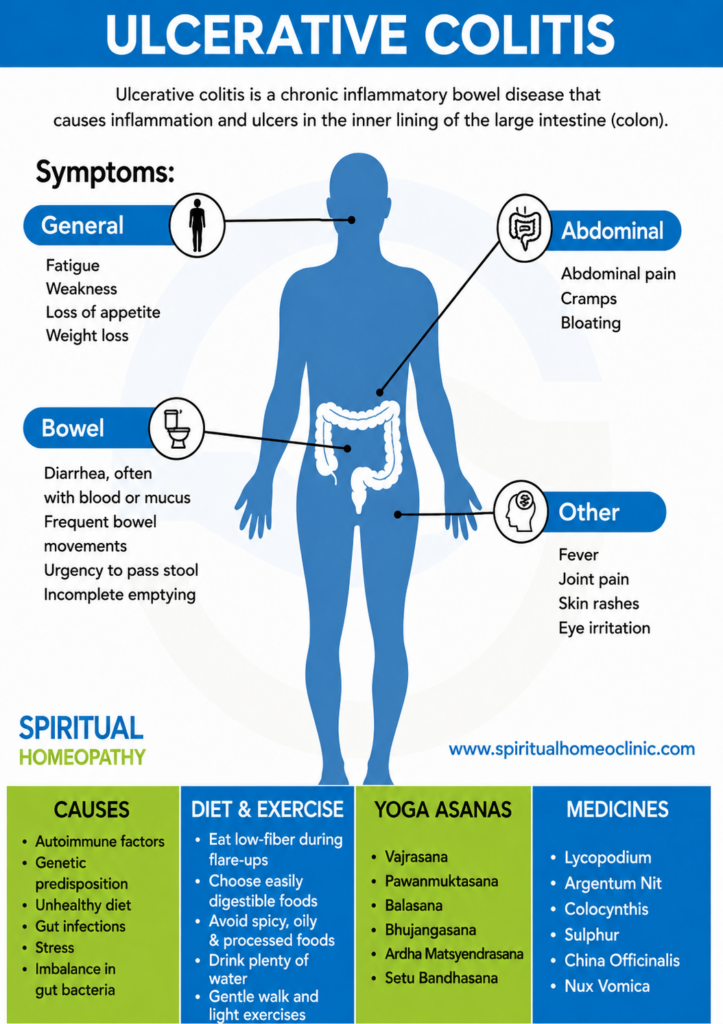
Ulcerative colitis is a chronic inflammatory bowel disease (IBD) that causes inflammation and sores (ulcers) in the inner lining of the large intestine and rectum. It may lead to symptoms such as frequent diarrhea, blood or mucus in the stool, abdominal cramps, urgency to pass stools, fatigue, reduced appetite, and unintended weight loss. Symptoms can vary in intensity and may occur in periods of flare-ups and remission. Persistent or recurring symptoms require proper medical evaluation and ongoing management.
At Spiritual Homeopathy, we take a personalized approach to understanding digestive concerns. During a consultation, our experienced homeopathic doctors consider the individual’s symptoms, medical history, bowel habits, dietary patterns, lifestyle, stress levels, and overall health. This helps create an individualized care plan suited to the person’s needs. Homeopathy may be considered as a complementary approach, but it should not replace evidence-based medical treatment for ulcerative colitis, particularly during active flare-ups.
We provide personalized homeopathic consultations for ulcerative colitis in Hyderabad through our clinics, along with online homeopathy consultations for patients across India and in more than 100 countries worldwide. If you are seeking guidance for recurring bowel symptoms, digestive discomfort, or long-term inflammatory bowel concerns, Spiritual Homeopathy offers patient-centered consultation and supportive care alongside appropriate medical evaluation.
Ulcerative Colitis: Understanding Its Causes, Symptoms, and Digestive Health
Ulcerative colitis is a long-term inflammatory bowel disease (IBD) that primarily affects the lining of the colon and rectum. In this condition, inflammation can result in small sores or ulcers developing along the intestinal lining. The disease may remain mild in some people, while others can experience more troublesome symptoms during periods known as flare-ups.
Common symptoms include frequent loose stools, blood or mucus in the stool, abdominal cramps, an urgent need to pass stool, rectal discomfort, fatigue, reduced appetite, and unintended weight loss. Some individuals may also experience symptoms outside the digestive system, such as joint discomfort, skin changes, or eye irritation. The pattern and severity of symptoms can vary considerably from person to person.
The exact cause of ulcerative colitis is not completely understood. It is believed to involve an abnormal immune response, genetic susceptibility, and environmental factors. Diet and lifestyle may influence how a person feels, although they are not considered the sole cause of the disease. Identifying individual triggers and following an appropriate medical management plan can be important for controlling symptoms and reducing complications.
Ulcerative colitis is different from occasional digestive upset because it involves ongoing inflammation of the bowel. Persistent diarrhea, rectal bleeding, unexplained weight loss, severe abdominal pain, fever, or significant changes in bowel habits should be medically evaluated. Proper diagnosis may involve medical history, blood and stool tests, imaging, and procedures such as colonoscopy when appropriate.
Spiritual Homeopathy Clinic offers personalized consultation support through its branches in Hyderabad, along with online consultation options for patients across India and internationally. Homeopathy should be considered complementary to appropriate medical care and should not replace prescribed treatment for ulcerative colitis.
Why Does Ulcerative Colitis Develop? Key Factors Linked to the Condition
Ulcerative colitis does not have one single known cause. It is a chronic inflammatory bowel disease (IBD) in which the immune system becomes involved in inflammation of the colon and rectum. Researchers believe that a combination of genetic, immune, environmental, and other factors may contribute to its development.
1. Abnormal Immune Response:
The immune system may mistakenly react against cells or substances in the digestive tract, resulting in ongoing inflammation of the intestinal lining.
2. Genetic Susceptibility:
Having a close family member with ulcerative colitis or another inflammatory bowel disease can increase the likelihood of developing the condition.
3. Changes in Gut Microbiome:
Alterations in the balance of microorganisms living in the intestine may influence intestinal inflammation and immune activity.
4. Environmental Influences:
Certain environmental exposures and lifestyle factors may play a role in triggering or influencing inflammatory bowel conditions in genetically susceptible individuals.
5. Intestinal Barrier Changes:
Disruption of the protective intestinal barrier may allow greater interaction between the immune system and substances present inside the gut, potentially contributing to inflammation.
6. Previous Gastrointestinal Infections:
Some infections or changes following gastrointestinal illness may influence the intestinal immune response, although infection itself is not considered a direct cause of ulcerative colitis.
7. Dietary Factors:
Diet is not considered the sole cause of ulcerative colitis. However, particular foods may worsen symptoms for some individuals, especially during active disease or flare-ups.
8. Stress and Emotional Factors:
Stress does not directly cause ulcerative colitis, but significant stress may influence digestive symptoms and can sometimes make existing symptoms more difficult to manage.
9. Smoking-Related Factors:
The relationship between smoking and ulcerative colitis is complex and differs from person to person. Smoking should not be started or continued as a method of managing the condition because of its serious health risks.
10. Other Immune and Environmental Factors:
Researchers continue to study how immune regulation, genetics, gut bacteria, and environmental influences interact in the development of ulcerative colitis.
Understanding these contributing factors can help healthcare professionals assess symptoms and develop an appropriate management plan. Ulcerative colitis requires proper medical diagnosis and monitoring, particularly when symptoms such as persistent diarrhea, rectal bleeding, severe abdominal pain, fever, or unexplained weight loss are present.
Types of Ulcerative Colitis: Understanding How the Condition Can Differ
Ulcerative colitis is categorized mainly according to where inflammation occurs in the large intestine. The extent of bowel involvement can influence the symptoms, severity, and medical management required.
Inflammation is limited to the rectum, the lowest part of the large intestine. Symptoms may include rectal bleeding, urgency, and discomfort while passing stool.
This form affects the rectum and sigmoid colon. People may experience bloody diarrhea, abdominal cramps, urgency, and a frequent need to pass stools.
Inflammation extends from the rectum through the left side of the colon. Common symptoms can include diarrhea with blood, abdominal pain, fatigue, and reduced appetite.
Also called pancolitis when the entire colon is involved, this is a more widespread form of ulcerative colitis. Symptoms may include frequent diarrhea, significant abdominal discomfort, fatigue, and unintended weight loss.
This refers to a severe flare of ulcerative colitis that can cause frequent bloody stools, intense abdominal symptoms, fever, rapid heart rate, dehydration, or marked weakness. It requires prompt medical assessment and treatment.
The extent and severity of ulcerative colitis can change over time, and symptoms may fluctuate between active periods (flare-ups) and remission. Identifying the affected portion of the colon through appropriate medical evaluation helps healthcare professionals determine suitable treatment and monitoring.
Recognizing Ulcerative Colitis: Common Symptoms You Should Pay Attention To
Ulcerative colitis can affect people differently depending on how much of the colon is inflamed and how active the condition is. Symptoms may develop gradually or become more noticeable during a flare-up. Recognizing persistent changes in bowel habits and other warning signs can help with timely medical assessment.
Common Symptoms of Ulcerative Colitis:
1. Frequent Diarrhea
Repeated loose or watery bowel movements are among the most common symptoms, particularly during periods of active inflammation.
2. Blood in the Stool
Inflammation and ulcers in the colon can cause bright red blood to appear with or mixed into the stool.
3. Mucus in Stool
Some people may notice mucus along with bowel movements because of irritation and inflammation of the intestinal lining.
4. Abdominal Cramps
Inflammation in the colon may cause cramping, aching, or discomfort in the lower or middle abdomen.
5. Urgent Need to Pass Stool
A person may experience a sudden and difficult-to-delay urge to use the bathroom, even when only a small amount of stool is passed.
6. Rectal Discomfort
Inflammation involving the rectum can cause soreness, pressure, or an uncomfortable sensation around the rectal area.
7. Tenesmus
Some individuals may feel that they still need to pass stool even after having a bowel movement. This persistent sensation is known as tenesmus.
8. Fatigue and Weakness
Ongoing inflammation, frequent bowel movements, blood loss, or reduced nutrient intake can contribute to tiredness and low energy.
9. Reduced Appetite and Weight Loss
Active symptoms may make eating uncomfortable or reduce appetite, potentially resulting in unintended weight loss over time.
10. Fever and General Unwellness
More active or severe inflammation may be accompanied by fever, weakness, or a general feeling of being unwell.
Symptoms may come and go, with periods of flare-ups and remission. However, persistent diarrhea, rectal bleeding, severe abdominal pain, fever, dehydration, or unexplained weight loss should not be ignored. Ulcerative colitis requires proper medical evaluation and ongoing management, particularly when symptoms become severe or suddenly worsen.
Diet and Daily Routine for Ulcerative Colitis: Supporting Gut Health During Flare-Ups and Remission
There is no single diet that works for everyone with ulcerative colitis. Food choices may need to change depending on whether symptoms are active or well controlled. The goal is to maintain adequate nutrition, support energy levels, and identify foods that personally worsen digestive symptoms without unnecessarily restricting the diet.
During periods when symptoms are manageable, aim for a varied and balanced diet that may include:
Fiber needs can vary with disease activity. During a flare-up, some people may find that raw vegetables, fruit skins, seeds, nuts, and high-fiber foods increase bowel discomfort. Softer, cooked, or lower-fiber choices may be easier to tolerate temporarily.
When symptoms are controlled, fiber can often be increased gradually according to individual tolerance and professional advice.
Frequent diarrhea can result in significant fluid and electrolyte loss. Drink fluids regularly throughout the day. During episodes of increased diarrhea, a healthcare professional may recommend an appropriate oral rehydration solution to help replace lost fluids and electrolytes.
Ulcerative colitis may increase nutritional needs, particularly during active inflammation. Include adequate protein and energy through foods that are well tolerated. If maintaining weight becomes difficult, a dietitian can help create a suitable nutritional plan.
Food triggers are highly individual. Depending on personal tolerance, symptoms may become worse after consuming:
Rather than eliminating foods unnecessarily, track your symptoms and discuss recurring patterns with a healthcare professional.
Large meals may be difficult to tolerate during periods of digestive discomfort. Eating smaller portions at regular intervals can make it easier to meet nutritional needs while reducing the burden on the digestive system.
When symptoms are active, introducing several unfamiliar foods at once can make it difficult to determine what is causing additional discomfort. Add foods gradually and observe how your body responds.
Ulcerative colitis is an inflammatory condition, and restrictive diets should not be used as a substitute for medical treatment. Eliminating numerous food groups without professional guidance may increase the risk of nutritional deficiencies.
A simple diary can help connect meals, bowel movements, abdominal symptoms, and flare patterns. This information may be useful when discussing dietary adjustments with your doctor or dietitian.
Adequate sleep, gentle physical activity when tolerated, stress management, and regular meals can contribute to overall wellbeing. During significant flare-ups, activity levels should be adjusted according to symptoms and medical advice.
Pro Tip: The best diet for ulcerative colitis is individualized. What feels comfortable during remission may not be suitable during a flare-up. Avoid stopping prescribed ulcerative colitis medication or relying solely on dietary changes without discussing it with your healthcare professional.
Important: Persistent diarrhea, significant rectal bleeding, dehydration, severe abdominal pain, fever, or rapid worsening of symptoms requires prompt medical attention.
Yoga for Ulcerative Colitis: Gentle Practices for Relaxation and Overall Well-Being
Yoga may be included as a supportive lifestyle practice for people living with ulcerative colitis. Gentle movements, breathing exercises, and relaxation techniques may help manage stress and improve general wellbeing. However, yoga does not treat the intestinal inflammation itself, and exercise should be adapted according to symptoms and disease activity.
Balasana (Child’s Pose):
A gentle resting posture that encourages relaxation and slow breathing. It may be comfortable during periods of mild abdominal tension, provided it does not increase discomfort.
Marjaryasana-Bitilasana (Cat-Cow Pose):
This slow movement between two positions gently mobilizes the spine and torso. Coordinating the movement with breathing can promote relaxation and body awareness.
Sukhasana (Easy Pose):
A simple seated position that can be combined with calm, controlled breathing. It may be useful for meditation and stress-management practices.
Vajrasana (Thunderbolt Pose):
This upright seated posture encourages a relaxed position and mindful breathing. It can be practiced for short periods when comfortable.
Supta Matsyendrasana (Reclining Twist):
A gentle reclining twist that provides comfortable movement through the torso. It should be performed without force, particularly when abdominal symptoms are present.
Anulom Vilom (Alternate Nostril Breathing):
This breathing practice focuses on slow, controlled respiration and may support relaxation and stress management. It can be practiced separately from physical asanas.
Yoga should be treated as a complementary wellness activity, not as a replacement for prescribed ulcerative colitis treatment. During an active or severe flare-up, strenuous exercise may not be appropriate. Stop any posture that causes pain, dizziness, increased bowel symptoms, or significant discomfort.
People with persistent diarrhea, rectal bleeding, severe abdominal pain, fever, dehydration, or worsening ulcerative colitis symptoms should seek medical care promptly. It is advisable to discuss an exercise routine with a healthcare professional, especially during active disease.
Homeopathic Treatment for Ulcerative Colitis: A Personalized Approach to Digestive Care
Ulcerative colitis is a chronic inflammatory bowel disease involving the colon and rectum. Because symptoms can vary widely between individuals, any complementary approach should begin with a proper understanding of the person’s bowel symptoms, medical history, nutritional status, and current treatment.
Homeopathic practice generally emphasizes individualized assessment rather than using the same remedy for every person with ulcerative colitis. During consultation, factors such as stool frequency, bleeding or mucus, abdominal discomfort, urgency, appetite, food tolerance, sleep, stress, and overall health may be discussed.
Understanding the Symptom Pattern:
The timing, frequency, severity, and combination of digestive symptoms are reviewed to understand the individual’s overall health picture.
Reviewing Dietary Habits:
Food choices, meal patterns, suspected intolerances, and changes in appetite may be discussed, particularly when certain foods appear to aggravate symptoms.
Considering Lifestyle Factors:
Sleep, daily activity, stress, and emotional wellbeing can be included in a broader wellness assessment.
Reviewing Existing Medical Care:
Any medicines, previous investigations, diagnoses, and treatment history should be considered before adding complementary care.
Homeopathy may be sought by some individuals as a complementary form of care, but there is currently insufficient scientific evidence to establish homeopathy as an effective treatment for ulcerative colitis or to replace standard IBD treatment. Ulcerative colitis can cause significant intestinal inflammation and complications, so appropriate medical monitoring remains important.
A comprehensive approach may also include:
Homeopathic or complementary care should not delay medical treatment, especially during an active flare. Rectal bleeding, frequent diarrhea, severe abdominal pain, fever, dehydration, rapid worsening of symptoms, or unexplained weight loss requires prompt medical evaluation.
Spiritual Homeopathy Clinic provides individualized consultations through its Hyderabad branches, along with online consultation options for patients across India and internationally. Homeopathic consultation can be considered alongside appropriate medical care, with treatment decisions based on the individual’s overall health and clinical needs.
Ulcerative colitis needs proper medical assessment because ongoing inflammation of the colon can sometimes lead to complications. If bowel symptoms are new, persistent, or becoming more severe, timely evaluation can help determine the cause and guide appropriate management.
Seek urgent medical care for heavy rectal bleeding, severe abdominal pain with fever or rapid worsening, marked abdominal swelling, fainting, or signs of significant dehydration.
At Spiritual Homeopathy, our experienced homeopathic doctors provide individualized consultations based on symptoms, medical history, lifestyle, dietary habits, and overall health. We offer consultations at our Hyderabad clinics in Kukatpally (KPHB), Chandanagar, Dilsukhnagar, and Nallagandla, along with secure online consultations for patients across India and in more than 100 countries worldwide.
For ulcerative colitis, homeopathic consultation should be considered complementary to appropriate medical care and should not replace prescribed IBD treatment or delay urgent evaluation.
To schedule a consultation, call 9069 176 176.
Doctors diagnose ulcerative colitis using a mix of health history, lab tests, and a scope of the large intestine. A definitive diagnosis requires an endoscopic procedure with a tissue biopsy to confirm inflammation.
The exact underlying cause of ulcerative colitis is unknown, but flare-ups and symptoms are commonly triggered by an overactive immune system, stress, and certain foods.
With colitis, you should avoid foods that irritate your digestive tract or trigger inflammation, especially during a flare-up.
While ulcerative colitis has no medical cure, you can achieve long-term remission and manage symptoms through a combination of prescribed medications, dietary adjustments, and lifestyle changes.