
Alzheimer’s disease is a progressive neurological disorder that leads to the death of brain cells, resulting in memory loss, confusion, and cognitive decline.
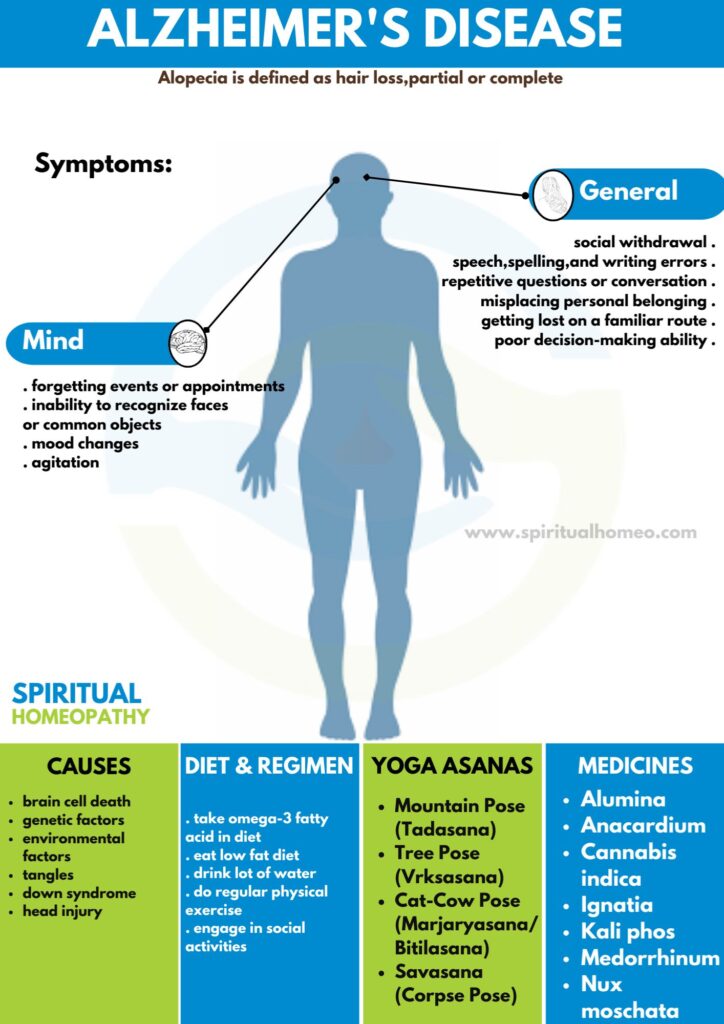
Alzheimer’s disease typically begins to show symptoms in individuals during their mid-60s. It is the most common form of dementia, accounting for approximately 60–80% of dementia cases. Studies estimate that millions of people worldwide are affected by this progressive neurological condition.
As the disease progresses, individuals may experience increasing difficulty with memory, reasoning, language, and recognizing familiar faces. Over time, cognitive decline can interfere with daily activities, decision-making, and independent functioning. In the later stages, Alzheimer’s disease can significantly impair the ability to recall recent events and recognize close family members.
At present, there is no definitive cure for Alzheimer’s disease, and available treatments focus mainly on symptom management and supportive care. In advanced stages, complications such as dehydration, malnutrition, and infections may occur and can affect overall health outcomes.
Early medical evaluation and ongoing care are important for understanding disease progression and planning appropriate support. Spiritual Homeopathy Clinic offers consultations through its Hyderabad branches as well as online and international consultation options for individuals seeking professional guidance and long-term management support.
Alzheimer’s disease is believed to result from a combination of genetic, lifestyle, and environmental factors that affect the brain over time. While the exact cause is not fully understood, these factors interact in complex ways to disrupt normal brain function.
In rare cases (less than 1%), Alzheimer’s disease is caused by specific genetic mutations that strongly increase the likelihood of developing the condition. These inherited forms usually lead to early-onset Alzheimer’s disease, often appearing during middle age.
At the core of Alzheimer’s disease are abnormalities in brain proteins that malfunction and interfere with the normal functioning of nerve cells (neurons). This initiates a cascade of harmful processes that gradually contribute to cognitive decline.
Neuron Damage:
Over time, neurons become damaged, lose their ability to communicate with one another, and eventually die. This damage typically begins in regions of the brain involved in memory, often years before noticeable symptoms develop. As the condition progresses, neuron loss spreads to other areas, leading to significant brain shrinkage in advanced stages.
Researchers have identified two proteins that play a central role in the development of Alzheimer’s disease:
Plaques (Beta-Amyloid):
Beta-amyloid is a fragment of a larger protein that can become toxic when it accumulates in the brain. These fragments interfere with communication between neurons and cluster together to form amyloid plaques, along with other cellular debris. The presence of these plaques is a characteristic feature of Alzheimer’s disease.
Tangles (Tau):
Tau proteins normally help maintain the internal structure and transport system of neurons. In Alzheimer’s disease, tau undergoes abnormal changes, forming twisted fibers known as neurofibrillary tangles. These tangles disrupt the movement of nutrients within neurons and contribute to cell damage and disease progression.
In summary, Alzheimer’s disease develops due to complex interactions between genetic influences, environmental factors, and abnormal protein processes that gradually damage brain cells. Understanding these contributing factors supports an individualized approach to long-term care and clinical guidance.
Early-Onset Alzheimer’s:
This type occurs in individuals typically before the age of 65. It is rare and accounts for a small percentage of Alzheimer’s cases. Early-onset Alzheimer’s is often linked to specific genetic mutations and may show a relatively faster progression compared to late-onset forms.
Late-Onset Alzheimer’s:
Late-onset Alzheimer’s disease is the most common form and usually develops after the age of 65. The exact cause is not fully understood, but a combination of genetic susceptibility, lifestyle factors, and environmental influences is believed to contribute to its development. Symptoms tend to progress gradually over time.
Familial Alzheimer’s:
Familial Alzheimer’s disease is a rare inherited form caused by specific genetic mutations passed through families. It often results in early-onset symptoms and may affect multiple generations. This form is associated with a significantly increased genetic risk and requires careful clinical evaluation.
Understanding the different types of Alzheimer’s disease helps guide individualized assessment and long-term management planning based on age of onset and clinical presentation.
Memory Impairment:
One of the earliest signs of Alzheimer’s disease is a reduced ability to absorb and remember new information. This may result in:
Repeatedly asking the same questions or telling the same stories
Misplacing personal items
Forgetting appointments, events, or conversations
Getting lost on familiar routes or in familiar places
Impaired Reasoning and Judgment:
As the disease progresses, individuals may experience difficulties with reasoning, complex tasks, and decision-making, such as:
Poor understanding of safety risks
Difficulty managing finances
Inability to make sound decisions
Trouble planning or executing complex or sequential activities
Visuospatial Difficulties:
Alzheimer’s disease can impair visual–spatial abilities that are not related to eyesight problems, including:
Inability to recognize familiar faces or common objects
Difficulty locating objects that are in plain sight
Trouble using everyday tools or correctly orienting clothing to the body
Language Impairment:
Language-related difficulties may develop, affecting speaking, reading, and writing, and can include:
Difficulty finding the right words during conversation
Hesitations while speaking
Spelling, speech, and writing errors
Changes in Personality and Behavior:
Alzheimer’s disease may lead to noticeable changes in personality and behavior, such as:
Uncharacteristic mood changes, including agitation, apathy, or social withdrawal
Loss of interest, motivation, or initiative
Reduced empathy and compassion
Development of compulsive, obsessive, or socially inappropriate behavior
As Alzheimer’s disease progresses, structural and functional brain changes can significantly affect mood and behavior. These may include:
Depression
Apathy
Social withdrawal
Mood swings
Distrust and paranoia
Irritability and aggression
Changes in sleeping habits
Wandering behaviors
Loss of inhibitions
Delusions, such as believing possessions have been stolen
These symptoms vary among individuals and may develop gradually. If memory, behavior, or functional changes are frequent, progressive, or interfere with daily life, clinical evaluation is recommended.
Studies have shown that poor sleep patterns, including difficulty falling asleep or staying asleep, can increase the risk of developing Alzheimer’s disease. Ensuring a good night’s sleep is important for overall brain health and may help slow the progression of cognitive decline.
Research indicates that risk factors associated with heart disease are also linked to a higher risk of Alzheimer’s disease. These factors include:
Lack of Physical Activity: Regular exercise supports blood flow to the brain and contributes to cognitive health.
Obesity: Maintaining a healthy weight helps manage inflammation and metabolic balance, which may protect brain function.
Smoking and Exposure to Secondhand Smoke: Smoking accelerates aging processes and harms brain cells, increasing Alzheimer’s risk.
High Blood Pressure: Managing blood pressure is important for maintaining healthy brain circulation.
High Cholesterol: Dietary and lifestyle measures that help control cholesterol may reduce Alzheimer’s risk.
Poorly Controlled Type 2 Diabetes: Effective diabetes management supports vascular and neurological health.
These lifestyle factors are considered modifiable, and adopting healthier habits may help lower the risk of Alzheimer’s disease. Dietary and lifestyle recommendations may vary based on individual health status and should be tailored accordingly.
Engagement in mentally and socially stimulating activities throughout life has been associated with a lower risk of developing Alzheimer’s disease. Individuals who continue learning, social interaction, and problem-solving tend to show a lower incidence of cognitive decline. In contrast, lower educational attainment has been identified as a potential risk factor.
Alzheimer’s disease is characterized by two primary pathological changes in the brain:
Beta-Amyloid Deposits: These extracellular plaques accumulate between nerve cells, disrupting communication and contributing to neuronal damage.
Neurofibrillary Tangles: These form inside neurons due to abnormal tau protein changes, interfering with cellular structure and transport mechanisms.
The accumulation of beta-amyloid plaques and neurofibrillary tangles leads to loss of synapses and neurons, resulting in gradual brain atrophy. This process often begins in the mesial temporal lobe, which is involved in memory, and gradually extends to other brain regions.
Adopting a balanced lifestyle, maintaining cardiovascular health, and staying mentally active play an important role in supporting brain function and managing Alzheimer’s disease risk.
Practicing yoga can play a supportive role in the overall management of Alzheimer’s disease by helping improve blood circulation to the brain, reducing stress, and supporting attention and emotional balance. The following yoga asanas (poses) and techniques may assist individuals with or at risk of Alzheimer’s disease as part of a broader care plan.
Benefits: Helps calm the mind, reduce anxiety, and support concentration.
How to Practice: Sit cross-legged with each foot placed on the opposite thigh. Keep the spine straight and hands resting on the knees in a comfortable mudra. Focus on slow, deep breathing.
Benefits: Supports digestion and helps calm the nervous system, which may aid mental clarity.
How to Practice: Kneel and sit back on the heels with the spine upright. Place hands on the thighs and breathe steadily.
Benefits: Helps reduce stress and mental fatigue and may support relaxation.
How to Practice: Sit with legs extended forward. Gently bend from the hips toward the feet, keeping the spine long and movements slow.
Benefits: Promotes relaxation, reduces fatigue, and helps calm the mind.
How to Practice: Kneel on the floor, sit back on the heels, and stretch the arms forward while resting the forehead on the ground.
Benefits: Encourages blood flow toward the brain and supports nervous system function.
How to Practice: Lie on the back and gently lift the legs and torso upward, supporting the lower back with the hands. Beginners should perform this pose only under proper supervision.
Anulom Vilom (Alternate Nostril Breathing): Helps reduce stress and supports mental balance.
Bhramari (Bee Breath): Promotes calmness and improves focus.
Kapalbhati (Skull Shining Breath): Stimulates alertness and supports overall energy levels.
Regular meditation may help support memory, emotional stability, and overall mental well-being. Guided meditation and mindfulness practices can also assist in reducing anxiety and mood fluctuations commonly associated with Alzheimer’s disease.
Note: Yoga and breathing practices are supportive measures and not a substitute for medical care. Individuals with advanced symptoms or other health conditions should consult a qualified healthcare professional or trained yoga therapist before starting any new routine. Guidance may need to be adapted based on individual abilities and health status.
Homeopathic care for Alzheimer’s disease focuses on supportive, individualized management rather than disease reversal. The approach aims to understand the person as a whole, including cognitive, emotional, and behavioral changes associated with the condition.
At Spiritual Homeopathy Clinic, consultations are available through in-clinic visits at multiple Hyderabad branches as well as online and international consultations, depending on patient needs.
Homeopathy views cognitive decline as a result of multiple interacting factors affecting the mind and body over time. Care is planned with attention to memory changes, emotional responses, sleep patterns, stress levels, and overall health status. The goal is to address contributing factors and support the body’s adaptive processes through long-term, individualized care.
Rather than focusing only on memory-related symptoms, this approach considers behavioral changes, emotional disturbances, and general well-being that may accompany neurodegenerative conditions such as Alzheimer’s disease.
Individualized Assessment
Consultations involve a detailed review of symptoms, medical history, lifestyle factors, and emotional health. This assessment helps guide a personalized care plan tailored to the individual’s condition and stage of illness.
Supportive Management
Homeopathic care is planned to support mental clarity, emotional balance, sleep quality, and stress regulation. Management strategies are selected based on the individual profile and are generally well-tolerated under professional guidance.
Ongoing Monitoring
Alzheimer’s disease is progressive, and care plans may require periodic review. Follow-up consultations help monitor changes over time and adjust supportive strategies as needed.
Homeopathic care emphasizes the individual rather than isolated symptoms. People experiencing memory difficulties, confusion, mood changes, irritability, apathy, or emotional withdrawal may benefit from a comprehensive, patient-centered approach that supports overall quality of life.
Emotional well-being is also considered important, as individuals may experience anxiety, sadness, or reduced motivation. Supportive care aims to promote emotional stability and mental comfort alongside cognitive support.
In addition to professional care, attention is often given to daily habits that may support brain health:
Balanced nutrition to support overall metabolic and neurological function
Regular physical activity to encourage circulation and general well-being
Mental engagement through reading, music, or structured activities
Stress management practices, such as meditation or gentle yoga, as supportive measures
These measures are intended to complement professional care and do not replace medical supervision.
Homeopathic management for Alzheimer’s disease is intended as a supportive and integrative approach. Outcomes may vary based on individual health status, disease stage, and consistency of care. Professional consultation is recommended before initiating or continuing treatment.
For appointments or guidance, Spiritual Homeopathy Clinic can be contacted at 9069 176 176.
When to Consult
You should consult a healthcare professional if Alzheimer’s disease–related symptoms appear gradually and begin to affect memory, thinking, behavior, or daily functioning. Early evaluation helps in understanding the condition, planning care, and supporting quality of life.
Seek consultation if you experience:
Ongoing memory loss that disrupts daily activities
Difficulty remembering recent events or conversations
Confusion about time, place, or familiar surroundings
Problems with speaking, understanding, or finding the right words
Changes in mood, behavior, or personality
Difficulty managing routine tasks or making decisions
Symptoms that slowly worsen over time
At Spiritual Homeopathy Clinic, consultations are available at multiple branches in Hyderabad, including Kukatpally, Chandanagar, Dilsukhnagar, and Nallagandla. Online and international consultations are also available for patients who cannot visit in person. A professional assessment supports an individualized care approach based on symptoms, overall health, and family concerns.
📞 For appointments or guidance, contact 9069 176 176.
Alzheimer’s disease is a progressive neurodegenerative condition that primarily affects memory, thinking, and behavior. As the most common cause of dementia, it leads to a gradual decline in cognitive function and interferes with daily life. Understanding the underlying mechanisms, symptoms, diagnosis, and ways to potentially reduce risk is important for timely evaluation and supportive care.
Consultations for evaluation and guidance are available at Spiritual Homeopathy Clinic through Hyderabad branches, online, and international consultations.
Recent studies indicate a sustained immune response and ongoing inflammation in the brains of individuals with Alzheimer’s disease. Inflammation is now considered a possible third core feature of Alzheimer’s pathology, alongside amyloid plaques and tau tangles. This prolonged inflammatory response may contribute to neural damage and progressive cognitive decline.
Alzheimer’s disease also shares certain characteristics with prion-related disorders. In such conditions, misfolded proteins can induce similar changes in nearby proteins, leading to widespread brain damage. In Alzheimer’s, beta-amyloid plaques and tau tangles appear to spread in a comparable prion-like manner, which may play a role in disease progression.
Early-Onset Alzheimer’s – A relatively rare form that develops before the age of 65.
Late-Onset Alzheimer’s – The most common type, typically occurring after age 65, influenced by a combination of genetic and environmental factors.
Familial Alzheimer’s Disease – A rare inherited form associated with specific genetic mutations, often linked to early-onset cases.
Alzheimer’s disease presents with a wide range of cognitive and behavioral symptoms that tend to worsen over time.
Repeating questions or conversations
Misplacing personal items
Forgetting recent events or appointments
Getting lost on familiar routes
Poor decision-making
Trouble managing finances
Difficulty planning or following complex tasks
Reduced awareness of safety risks
Difficulty recognizing familiar faces or objects
Problems using everyday tools or orienting clothing correctly
Difficulty finding appropriate words
Hesitant or interrupted speech
Writing and spelling errors
Mood swings, apathy, or depression
Social withdrawal
Reduced empathy or motivation
Compulsive, inappropriate, or repetitive behaviors
Delusions or paranoia
If these symptoms are frequent, progressive, or interfere with daily activities, professional evaluation is advised.
As Alzheimer’s disease advances, mood and behavior may be increasingly affected. Common changes include:
Irritability or aggression
Sleep disturbances
Wandering or restlessness
Loss of inhibitions
Depression or apathy
Distrust and paranoid thoughts
Diagnosis involves a combination of clinical evaluation and supportive investigations to assess cognitive decline and exclude other conditions.
Assessment of reflexes, muscle tone, coordination, vision, and hearing. Loss of smell (anosmia) may be observed in some individuals.
Standardized tools such as the Mini-Mental State Examination (MMSE) and other neuropsychological tests evaluate memory, attention, language, and problem-solving abilities.
MRI or CT scans help rule out structural causes such as tumors or strokes. PET scans may be used in selected cases to assess brain metabolism or amyloid and tau changes, primarily in specialized settings.
Blood tests are used to exclude reversible causes of cognitive impairment, including thyroid disorders or vitamin B12 deficiency.
In specific situations, particularly early-onset or rapidly progressive cases, CSF analysis may help identify abnormal protein patterns associated with Alzheimer’s disease.
Several conditions can present with symptoms similar to Alzheimer’s and should be carefully ruled out, including:
Depression-related cognitive impairment (pseudodementia)
Lewy body dementia
Vascular dementia
Frontotemporal dementia
Thyroid disorders
Vitamin B12 deficiency
Effects of multiple medications
Substance misuse
While there is currently no cure for Alzheimer’s disease, certain lifestyle measures may help lower risk or support brain health:
Staying mentally active through learning and problem-solving
Regular physical activity
Managing blood pressure, cholesterol, and blood sugar
Following a heart-healthy diet rich in nutrients
Limiting alcohol intake; once cognitive symptoms appear, alcohol avoidance is generally advised
Alzheimer’s disease is a complex condition influenced by genetic factors, chronic inflammation, and abnormal protein activity in the brain. Early recognition, accurate diagnosis, and consistent supportive care can help manage symptoms and maintain quality of life. Individual care plans may vary, and professional consultation is recommended for ongoing guidance and monitoring.
WhatsApp us