
Back pain is one of the most common musculoskeletal problems, affecting people of all ages. It refers to pain, stiffness, or discomfort anywhere along the spine, from the neck and upper back to the lower back and hips. Back pain may result from poor posture, muscle strain, injuries, prolonged sitting, heavy lifting, arthritis, slipped discs, or other spinal conditions. Symptoms can range from a mild, persistent ache to sharp pain that limits movement and interferes with daily activities. While occasional back pain often improves with rest, persistent or recurring pain should not be ignored, as it may indicate an underlying condition that requires proper evaluation and treatment.
At Spiritual Homeopathy, we believe in treating the root cause rather than simply suppressing symptoms. Our experienced homeopathic doctors carefully evaluate each patient’s symptoms, medical history, lifestyle, posture, occupation, physical activity, and overall health before preparing an individualized treatment plan. Our holistic approach focuses on reducing pain and inflammation, improving mobility and flexibility, supporting spinal health, minimizing recurring back pain, and promoting long-term well-being through safe and personalized homeopathic care. We provide homeopathic treatment for back pain, neck pain, lower back pain, sciatica, muscle strain, and other chronic musculoskeletal conditions.
We provide personalized homeopathic treatment for back pain in Hyderabad to patients of all age groups through our clinics across Hyderabad, as well as online homeopathy consultations for patients throughout India and in more than 100 countries worldwide. If you are looking for the best homeopathy doctor for back pain, natural treatment for spinal discomfort, lower back pain management, or long-term musculoskeletal wellness, Spiritual Homeopathy is committed to delivering expert, patient-centered care wherever you are.
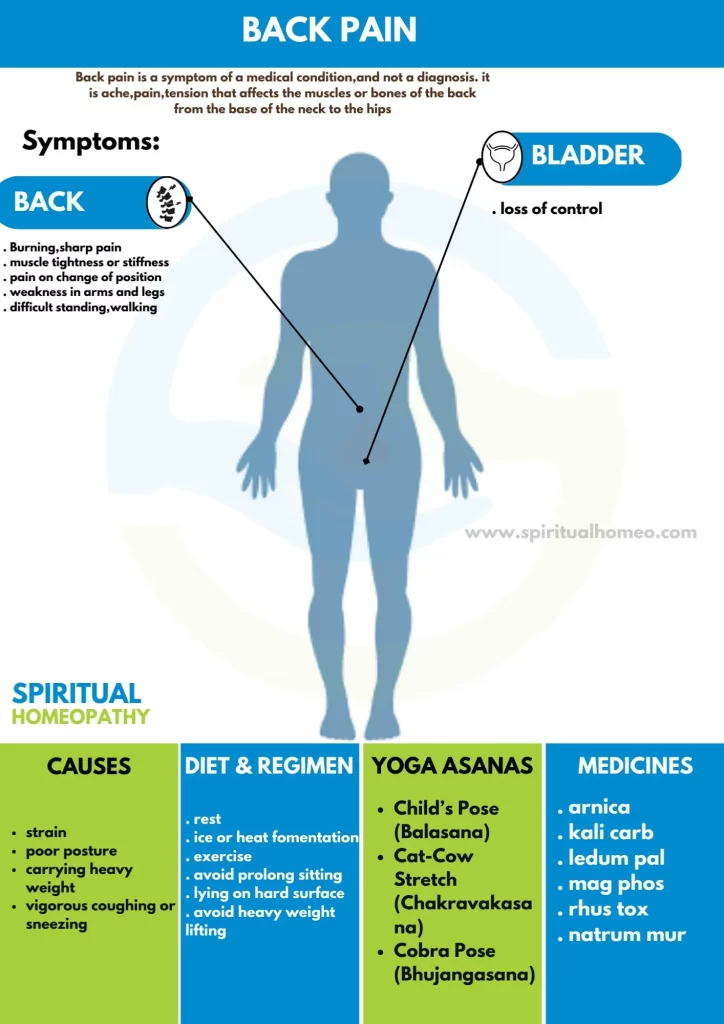
Low back pain, often called lumbago, is one of the most common health complaints worldwide and a leading cause of missed work and reduced mobility. It primarily affects the lower back, which supports the upper body and plays a key role in everyday movements like bending, lifting, and twisting—making it more prone to strain and injury.
A frequent form of lower back pain is sciatica, which usually affects one side of the lower body. Sciatica occurs when the sciatic nerve—the longest nerve running from the lower spine down the back of each leg—becomes compressed or irritated. This can lead to radiating pain, numbness, or tingling along the leg.
Adults between 35 and 55 years are more susceptible to back pain due to natural aging processes such as reduced flexibility, wear and tear on spinal discs, or degenerative changes in the spine.
Sedentary habits, long hours of desk work, improper posture, and lack of regular physical activity contribute significantly to back pain. Conversely, excessive exercise or incorrect lifting techniques can also strain the back muscles and ligaments.
Back pain is not always purely physical. Emotional stress can tighten muscles, particularly in the back and shoulders, amplifying discomfort. Managing stress is often an important part of reducing back pain and improving overall wellness.
Acute back pain is short-term, usually resulting from injury, poor posture, or overuse. It typically resolves within days to weeks.
Chronic back pain persists for more than three months and may not always have a clearly identifiable cause. It can significantly interfere with daily life and work.
Pregnant women may experience back pain due to hormonal changes and increased pressure on the lower spine and pelvis.
Children and teenagers are increasingly affected by back pain, often from poor posture, excessive screen time, heavy backpacks, or weak core muscles that provide insufficient spinal support.
Taking preventive measures such as staying active, maintaining proper posture, strengthening core muscles, and addressing emotional health can help reduce the risk and severity of back pain.
Nearly 90% of back pain cases arise from mechanical issues—conditions related to the spine, surrounding muscles, or ligaments. These problems often result from everyday movements, injuries, or poor posture, and can increase the likelihood of experiencing back discomfort.
Strain is the leading mechanical cause of back pain. It occurs when the muscles or ligaments supporting the spine become overstretched or injured, often due to:
Sudden twisting or awkward movements
Lifting heavy objects improperly
Poor posture while sitting, standing, or walking
Frequent bending or repetitive motions
Vigorous coughing or sneezing that stresses the lower back
These strains can lead to inflammation, stiffness, and localized pain, which may restrict movement or affect daily activities.
Modern sedentary lifestyles, weak core muscles, improper body mechanics, and insufficient physical activity make the back more vulnerable to mechanical problems. Even minor movements, if performed incorrectly or repeatedly, can contribute to long-term back issues.
Back pain is a common musculoskeletal condition that primarily affects the spine and vertebrae. Often referred to as low back pain or lumbago, it can present in different forms and severities depending on the underlying cause and the area affected.
System: Skeletal System
Primary Organ Affected: Spine, Vertebrae
Common Alternate Names: Low Back Pain, Lumbago
Hindi: पीठ दर्द, कमर दर्द
Gujarati: પીઠનો દુખાવો, કમર દર્દ
French: Mal au dos
Spanish: Dolor de espalda
Acute Back Pain
Sudden onset, usually lasting a few days to weeks
Often caused by muscle or ligament strain, injury, or poor posture
Chronic Back Pain
Persistent pain lasting longer than 12 weeks
May result from long-term structural issues, degenerative changes, or nerve involvement
Mechanical Back Pain
Related to joints, discs, or soft tissues
Often triggered by repetitive movements, improper posture, or weak core muscles
Sciatica
Pain radiating along the sciatic nerve
Typically affects one side, from the lower back down to the leg
Can be associated with nerve compression or irritation
Referred Back Pain
Pain felt in the back but originating from another area, such as the kidneys or pelvis
Requires careful evaluation to identify the source
Back pain can affect the upper, middle, or lower back and is one of the most common musculoskeletal complaints. While muscle strain, poor posture, or overuse are frequent causes, certain symptoms may indicate more serious underlying conditions. Spiritual Homeopathy Clinic provides in-clinic, online, and international consultations for a detailed assessment and individualized care plan.
Back pain symptoms may vary in type and intensity. Typical signs include:
A dull, burning, or sharp sensation in the back
Muscle tightness or stiffness, especially after inactivity
Pain that worsens with deep breathing, coughing, or sneezing
Discomfort during shoulder movement or neck flexion
Tenderness when touching specific areas or making certain movements
Seek prompt medical care if you experience:
Weakness in the arms or legs
Numbness or tingling in limbs, chest, or abdomen
Loss of bladder or bowel control
Sudden inability to move parts of the body
Back pain accompanied by chest pain or fever
Pain that wakes you from sleep or worsens suddenly
These signs may indicate nerve involvement, spinal cord issues, or infections and should never be ignored.
Lower back pain can share features with upper and middle back pain. Common patterns include:
Persistent pain or stiffness from the neck base to the tailbone
Shooting or stabbing sensations, sometimes sudden
Discomfort after prolonged sitting or standing
Pain radiating to the buttocks, thighs, calves, or feet
Difficulty standing upright due to spasms or pain
Reduced mobility affecting daily activities or work
Sleep disturbances and emotional impact such as anxiety or depression
Weight changes due to limited movement
Immediate evaluation is advised for:
Chest pain along with back pain
Sudden loss of movement or coordination
Severe pain with numbness, tingling, or limb weakness
Difficulty urinating or loss of bladder control
Back pain with unexplained fever
Pain that disrupts sleep or escalates suddenly
A thorough assessment can help identify the underlying cause. At the clinic, your doctor may:
Review symptoms, lifestyle, and medical history
Perform a physical examination
Recommend tests if necessary, including:
X-rays: Detect fractures or arthritis
MRI or CT scans: Assess discs, soft tissue, nerves, and spinal structures
Bone scan: Detect fractures or bone abnormalities
Electromyography (EMG): Evaluate nerve compression or spinal stenosis
Blood tests: Identify infections or systemic causes
Back pain may also originate from nearby organs rather than the spine:
Abdominal conditions: Gastritis, peptic ulcers, pancreatitis, gallbladder inflammation
Urinary system disorders: Kidney stones, urinary tract infection
Pelvic issues: Ovarian cysts, painful menstruation (dysmenorrhea)
Aortic disorders: Abdominal aortic aneurysm
Back pain is not always a simple muscle strain—it can be a sign of more serious conditions. Understanding the symptoms and recognizing when to seek professional care is essential. Spiritual Homeopathy Clinic offers personalized evaluation and homeopathic management plans through in-clinic, online, and international consultations.
Nutrition plays an essential role in maintaining spinal health, reducing inflammation, and supporting the healing of bones, muscles, and connective tissues. A balanced diet rich in key nutrients can help prevent chronic back pain and conditions like osteoporosis. For tailored dietary guidance, Spiritual Homeopathy Clinic offers consultations at multiple branches in Hyderabad, as well as online and international sessions.
1. Calcium
Calcium is crucial for maintaining healthy bone mass and preventing bone weakening, a common contributor to back pain.
Calcium-Rich Foods:
Almonds
Sesame seeds
Kale and turnip greens
White beans and black-eyed peas
Oranges
2. Vitamin C
Vitamin C helps reduce inflammation and supports healing of tendons, ligaments, and spinal discs, while strengthening connective tissues.
Vitamin C-Rich Foods:
Citrus fruits (oranges, lemons)
Broccoli and Brussels sprouts
Tomatoes and green peppers
Strawberries, kiwis, and melons
Alfalfa sprouts and potato skins
3. Vitamin D
Vitamin D improves calcium absorption, helping maintain strong bones and reduce bone loss.
Best Sources of Vitamin D:
Early morning sunlight
Egg yolks
Fish oils (e.g., cod liver oil)
Fortified milk and dairy alternatives
4. Iron
Iron supports myoglobin production, essential for healthy muscle function—particularly in muscles that stabilize the spine.
Iron-Rich Foods:
Liver, pork, fish, shellfish
Red meat and poultry
Lentils, beans, and soy products
Eggs and whole grains
Green leafy vegetables (spinach, kale, broccoli)
5. Magnesium
Magnesium aids muscle relaxation and contraction, helping reduce spasms and pain in the back muscles.
Magnesium-Rich Foods:
Whole grains and whole-grain bread
Beans, seeds, and nuts
Potatoes and avocados
Bananas and kiwi
Green leafy vegetables like spinach and kale
Certain foods may worsen inflammation, contribute to weight gain, or affect bone and muscle health. Limiting these can support back pain management:
Red meat (high in saturated fats)
Refined grains like white bread, pasta, and rice
Whole-fat dairy products
Sugary snacks and beverages
Fried foods, chips, crackers, and pastries
Excessive caffeine and alcohol
A nutrient-dense diet rich in calcium, magnesium, iron, and vitamins C and D supports back health, reduces inflammation, and helps maintain spinal strength. Guidance may vary by individual, so it is recommended to consult a qualified healthcare provider for a personalized plan. Spiritual Homeopathy Clinic provides individualized dietary and lifestyle guidance along with homeopathic management for back pain.
Yoga can be a supportive approach for managing back pain by improving flexibility, strength, and posture. These practices complement medical care but are not a replacement for professional treatment. Consult a qualified healthcare provider, especially if you have injuries, herniated discs, or sciatica. Spiritual Homeopathy Clinic provides guidance for integrating lifestyle and yoga practices alongside individualized homeopathic care.
1. Cat-Cow Pose (Marjaryasana-Bitilasana)
Benefits: Improves spinal flexibility; relieves tension in the back and neck.
How to do: Start on all fours. Inhale while arching the back (cow pose), exhale while rounding the spine (cat pose). Repeat for 1–2 minutes.
2. Child’s Pose (Balasana)
Benefits: Gently stretches the lower back, hips, and thighs; promotes relaxation.
How to do: Kneel, sit on your heels, and stretch your arms forward with forehead touching the floor. Hold for 30–60 seconds.
3. Downward-Facing Dog (Adho Mukha Svanasana)
Benefits: Strengthens the spine, lengthens back muscles, improves posture.
How to do: From all fours, lift hips up and back into an inverted “V” shape. Keep spine straight and heels reaching toward the floor.
4. Cobra Pose (Bhujangasana)
Benefits: Strengthens lower back, opens the chest, and reduces spinal stiffness.
How to do: Lie on your stomach, hands under shoulders, and gently lift the upper body, keeping elbows slightly bent.
5. Bridge Pose (Setu Bandhasana)
Benefits: Strengthens back, glutes, and hamstrings; relieves spinal tension.
How to do: Lie on your back, bend knees, feet hip-width apart, and lift hips while pressing into your feet.
6. Supine Twist (Supta Matsyendrasana)
Benefits: Gently stretches the spine and releases lower back tension.
How to do: Lie on your back, draw one knee toward your chest, and gently twist it across your body, keeping shoulders flat.
7. Locust Pose (Salabhasana)
Benefits: Strengthens lower back muscles; improves posture.
How to do: Lie on your stomach, arms along sides, lift chest and legs off the floor. Hold for 10–30 seconds.
8. Legs Up the Wall (Viparita Karani)
Benefits: Relieves lower back pressure, improves circulation, calms the nervous system.
How to do: Lie on your back, rest legs vertically against a wall. Hold for 5–10 minutes.
Avoid over-stretching or forcing any movement.
If you have herniated discs, sciatica, or spinal injuries, consult a doctor or certified yoga therapist first.
Always warm up before starting your yoga practice.
Note: Yoga routines may need adjustments based on individual conditions and pain levels. A consultation at Spiritual Homeopathy Clinic can help tailor supportive lifestyle and yoga guidance alongside homeopathic care.
At Spiritual Homeopathy Clinic, we provide a holistic approach to back pain that integrates traditional homeopathic principles with a careful understanding of physical, emotional, and lifestyle factors. Our experienced team of homeopaths in Hyderabad offers personalized care designed to address not only pain symptoms but also underlying contributing factors affecting your spine and musculoskeletal health.
We focus on long-term management and individualized care for back pain. Rather than just alleviating symptoms, our approach aims to identify and address the root causes—such as muscular imbalances, posture issues, and lifestyle factors—while supporting your body’s natural healing abilities. This ensures a comprehensive, balanced approach to recovery and mobility.
Homeopathic Consultations
Our qualified doctors provide in-depth assessments of your back pain, daily activities, medical history, and lifestyle. Consultations are available in-clinic across multiple Hyderabad branches or through online and international sessions for those unable to visit in person.
Individualized Homeopathic Care
Treatments are tailored to your specific symptoms and overall health, supporting long-term management and helping address contributing factors. The approach is generally well-tolerated under professional guidance.
Follow-Up and Progress Tracking
Regular follow-ups allow monitoring of your response to treatment, adjustments to your care plan, and guidance on exercises, posture, and lifestyle modifications to support spinal health.
At Spiritual Homeopathy Clinic, your well-being is our priority. We focus on compassionate, patient-centered care for back pain, aiming to restore mobility, reduce discomfort, and enhance quality of life.
You should consult a healthcare professional if back pain becomes frequent, persistent, or begins to interfere with daily activities, work, or sleep. Early evaluation helps identify underlying causes and supports long-term management.
Seek consultation if you experience:
Recurrent or severe back pain
Pain radiating to the legs, buttocks, or arms
Numbness, tingling, or weakness in the limbs
Difficulty standing, walking, or maintaining posture
Pain that worsens at night or disrupts sleep
Symptoms not improving with rest, exercise, or lifestyle adjustments
At Spiritual Homeopathy Clinic, consultations are available at multiple branches in Hyderabad, including Kukatpally, Chandanagar, Dilsukhnagar, and Nallagandla. Online and international consultations are also offered for patients unable to visit in person. A professional assessment ensures individualized care tailored to your symptoms, physical condition, and overall health.
For appointments or guidance, call 9069 176 176.
Lower back pain is most commonly caused by muscle or ligament strains, often triggered by improper lifting, poor posture, or lack of exercise. Other frequent culprits include disc injuries, arthritis, and structural spine conditions.
Relieve lower back pain by alternating ice (first 48 hours) and heat (thereafter) to reduce inflammation and relax muscles. Avoid strict bed rest; stay gently active with short walks and incorporate daily, pain-free stretches like knee-to-chest movements or the cat-cow pose to restore mobility.
Back pain is serious if it radiates down your legs, is accompanied by weakness, numbness, or a fever, or results from a recent injury or accident. Seek immediate medical attention (or go to the ER) if you experience sudden loss of bowel or bladder control.
While daily back pain is incredibly common—often stemming from everyday lifestyle factors like sitting too long, poor posture, or weak core muscles—it is not considered normal if it persists for weeks or severely impacts your mobility.
Back pain is frequently caused by musculoskeletal issues, but it can also be a symptom of problems with internal organs. This occurs when pain signals from an affected organ travel along shared nerve pathways, known as referred pain.