
“Bad breath, also known as halitosis, is a common condition where an unpleasant odor comes from the mouth, often caused by poor oral hygiene, certain foods, or underlying health issues.”
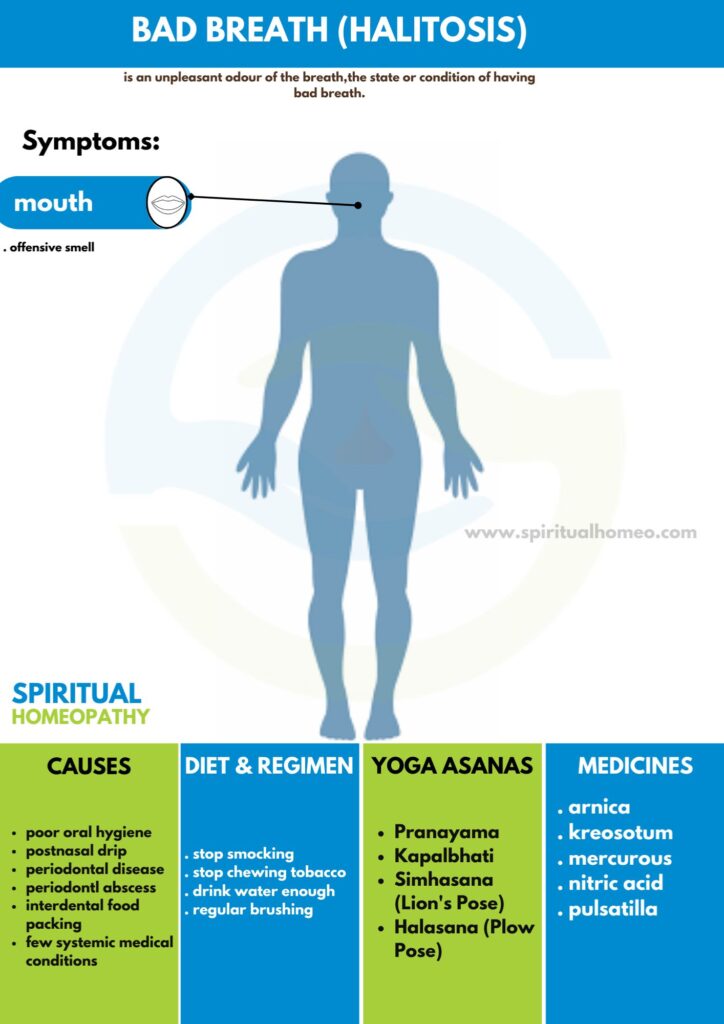
Around 90% of true halitosis cases originate within the mouth, referred to as intra-oral halitosis or oral malodour. This type of bad breath is most commonly caused by bacteria on the tongue and other oral surfaces. Tongue bacteria alone are responsible for producing foul-smelling compounds and fatty acids in approximately 80–90% of mouth-related bad breath cases.
Bad breath may be temporary—often disappearing after eating, drinking, brushing, flossing, or using a mouthwash—or persistent, known as chronic halitosis. Chronic bad breath affects roughly 25% of people to varying degrees.
Although the mouth is the primary source, other areas such as the tonsils can contribute to halitosis. Research indicates that around 3% of cases may be linked to the tonsils. In severe instances, bad breath can affect quality of life for an estimated 0.5–1.0% of adults.
At Spiritual Homeopathy Clinic, consultations are available at multiple branches in Hyderabad, including Kukatpally, Chandanagar, Dilsukhnagar, and Nallagandla. Online and international consultations are also offered for patients who cannot visit in person. A professional assessment can help identify the root cause and support an individualized care plan.
Bad breath, or halitosis, can arise from multiple factors—most commonly within the mouth. Other areas of the body, systemic conditions, and lifestyle factors may also contribute. Understanding the root cause is essential for effective management.
Poor oral hygiene is the most frequent cause, allowing bacteria to thrive. Key contributors include:
Food particles trapped between teeth
Faulty dental work or crowns
Sub-gingival (under-gum) niches
Abscesses and infected gums
Unclean dentures
Oral lesions from infections such as herpes simplex or HPV
Strong-smelling foods (garlic, onions, meat, fish, cheese) and habits like smoking or alcohol consumption can worsen breath odor. Morning breath is often stronger due to reduced saliva flow and limited oxygen exposure during sleep.
The back of the tongue is a major site for bacteria producing volatile sulfur compounds (VSCs), which cause foul odor.
A dry or poorly cleaned tongue, especially the posterior dorsum, promotes bacterial buildup.
A white tongue coating may indicate halitosis but is not always the direct cause.
Studies show people with halitosis generally have higher bacterial loads on the tongue than those without it.
Gum disease significantly contributes to halitosis, particularly in severe cases:
Gingivitis and periodontal disease
Periodontal and gingival abscesses
Subgingival calculus (tartar)
These conditions foster anaerobic bacteria that release malodorous gases.
Occasionally, bad breath originates from the nasal passages due to:
Sinus infections
Foreign bodies in the nose
Chronic rhinosinusitis (though not always detectable via breath tests)
Tonsil-related issues may produce halitosis:
Chronic caseous tonsillitis
Tonsil stones (tonsilloliths)
Peritonsillar abscess
Actinomycosis or tonsillar tumors
Bacteria and debris in these areas can lead to foul odor.
Though less common, gastrointestinal conditions may cause bad breath:
GERD (acid reflux) or hiatal hernia allowing gases to reach the mouth
Zenker’s diverticulum retaining food, causing putrid breath
Severe stomach conditions, such as fistulas or persistent reflux
Rarely, systemic conditions can be linked to halitosis:
Liver failure (fetor hepaticus)
Kidney infections or failure
Respiratory tract infections
Certain cancers
Trimethylaminuria (“fish odor syndrome”)
Diabetes mellitus and metabolic disorders affecting breath odor
Approximately 25% of individuals seeking help for bad breath may suffer from halitophobia—a psychological condition where the person believes they have bad breath despite no clinical evidence.
Additional causes may include:
Tooth decay or deep cavities
Healing dental extraction sites
Food impaction due to poor dental alignment or missing teeth
Dirty dentures, especially plastic, which can harbor bacteria and yeast
Oral infections and ulcers
Fasting, dehydration, or low saliva flow
Stress, anxiety, or hormonal changes affecting saliva and VSC levels
Smoking and alcohol use
Consumption of volatile foods like garlic, onions, durian, cabbage, or radish
Medications causing dry mouth (xerostomia)
By identifying the specific cause—whether oral, systemic, or lifestyle-related—appropriate management can be planned to reduce halitosis effectively. At Spiritual Homeopathy Clinic, professional assessment helps determine the underlying cause and supports an individualized care plan for each patient.
Bad breath can vary in cause, intensity, and odor. Understanding its different types helps identify the underlying issue and guide appropriate care. Common forms of halitosis include:
This is a temporary and common form of bad breath caused by:
Reduced saliva production during sleep
Overnight bacterial buildup on the tongue and teeth
Morning breath generally improves after brushing, rinsing, and eating.
Also known as persistent halitosis, this type does not resolve with routine oral hygiene. Common causes include:
Poor oral hygiene
Gum disease (periodontitis)
Tooth decay or dental infections
Digestive disorders, such as GERD
Chronic halitosis requires professional assessment and ongoing management.
A sweet or fruity odor may indicate metabolic conditions, such as uncontrolled diabetes or diabetic ketoacidosis. It occurs when:
The body breaks down fat for energy, producing acetone
This type of breath requires prompt medical evaluation.
A foul, sulfur-like odor caused by bacteria producing volatile sulfur compounds (VSCs). Common triggers include:
Gum disease
Tongue bacteria
Decomposing food particles in the mouth
This odor often signals long-term oral health issues.
Frequent in smokers, tobacco breath is due to:
Chemical residues from tobacco products
Dry mouth caused by smoking
Increased risk of gum disease and oral cancer
Tobacco-related halitosis may persist even after brushing and can worsen other types of bad breath.
Identifying the early signs of bad breath is important for timely assessment and appropriate care. Common symptoms that may indicate halitosis include:
A continuous foul smell from the mouth, even after brushing or using mouthwash, may indicate chronic halitosis. This is often linked to bacterial buildup, gum disease, or other underlying health factors.
A dry, sticky, or parched feeling in the mouth may signal reduced saliva production. Saliva naturally helps remove food particles and bacteria, so its reduction can contribute to bad breath.
A visible white or yellowish layer on the tongue, particularly toward the back, can indicate bacterial or food particle accumulation. While not always the direct cause, it is commonly associated with oral malodor.
A persistent sour, bitter, or metallic taste may suggest bacterial activity, poor oral hygiene, or digestive issues contributing to unpleasant breath.
Stronger breath odor in the morning is common due to dry mouth and reduced saliva flow during sleep. If the odor is pronounced or persistent, it may indicate an underlying problem.
Unusually thick saliva can create an environment that encourages bacterial growth, worsening mouth odor.
Ongoing sore throat, post-nasal drip, or mucus accumulation at the back of the throat may contribute to bad breath, especially if linked to bacterial or sinus-related issues.
A balanced diet plays an important role in maintaining fresh breath. Certain foods and habits can help reduce halitosis, while others may worsen it. Key dietary recommendations include:
Stay Hydrated: Drink adequate water throughout the day to keep the mouth moist and help flush away odor-causing bacteria.
Eat Fresh Fruits & Vegetables: Crunchy produce like apples, carrots, and celery stimulate saliva flow and help naturally clean teeth and tongue surfaces.
Include Probiotic Foods: Yogurt and other probiotic-rich foods may help maintain a healthy balance of oral and gut bacteria, potentially reducing bad breath.
Limit Sugar Intake: Reduce sugary snacks and drinks, which can feed bacteria that produce foul-smelling compounds.
Avoid Strong-Smelling Foods: Minimize garlic, onions, and other sulfur-containing foods that may leave lingering odors.
In addition to diet, a consistent oral care routine is essential for managing bad breath:
Brush Twice Daily: Use fluoride toothpaste and brush for at least two minutes, especially after meals.
Floss Daily: Remove trapped food and plaque between teeth where a toothbrush cannot reach.
Use a Tongue Scraper: Gently clean the back of the tongue to remove bacteria and debris that contribute to odor.
Rinse Your Mouth: Gargle with alcohol-free mouthwash or a mild saltwater solution to reduce bacteria and freshen breath.
Chew Sugar-Free Gum: Stimulates saliva production and helps neutralize odors, particularly after meals or during dry mouth episodes.
Yoga can support oral health and help reduce bad breath (halitosis) by improving digestion, reducing stress, and promoting better respiratory and circulatory function. While yoga alone cannot treat halitosis, certain asanas and breathing practices may help address contributing factors such as poor digestion, sinus congestion, or stress.
Kapalabhati Pranayama (Skull Shining Breathing)
Benefits: Detoxifies the lungs and nasal passages, increases oxygen supply, and helps flush out toxins that may contribute to bad breath.
How to Do: Sit comfortably, inhale deeply, and exhale forcefully through the nose while pulling in the stomach. Perform 30–50 rapid breaths per session.
Caution: Avoid if you have high blood pressure, heart issues, or are pregnant.
Simhasana (Lion’s Pose)
Benefits: Stimulates the throat, tongue, and respiratory tract; supports toxin elimination and strengthens facial muscles.
How to Do: Sit in Vajrasana, place hands on knees, open your mouth wide, stick out your tongue, and exhale with a roar-like sound while gazing at the tip of your nose or between the eyebrows.
Ardha Matsyendrasana (Half Spinal Twist Pose)
Benefits: Improves digestion and detoxifies abdominal organs, helping prevent digestive-related halitosis.
How to Do: Sit with legs extended, bend one knee and place the foot over the opposite thigh, twist the torso toward the bent knee, and hold while breathing deeply.
Paschimottanasana (Seated Forward Bend)
Benefits: Stimulates digestion and reduces bloating or indigestion that may contribute to bad breath.
How to Do: Sit with legs straight, inhale and raise your arms, exhale and bend forward to touch your toes while keeping the spine long.
Sarvangasana (Shoulder Stand)
Benefits: Enhances blood circulation to the head and throat, supporting sinus health and reducing oral bacteria buildup.
How to Do: Lie on your back, lift your legs and hips upward, supporting the lower back with your hands. Hold for 30–60 seconds.
Caution: Avoid if you have neck problems, high blood pressure, or glaucoma.
At Spiritual Homeopathy Clinic, we adopt a holistic approach that combines classical homeopathic principles with attention to the emotional and overall well-being of our patients. Our experienced homeopaths in Hyderabad provide individualized care to address the underlying causes of bad breath, considering both oral and systemic factors. Online and international consultations are also available for patients unable to visit in person.
Rather than focusing solely on symptoms, our treatment approach aims to identify and address contributing factors that lead to halitosis. By supporting the body’s natural balance and promoting long-term oral and digestive health, our care focuses on long-term management and overall wellness.
Comprehensive Consultations
Our homeopaths conduct thorough consultations, in-clinic or online, to understand your medical history, lifestyle, and oral health. Every treatment plan is personalized according to your unique needs.
Individualized Homeopathic Care
Based on your assessment, we recommend remedies and approaches that support your body’s natural processes and help manage contributing factors. Our treatments are generally well-tolerated under professional guidance.
Ongoing Follow-Up
Regular follow-ups allow us to monitor your progress, adjust care as needed, and provide continued guidance on oral hygiene, diet, and lifestyle. This ensures a consistent, safe approach to managing halitosis.
Focuses on root causes rather than just masking symptoms
Supports natural healing and oral balance
Addresses contributing lifestyle or digestive factors
Provides professional guidance tailored to each patient
At Spiritual Homeopathy Clinic, our goal is to offer safe, individualized care that helps improve oral health and confidence, whether through in-clinic, online, or international consultations.
You should consult a healthcare professional if bad breath becomes frequent, persistent, or affects your daily life. Early evaluation helps identify underlying causes and guides an appropriate treatment plan.
Seek consultation if you experience:
Persistent or worsening foul odor despite regular oral hygiene
Dry mouth or thick saliva that does not improve with hydration
White coating on the tongue or ongoing bad taste
Chronic throat irritation, post-nasal drip, or sinus-related issues
Symptoms related to digestive problems or systemic conditions
At Spiritual Homeopathy Clinic, consultations are available at multiple branches in Hyderabad, including Kukatpally, Chandanagar, Dilsukhnagar, and Nallagandla. Online and international consultations are also offered for patients who cannot visit in person. Professional assessment enables an individualized care approach tailored to your symptoms and overall health.
For appointments or guidance, contact 9069 176 176.
1. What is Bad Breath?
Bad breath, or halitosis, is an unpleasant odor coming from the mouth. It can be temporary or persistent and often arises from bacterial buildup, poor oral hygiene, or underlying health issues. Persistent symptoms may indicate the need for a professional evaluation.
2. How Can Homeopathy Help with Bad Breath?
Homeopathy provides a holistic approach by addressing the root causes rather than only masking symptoms. At Spiritual Homeopathy Clinic, our practitioners consider physical, emotional, and lifestyle factors to create individualized treatment plans. Remedies and guidance aim to support the body’s natural balance and promote long-term oral and systemic wellness.
3. What Are the Common Symptoms of Bad Breath?
Symptoms of halitosis may include:
White coating on the back of the tongue
Dry or sticky mouth
Plaque or debris around teeth
Post-nasal drip or excess throat mucus
Persistent morning breath
Burning sensation on the tongue
Thick or pasty saliva
Frequent throat clearing
Sour, bitter, or metallic taste
If these symptoms occur frequently or interfere with daily life, professional consultation is advised.
4. What Causes Bad Breath?
Common causes include:
Poor oral hygiene and bacterial growth
Viral or bacterial infections in the mouth or throat
Unclean or dry tongue, particularly the back portion
Gum disease or periodontal problems
Subgingival calculus (tartar beneath the gums)
Sinus infections or nasal foreign bodies
Tonsil conditions, including stones or chronic inflammation
Gastrointestinal issues like acid reflux or hiatal hernia
Chronic liver conditions
Respiratory tract infections
Metabolic conditions such as diabetes.
WhatsApp us