
Bell’s Palsy is a sudden onset condition that causes facial paralysis due to lower motor neuron dysfunction. In most cases, no specific cause can be identified for this condition.
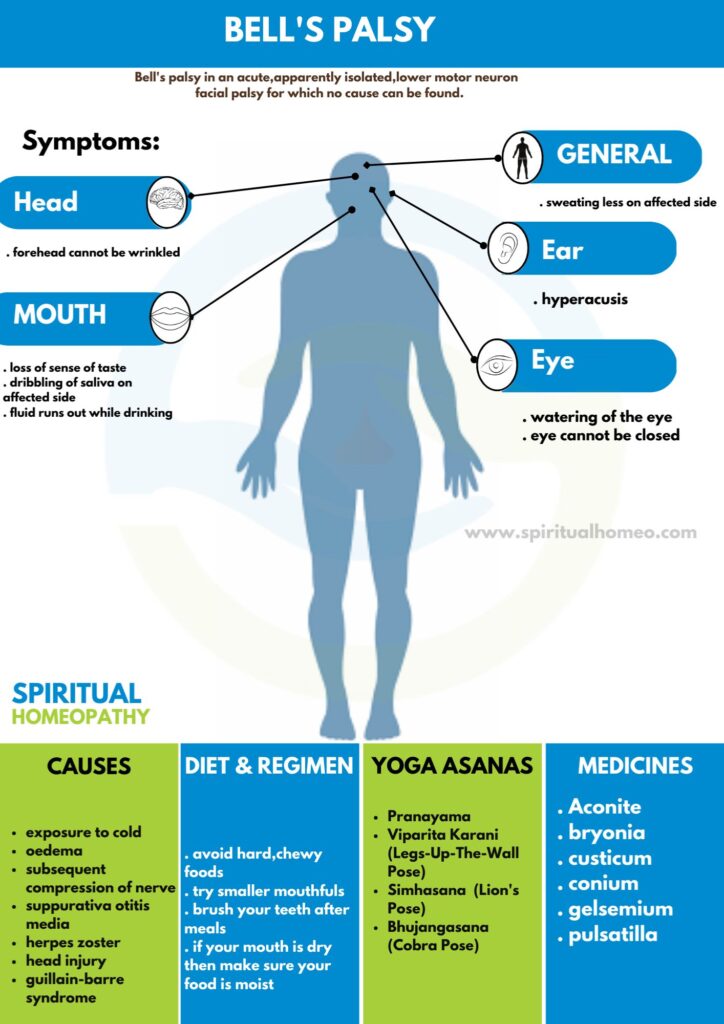
Bell’s palsy is the most common type of facial paralysis, affecting approximately 25 out of every 100,000 individuals each year, or about 1 in 60 people during their lifetime. It results from a lower motor neuron lesion of the 7th (facial) nerve, leading to sudden weakness or paralysis on one side of the face.
This condition can occur in individuals of all ages and both sexes, with certain risk factors including pregnancy and diabetes mellitus. In most cases, the exact cause is idiopathic, meaning no specific origin is identified.
At Spiritual Homeopathy Clinic, consultations for Bell’s palsy are available at multiple branches in Hyderabad, as well as through online and international sessions, allowing for individualized assessment and guidance for each patient.
Bell’s palsy can be triggered by a variety of factors, including both known clinical conditions and other associated causes:
Known Clinical Conditions:
Diabetes – may increase susceptibility to nerve inflammation.
Severe Hypertension – can affect blood flow to the facial nerve.
Late Pregnancy – particularly during the third trimester.
Dental Anesthesia – in rare cases, may temporarily affect nerve function.
Associated Causes:
Exposure to Cold: Prolonged exposure to cold weather may lead to edema, which can put pressure on the facial nerve within the narrow fallopian canal, disrupting blood circulation and contributing to facial paralysis.
Other Significant Causes: Acute facial palsy may also arise from:
Suppurative otitis media (middle ear infection)
Herpes zoster (shingles)
Head injury
Guillain-Barré syndrome (an autoimmune disorder affecting the peripheral nervous system)
Understanding these factors is important in designing an individualized care plan for each patient. At Spiritual Homeopathy Clinic, patients can consult experienced practitioners at our multiple Hyderabad branches or via online and international consultations to assess these contributing factors and plan appropriate homeopathic management.
Bell’s palsy can be classified based on cause, severity, and recurrence:
Classic Bell’s Palsy:
The most common type, often linked to viral infections such as herpes simplex. It typically results in sudden, unilateral (one-sided) facial paralysis.
Bilateral Bell’s Palsy:
A rare form affecting both sides of the face simultaneously. This type may be associated with more serious underlying conditions, such as Lyme disease or certain viral infections.
Recurring Bell’s Palsy:
Refers to cases where Bell’s palsy occurs multiple times in the same individual, usually with similar symptoms affecting one side of the face.
Partial Bell’s Palsy:
In this form, facial paralysis is incomplete, and some muscle function remains, causing partial weakness on the affected side.
While all types involve facial weakness, severity, onset, and underlying causes may differ. At Spiritual Homeopathy Clinic, consultations are available at multiple Hyderabad branches as well as online and international consultations, allowing practitioners to assess the type and design an individualized homeopathic care plan tailored to each patient’s needs.
Forehead:
The ability to wrinkle the forehead is reduced or lost, and frowning becomes difficult, particularly due to involvement of the frontalis muscle.
Eye:
The eye on the affected side may not close completely. When attempting to close the eye, the eyeball may roll upward and outward, a response known as Bell’s phenomenon. This can increase the risk of eye dryness or irritation.
Teeth:
While showing the teeth, the lips on the affected side may not separate properly, making it difficult to whistle or pronounce labial sounds. The nasolabial fold appears flattened, and the angle of the mouth droops, which may lead to drooling due to paralysis of the orbicularis oris muscle.
Cheek:
The cheek may puff out during expiration because of paralysis of the buccinator muscle. Food can accumulate between the teeth and the affected cheek, and fluids may leak while drinking.
Tongue:
Lowering of the tongue base may occur due to involvement of the stylohyoid and posterior belly of the digastric muscles, which can result in difficulty swallowing.
A well-balanced diet plays an important role in supporting the healing process and helping reduce inflammation during Bell’s palsy recovery. The following nutrients and foods may support overall nerve health and general well-being:
Including omega-3-rich foods such as salmon, walnuts, and flaxseeds may help support inflammation control and nerve function.
Foods like eggs, meat, and fortified cereals contain vitamin B12, which is important for nerve health and normal neurological function.
Citrus fruits, bell peppers, and broccoli are good sources of vitamin C, which supports immune function and tissue repair.
Spinach, almonds, and bananas provide magnesium, which may help with muscle relaxation and stress management during recovery.
Pumpkin seeds, beans, and seafood contain zinc, a mineral involved in immune support and tissue repair.
Adequate fluid intake is essential for overall health. Drinking sufficient water supports normal body functions and recovery.
A nutrient-dense, balanced diet may support recovery from Bell’s palsy. Dietary guidance can vary based on individual health status and should be adapted under professional advice when needed.
Yoga can serve as a supportive and complementary practice for individuals with Bell’s palsy. It may help reduce stress, improve circulation, and support relaxation of the affected facial muscles. The following yoga practices are commonly used as part of a supportive care routine:
Benefits:
Pranayama helps reduce stress, improve circulation, and promote relaxation of the nervous system, which may support recovery in Bell’s palsy.
How to Practice:
Sit comfortably with a straight spine. Close your eyes and focus on slow, deep breathing. Practices such as Nadi Shodhana (alternate nostril breathing) or Bhramari (humming bee breath) may help calm the nervous system and improve oxygen flow.
Benefits:
Tadasana supports posture alignment, core strength, and overall circulation, which may assist general recovery.
How to Practice:
Stand with feet together and arms by your sides. Press your feet firmly into the ground, lengthen your spine, and raise your arms overhead while maintaining balance.
Benefits:
Matsyasana helps open the chest and throat area, supporting relaxation and circulation around the neck and facial region.
How to Practice:
Lie on your back with legs extended. Place your hands under your hips and gently lift your chest, allowing the head to tilt back comfortably.
Benefits:
This pose helps strengthen the spine, reduce neck and shoulder tension, and support blood flow to the upper body.
How to Practice:
Lie on your back with knees bent and feet flat on the floor. Press your feet down and lift your hips upward, holding for a few breaths before slowly lowering.
Benefits:
Simhasana focuses on stretching and activating facial muscles, which may help encourage mobility and relaxation of the face.
How to Practice:
Sit comfortably, place palms on your knees, inhale deeply, and exhale while opening the mouth wide and extending the tongue, producing a gentle roaring sound.
Benefits:
Savasana promotes deep relaxation, stress reduction, and overall mental calm, which is important during recovery.
How to Practice:
Lie on your back with arms relaxed by your sides. Close your eyes and focus on slow, natural breathing for 5–10 minutes.
Benefits:
Ujjayi breathing helps calm the nervous system and supports steady oxygen flow throughout the body.
How to Practice:
Sit comfortably and inhale through the nose while gently constricting the throat to create a soft sound. Exhale slowly, maintaining the same rhythm.
Gentle Movements: Practice slow, controlled movements to avoid strain.
Facial Awareness: Gentle facial massage and simple facial movements may be done alongside yoga.
Regular Practice: Consistent, moderate practice may support overall well-being.
Yoga and breathing exercises are supportive measures and should not replace medical evaluation or treatment. It is advisable to consult a healthcare professional before starting yoga, especially if symptoms are severe or progressing.
At Spiritual Homeopathy Clinic, a holistic approach to care is followed, combining classical homeopathic principles with attention to emotional and lifestyle factors that influence health. The focus remains on understanding the individual’s overall condition rather than addressing symptoms alone, allowing care to be patient-centred and personalized.
Healing is approached by considering the balance between physical, emotional, and functional aspects of health. Instead of focusing only on surface-level symptoms, care aims to identify underlying factors that may contribute to illness. This approach supports the body’s natural regulatory processes and helps promote long-term health management under professional guidance.
Consultations involve a detailed review of symptoms, health history, lifestyle patterns, and individual concerns. These assessments help guide an individualized care approach. Consultations are available at multiple branches in Hyderabad, as well as through online and international consultation services for those unable to visit in person.
Homeopathic care focuses on addressing contributing factors that influence health and supporting overall well-being. The approach is non-invasive and generally well-tolerated when provided under professional supervision. Care plans are adapted according to the individual’s response and overall health status.
Ongoing follow-up is an important part of care. Regular reviews help monitor progress, assess changes in symptoms, and make appropriate adjustments as needed. This supports continuity of care and long-term management.
At Spiritual Homeopathy Clinic, care is provided with attention to safety, clarity, and individual needs. Whether managing a specific condition or seeking support for general health concerns, professional guidance is offered to help patients make informed decisions about their care.
For consultation or guidance, contact 9069 176 176. In-clinic, online, and international consultations are available.
You should consult a healthcare professional if symptoms of Bell’s palsy appear suddenly, worsen over time, or begin to interfere with daily activities. Early evaluation helps assess the extent of facial nerve involvement and identify possible contributing factors.
Seek consultation if you experience:
Sudden weakness or paralysis on one side of the face
Difficulty closing the eye or drooping of the mouth
Changes in facial expressions or speech
Facial pain, numbness, or discomfort around the ear
Difficulty eating, drinking, or swallowing
Symptoms that do not show gradual improvement
At Spiritual Homeopathy Clinic, consultations are available across multiple branches in Hyderabad, including Kukatpally, Chandanagar, Dilsukhnagar, and Nallagandla. In-clinic, online, and international consultations are offered to support timely evaluation and individualized care planning based on symptom severity and overall health status.
For appointments or guidance, contact 9069 176 176.
Bell’s palsy is a condition that causes sudden, temporary weakness or paralysis on one side of the face. It occurs due to a lower motor neuron involvement of the facial nerve. In many cases, the exact cause remains unclear.
Common symptoms of Bell’s palsy may include:
Pain behind the ear (postauricular pain)
Reduced or altered taste on one side of the tongue
Increased sensitivity to sound (hyperacusis)
Excessive tearing or watering of the eye
Reduced sweating on the affected side of the face
If these symptoms appear suddenly or worsen, timely medical consultation is advised.
Several factors may be associated with the development of Bell’s palsy, including:
Diabetes
Severe hypertension (high blood pressure)
Pregnancy, especially during the last trimester
Dental procedures involving anesthesia
Exposure to cold
Swelling (oedema) causing pressure on the facial nerve
Middle ear infections (otitis media)
Shingles (herpes zoster)
Head injuries
Identifying contributing factors helps guide an individualized care approach.
A healthcare professional should be consulted if facial weakness appears suddenly, persists, or is associated with pain, hearing changes, or difficulty closing the eye.
At Spiritual Homeopathy Clinic, consultations are available at multiple branches in Hyderabad, along with online and international consultation options. Professional assessment supports safe and individualized care planning.
WhatsApp us