Menorrhagia

Menorrhagia Symptoms and Treatment | A Guide to Heavy Menstrual Bleeding

Menorrhagia

Effective Homeopathic Treatment for Menorrhagia

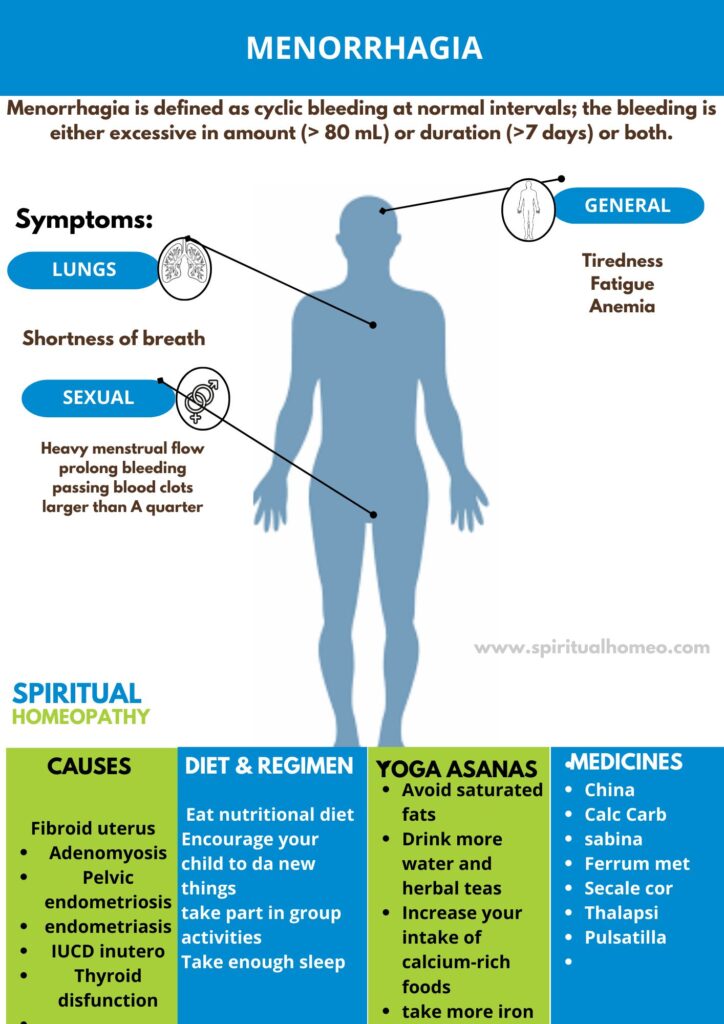
Menorrhagia refers to heavy or prolonged menstrual bleeding that occurs at regular intervals. It is typically defined as blood loss exceeding 80 mL per cycle or lasting longer than 7 days. This condition can significantly impact daily activities and may be a sign of underlying health issues. If you experience unusually heavy periods or extended bleeding, it’s important to consult a healthcare provider for proper evaluation and treatment.

Everything You Need to Know

Overview

Menorrhagia is the medical term for excessively heavy or prolonged menstrual periods. While many women experience heavy bleeding at times, menorrhagia involves blood loss severe enough to interfere with daily activities due to excessive flow and intense cramping. If you find yourself dreading your period because of heavy bleeding or discomfort, it may be a sign of menorrhagia. Consult your doctor, as there are several effective treatment options available to manage this condition.

Causes

Menorrhagia, or heavy menstrual bleeding, can result from a range of underlying conditions, which may be organic, systemic, hematologic, or functional in nature.

Organic causes often involve structural or local uterine issues, such as:

  • Uterine fibroids or adenomyosis, which enlarge the uterus and increase the endometrial surface area

  • Endometriosis or a retroverted uterus, contributing to pelvic congestion

  • Chronic tubo-ovarian masses or complications from intrauterine devices (IUCD)

  • Early-stage tubercular endometritis

  • Ovarian granulosa cell tumors

Systemic conditions may also play a role, including:

  • Liver dysfunction, affecting estrogen metabolism

  • Heart conditions such as congestive heart failure or severe hypertension, impacting uterine blood flow

  • Endocrine disorders, including hypothyroidism or hyperthyroidism, which can disrupt hormonal balance

Hematologic causes include:

  • Platelet disorders, such as idiopathic thrombocytopenic purpura (ITP) or von Willebrand’s disease

  • Blood cancers like leukemia, which can impair clotting

Functional causes stem from hormonal imbalances within the hypothalamic-pituitary-ovarian-endometrial axis, leading to dysfunctional uterine bleeding (DUB).

Identifying the underlying cause is crucial for effective management. At Spiritual Homeopathy Clinic, individualized assessment and care are available through multiple branches in Hyderabad, as well as via online and international consultations, to address each patient’s specific symptoms and overall health status.

Types of Menorrhagia (Heavy Menstrual Bleeding)

Menorrhagia is the medical term for unusually heavy or prolonged menstrual periods. It can interfere with daily life and may be a sign of an underlying health condition. Understanding the different types of menorrhagia can help with better diagnosis and treatment. Below are the most common classifications based on their causes and characteristics.


1. Primary Menorrhagia (Functional Menorrhagia)

Primary menorrhagia occurs in the absence of any physical disease. It’s often linked to hormonal imbalances, especially during adolescence or the years leading up to menopause.

  • Cause: Often due to anovulation (lack of ovulation), which disrupts hormone regulation and causes the uterine lining to thicken excessively.

  • Common Symptoms:

    • Heavy or prolonged periods lasting more than 7 days

    • Irregular menstrual cycles

    • Occasional missed periods


2. Secondary Menorrhagia

Secondary menorrhagia is caused by an identifiable medical condition or structural issue within the uterus.

  • Common Causes:

    • Uterine fibroids – Benign tumors in the uterus

    • Endometrial hyperplasia – Overgrowth of the uterine lining

    • Adenomyosis – Uterine lining grows into the muscle wall

    • Polyps – Small, benign growths in the uterus

    • Non-hormonal IUDs – Can cause increased bleeding

    • Thyroid disorders – Both hyperthyroidism and hypothyroidism can disrupt periods

    • Blood clotting disorders – Such as von Willebrand disease

  • Symptoms:

    • Heavy, prolonged bleeding

    • Possible pelvic pain or pressure

    • Irregular or painful periods


3. Menorrhagia with Ovulatory Dysfunction

This form of menorrhagia happens when ovulation is irregular or absent, leading to hormonal imbalance.

  • Cause: Imbalance in estrogen and progesterone due to missed ovulation (anovulation).

  • Symptoms:

    • Unpredictable or missed periods

    • Excessive bleeding when periods do occur

    • Signs of hormonal issues such as acne, weight changes, or abnormal hair growth


4. Postmenopausal Menorrhagia

Although menstruation naturally stops after menopause, any bleeding afterward is abnormal and should be evaluated.

  • Potential Causes:

    • Uterine cancer or precancerous changes

    • Endometrial atrophy – Thinning of the uterine lining

    • Hormone replacement therapy (HRT) – Can cause breakthrough bleeding

  • Symptoms:

    • Vaginal bleeding occurring 12 months or more after menopause

    • Spotting or heavy flow


5. Ovulatory Menorrhagia

In this type, ovulation still occurs regularly, but menstrual bleeding is abnormally heavy.

  • Causes:

    • Hormonal fluctuations between estrogen and progesterone

    • Uterine abnormalities like fibroids or polyps

  • Symptoms:

    • Consistent monthly periods with heavy flow

    • Bleeding lasting longer than 7 days


6. Idiopathic Menorrhagia

When no clear medical cause is found despite comprehensive testing, the condition is termed idiopathic menorrhagia.

  • Cause: Unknown, but may involve subtle hormonal or genetic factors.

  • Symptoms:

    • Heavy menstrual bleeding without a detectable underlying condition

    • Recurring episodes of excessive bleeding


7. Menorrhagia Caused by Blood Disorders

Certain bleeding or clotting disorders can lead to excessive menstrual bleeding.

  • Common Disorders:

    • Von Willebrand Disease – A common clotting disorder in women

    • Platelet function disorders – Affect the blood’s ability to clot

    • Hemophilia – Rare in females but can cause abnormal bleeding

  • Symptoms:

    • Extremely heavy menstrual bleeding

    • Easy bruising or bleeding gums

    • Prolonged bleeding after injury or surgery

Signs and Symptoms of Heavy Menstrual Bleeding (Menorrhagia)

Experiencing unusually heavy periods can be more than just inconvenient—it may be a sign of menorrhagia, a condition that requires medical attention. Here are the most common symptoms that indicate your menstrual bleeding may be heavier than normal:

  • Soaking through one or more pads or tampons every hour for several hours in a row

  • Using double sanitary protection (such as a tampon and pad together) to manage your flow

  • Waking up at night to change sanitary products due to excessive bleeding

  • Menstrual bleeding lasting longer than 7 days

  • Passing large blood clots, typically bigger than the size of a quarter

  • Avoiding daily activities such as work, school, or exercise due to heavy flow

  • Symptoms of anemia, including fatigue, weakness, or shortness of breath

If you experience any of these symptoms consistently, it’s important to consult a healthcare provider. Early diagnosis and treatment can help manage the condition effectively and improve your quality of life.

Diet and Lifestyle Guide for Managing Menorrhagia (Heavy Menstrual Bleeding)

Menorrhagia, or heavy menstrual bleeding, can significantly impact your physical health and daily life. While medical treatment is often necessary, making smart dietary and lifestyle choices can help manage symptoms, prevent complications like anemia, and improve overall well-being. Below is a comprehensive guide on what to eat and how to live well with menorrhagia.


Best Diet for Menorrhagia: Nutrients That Support Hormone Balance and Blood Health

1. Iron-Rich Foods

Heavy periods can lead to iron deficiency or anemia. Boosting iron intake is essential to replenish lost stores and maintain energy.

Top Iron Sources:

  • Lean meats: chicken, turkey, lean beef

  • Leafy greens: spinach, kale, Swiss chard

  • Legumes: lentils, chickpeas, black beans

  • Tofu and tempeh

  • Fortified cereals and whole grains

  • Pumpkin seeds, quinoa

  • Dried fruits: apricots, raisins, prunes

Tip: Combine iron-rich foods with vitamin C-rich foods (like oranges or tomatoes) to enhance iron absorption.


2. Vitamin C-Rich Foods

Vitamin C not only helps absorb iron better but also supports immune function and tissue repair.

Best Sources:

  • Citrus fruits: oranges, lemons, grapefruits

  • Berries: strawberries, blueberries, raspberries

  • Bell peppers, broccoli, tomatoes

  • Kiwi and leafy greens


3. Vitamin K-Rich Foods

Vitamin K is essential for blood clotting and may help reduce excessive bleeding.

Rich Sources:

  • Dark leafy greens: kale, spinach, collard greens

  • Broccoli, cabbage, Brussels sprouts

  • Fish like salmon and tuna

  • Dairy: cheese, yogurt


4. Omega-3 Fatty Acids

Omega-3s reduce inflammation, support hormone balance, and may help ease heavy bleeding and cramps.

Sources Include:

  • Fatty fish: salmon, mackerel, sardines

  • Chia seeds, flaxseeds, walnuts

  • Hemp seeds, pumpkin seeds


5. Magnesium-Rich Foods

Magnesium helps regulate hormones and reduces menstrual cramps, which often accompany heavy periods.

Magnesium-Rich Choices:

  • Dark leafy greens: spinach, chard

  • Nuts and seeds: almonds, sunflower seeds

  • Whole grains: brown rice, oats, quinoa

  • Legumes: beans, lentils

  • Avocados and bananas


6. High-Fiber Foods

Fiber helps balance hormones by aiding the elimination of excess estrogen, which can contribute to heavy bleeding.

Fiber-Rich Options:

  • Whole grains: oats, quinoa, whole wheat

  • Fruits: apples, pears, berries

  • Vegetables: carrots, Brussels sprouts, broccoli

  • Legumes: lentils, beans, chickpeas


7. Herbal Teas for Menstrual Health

Certain herbal teas can help reduce menstrual flow and ease cramps.

Effective Teas:

  • Ginger tea: Anti-inflammatory and soothing

  • Chamomile tea: Calms nerves and may regulate bleeding

  • Cinnamon tea: May help control heavy flow and ease discomfort


Foods to Avoid During Heavy Periods

To better manage menorrhagia, limit or avoid the following:

  • Caffeine: Can worsen hormonal imbalances and dehydration

  • Alcohol: May interfere with blood clotting and increase bleeding

  • Refined sugars and processed foods: These can trigger inflammation and affect hormonal health


Lifestyle Tips for Managing Menorrhagia

1. Maintain a Healthy Weight

Being overweight or underweight can disrupt hormone balance. Achieving a healthy body weight helps regulate menstrual cycles and reduces heavy bleeding.

2. Exercise Regularly

Light to moderate exercise (e.g., walking, yoga, swimming) supports circulation, reduces stress, and helps balance hormones.

3. Stay Hydrated

Drink plenty of water to prevent fatigue and reduce cramping. Hydration also helps improve energy levels during your period.

4. Manage Stress

Chronic stress can impact hormone production and worsen symptoms. Try stress-reducing practices like:

  • Meditation

  • Deep breathing exercises

  • Yoga or stretching

  • Journaling or talking to a therapist

5. Get Enough Rest

Fatigue is common with heavy periods. Aim for 7–9 hours of sleep per night to help your body recover and maintain energy levels.

Best Yoga Asanas for Menorrhagia (Heavy Menstrual Bleeding)

⚠️ Note: Always consult your doctor before starting yoga if you have severe symptoms or underlying medical conditions.

1. Supta Baddha Konasana (Reclining Bound Angle Pose)

  • Benefits: Opens the pelvis, calms the nervous system, and improves blood flow to the reproductive organs.

  • How to do it: Lie on your back, bring the soles of your feet together, and let your knees fall apart. Use pillows or bolsters under your knees for support.

  • Duration: Hold for 5–10 minutes while breathing deeply.


2. Viparita Karani (Legs Up the Wall Pose)

  • Benefits: Improves venous return, reduces lower body swelling, calms the mind, and relieves pelvic congestion.

  • How to do it: Lie on your back and rest your legs vertically against a wall. Keep your hips slightly elevated with a cushion.

  • Duration: Stay for 5–15 minutes.


3. Balasana (Child’s Pose)

  • Benefits: Relieves menstrual cramps and stress, and gently stretches the lower back and hips.

  • How to do it: Kneel on the mat, sit back on your heels, and fold forward, resting your forehead on the ground or a cushion.

  • Duration: 2–5 minutes or longer as needed.


4. Setu Bandhasana (Bridge Pose)

  • Benefits: Stimulates abdominal organs, improves circulation in the pelvic region, and may help with hormonal balance.

  • How to do it: Lie on your back, bend your knees with feet flat, and lift your hips while keeping your shoulders grounded.

  • Duration: Hold for 30 seconds to 1 minute. Use a block under your lower back for support if needed.


5. Paschimottanasana (Seated Forward Bend)

  • Benefits: Calms the nervous system, relieves stress, and supports hormonal regulation.

  • How to do it: Sit with legs extended, inhale to lengthen your spine, and exhale to fold forward over your legs.

  • Duration: Hold for 1–2 minutes with relaxed breathing.


6. Janu Sirsasana (Head-to-Knee Pose)

  • Benefits: Stimulates abdominal organs and promotes hormonal balance.

  • How to do it: Sit with one leg extended, bend the other foot to the inner thigh, and fold forward over the extended leg.

  • Duration: 1–2 minutes each side.


7. Ardha Matsyendrasana (Seated Spinal Twist)

  • Benefits: Improves digestion, stimulates abdominal organs, and supports reproductive organ health.

  • How to do it: Sit with one leg bent and the other crossed over. Twist your torso toward the bent knee, using the opposite arm to deepen the stretch.

  • Duration: 30 seconds to 1 minute each side.


🧘‍♂️ Additional Tips for Practicing Yoga with Menorrhagia

  • Focus on gentle, restorative poses and avoid intense backbends or inversions during heavy bleeding.

  • Prioritize breathwork (pranayama) like Anulom Vilom or deep belly breathing to reduce stress.

  • Use props like cushions, bolsters, and blankets for added comfort and support.

  • Listen to your body—never force a pose or hold it if it causes discomfort or fatigue.

🌿 Why Choose Homeopathy?

Homeopathy is a gentle, natural system of healing that focuses on treating the root cause of illness, not just the symptoms. It works in harmony with your body’s innate ability to heal itself—without causing side effects. Safe for all ages and tailored to each individual, homeopathy supports long-term health and well-being.

Whether you’re managing a chronic condition or seeking relief from acute symptoms, homeopathy offers a holistic, personalized path to recovery.


🌟 Spiritual Homeopathy: Your Trusted Partner in Natural Healing

At Spiritual Homeopathy, we are deeply committed to helping you achieve true wellness—physically, emotionally, and spiritually. Our mission is to provide compassionate, individualized care using time-tested homeopathic principles and modern clinical insight.

We don’t just treat symptoms; we focus on identifying and resolving the underlying imbalances that cause illness, so you can enjoy lasting health and vitality.


💫 Why Choose Spiritual Homeopathy?

At the heart of our practice is a unique approach that blends classical homeopathy with a deep respect for the spiritual and emotional dimensions of healing. Here’s what sets us apart:

  • ✅ Root-Cause Healing: We look beyond surface symptoms to identify and treat the root cause.

  • ✅ Personalized Treatment: Every remedy and plan is uniquely tailored to your body, lifestyle, and emotional needs.

  • ✅ Experienced Team: Our skilled and empathetic homeopathy doctors in Hyderabad offer both in-clinic and online consultations for your convenience.

  • ✅ Safe & Non-Toxic: Our remedies are gentle, non-addictive, and free from harmful chemicals.

  • ✅ Spiritual Care: We understand the mind-body-spirit connection and integrate it into every treatment.


🔍 Our Treatment Process

🩺 1. In-Depth Consultation

We take time to listen—really listen. During your initial session, our experts assess your health history, lifestyle, emotional state, and current symptoms to develop a treatment plan that’s customized just for you.

💊 2. Holistic Remedies

We offer a wide range of homeopathic medicines, carefully selected to suit your individual condition—whether you’re dealing with an acute illness like bronchitis or a long-standing issue like digestive problems, skin disorders, or allergies.

🔄 3. Ongoing Support & Follow-Up

Healing is a journey, and we’re with you every step of the way. Regular follow-ups help us monitor your progress, fine-tune your treatment, and ensure you’re getting the best possible outcome.


❤️ Our Promise to You

At Spiritual Homeopathy, your well-being is our highest priority. Whether you’re seeking relief from specific health issues or aiming to boost your overall vitality, we’re here to guide you with care, empathy, and clinical excellence.


📞 Start Your Healing Journey Today

Ready to experience the power of natural, root-cause healing?
Book your consultation with Spiritual Homeopathy now — in person or online — and take the first step toward balanced, vibrant health.

👉 Schedule Your Appointment Today

When to Consult a Doctor

You should consult a healthcare professional if menstrual bleeding becomes unusually heavy, prolonged, or begins to interfere with daily activities. Early evaluation helps identify underlying causes and allows for personalized care.

Seek consultation if you experience:

  • Bleeding that soaks through pads or tampons every hour for several hours

  • Menstrual periods lasting longer than 7 days

  • Passing large blood clots

  • Symptoms of anemia, such as fatigue, weakness, or shortness of breath

  • Severe pelvic pain or pressure

  • Bleeding that does not improve with dietary, lifestyle, or supportive measures

At Spiritual Homeopathy Clinic, consultations are available at multiple branches in Hyderabad, including Kukatpally, Chandanagar, Dilsukhnagar, and Nallagandla. Online and international consultations are also offered for patients unable to visit in person. A professional assessment ensures an individualized care plan tailored to your symptoms and overall health.

For appointments or guidance, contact 9069 176 176.

FAQ

  1. What is menorrhagia?
    Menorrhagia is a condition marked by unusually heavy or prolonged menstrual bleeding. It may involve soaking through one or more pads or tampons every hour, bleeding for over 7 days, or passing large blood clots.

  2. What are the common causes of menorrhagia?
    Common causes include:

  • Hormonal imbalances

  • Uterine fibroids or polyps

  • Endometriosis or adenomyosis

  • Thyroid disorders

  • Blood clotting disorders

  • Use of non-hormonal IUDs

  • Certain medications or underlying health conditions

  1. How do I know if my period is too heavy?
    Signs of heavy periods include:

  • Changing pads or tampons every hour for several hours

  • Bleeding for more than 7 days

  • Passing clots larger than a quarter

  • Experiencing fatigue, dizziness, or weakness (possible signs of anemia)

  1. Can menorrhagia lead to anemia?
    Yes. Significant blood loss can lower iron levels, causing iron-deficiency anemia. Symptoms may include fatigue, shortness of breath, and pale skin.

  2. How is menorrhagia diagnosed?
    Diagnosis may involve:

  • Blood tests to check for anemia or hormone levels

  • Pelvic examination

  • Ultrasound imaging of the uterus

  • Endometrial biopsy (in select cases)

  • Hysteroscopy to view the uterine lining

  1. What treatments are available for menorrhagia?
    Treatment depends on the underlying cause and may include:

  • Iron supplementation to manage anemia

  • Hormonal therapies (e.g., birth control options)

  • Anti-inflammatory medications to reduce bleeding and cramps

  • Surgical procedures (e.g., removal of fibroids, endometrial ablation, or hysterectomy in specific cases)

  1. Can diet help manage menorrhagia?
    Yes. A nutrient-rich diet supports hormone balance and replenishes nutrients lost through heavy bleeding. Important nutrients include:

  • Iron (e.g., red meat, spinach, lentils)

  • Vitamin C (e.g., citrus fruits, peppers)

  • Vitamin K (e.g., leafy greens)

  • Omega-3 fatty acids (e.g., fatty fish, flaxseeds)

  • Magnesium (e.g., nuts, whole grains)

  1. Can stress contribute to heavy periods?
    Chronic stress can affect hormone levels, which may lead to heavier or irregular menstrual bleeding in some individuals.

  2. Are there lifestyle changes that can help manage menorrhagia?
    Supportive approaches include:

  • Gentle yoga and regular moderate exercise

  • Herbal teas such as ginger or chamomile

  • Stress management techniques (meditation, deep breathing)

  • Staying hydrated and maintaining a healthy weight

  1. When should I consult a doctor for heavy periods?
    See a healthcare professional if:

  • Your bleeding soaks through pads or tampons every hour

  • Periods last longer than 7 days

  • You experience fatigue, dizziness, or shortness of breath

  • Heavy bleeding interferes with daily activities or quality of life