
Obesity is a common health condition characterized by excessive accumulation of body fat that can increase the risk of various chronic diseases and affect overall well-being. It usually develops when calorie intake consistently exceeds the calories burned through physical activity and normal body functions. Obesity may also be influenced by factors such as genetics, hormonal imbalances, poor dietary habits, lack of physical activity, stress, inadequate sleep, and certain medical conditions. Common signs include excessive weight gain, increased body mass index (BMI), fatigue, shortness of breath during physical activity, joint pain, reduced mobility, and difficulty performing daily activities. If left unmanaged, obesity can increase the risk of diabetes, high blood pressure, heart disease, sleep apnea, fatty liver disease, and other metabolic disorders. Seeking early obesity treatment and proper evaluation can help achieve healthy weight management and reduce the risk of long-term health complications.
At Spiritual Homeopathy, we believe in treating the root cause of obesity rather than simply focusing on weight reduction. Our experienced homeopathic doctors carefully evaluate each patient’s symptoms, medical history, eating habits, metabolism, hormonal health, stress levels, lifestyle, and overall well-being before preparing an individualized treatment plan. Our holistic approach focuses on providing natural obesity treatment, supporting healthy metabolism, improving digestion, promoting sustainable weight management, addressing contributing factors, and enhancing overall health through safe and personalized homeopathic care. We specialize in homeopathic treatment for obesity, weight management, metabolic disorders, hormonal imbalances, and lifestyle-related health conditions.
We provide personalized homeopathic treatment for obesity in Hyderabad to patients of all age groups through our clinics in Hyderabad, as well as online homeopathy consultations for patients across India and in more than 100 countries worldwide. If you are looking for the best homeopathy doctor for obesity, natural weight management, holistic obesity treatment, or long-term metabolic health, Spiritual Homeopathy is committed to delivering expert, patient-centered care wherever you are.
Obesity is increasingly recognized as a global health concern, posing serious risks to overall well-being and placing a growing burden on healthcare systems worldwide. It is associated with a higher risk of metabolic, cardiovascular, and musculoskeletal conditions and often requires long-term management rather than short-term measures.
At Spiritual Homeopathy Clinic, individuals can seek professional guidance through in-clinic consultations across multiple branches in Hyderabad, as well as online and international consultations, based on convenience and health needs.
In many developing countries, national obesity rates may appear low on average. However, this often masks the fact that urban areas experience significantly higher rates of overweight and obesity. For example, in urban India, nearly 25% of women are classified as overweight or obese, highlighting lifestyle and environmental influences in city settings.
Public awareness of the health risks associated with obesity is gradually increasing. As a result, more individuals are seeking medical advice for weight management or for addressing obesity-related conditions such as diabetes, heart disease, and joint problems. Early consultation supports better understanding of contributing factors and helps guide individualized care.
In developed nations such as the United States and the United Kingdom, obesity has become widespread, affecting a large proportion of the population. Population-wide weight trends continue to rise—individuals who were previously considered lean are gaining weight, while those already overweight are becoming more so. In the UK, the average adult gains approximately 1 kilogram each year, underscoring the need for timely medical evaluation and sustained lifestyle-focused management.
Obesity results from a complex interaction of lifestyle, genetic, and socio-economic factors. Even small, sustained daily imbalances in energy intake can lead to significant weight gain over time. Understanding these contributing factors is important for appropriate evaluation and long-term management.
A consistent daily surplus of just 0.2–0.8 MJ (50–200 kcal), which is less than 10% of average energy intake, can result in a weight gain of approximately 2 to 20 kg over 4 to 10 years. Such gradual changes often go unnoticed until excess weight becomes established.
Body weight commonly increases throughout adulthood due to a natural decline in basal metabolic rate (BMR) and reduced physical activity levels. Children with higher body weight are more likely to become overweight or obese adults, highlighting the importance of early lifestyle habits.
In countries such as India, food energy distribution is uneven. It is estimated that around 5% of the population consumes nearly 40% of available food energy. This imbalance has contributed to increasing obesity rates in urban populations, while some rural communities continue to face undernutrition.
Frequent intake of highly processed, calorie-dense foods plays a significant role in weight gain. These include sugar-sweetened beverages, refined snacks, and salty convenience foods that are high in calories but low in nutritional value.
Physical activity levels have declined considerably due to modern lifestyle changes. Increased screen time, including prolonged television viewing, is strongly associated with reduced physical activity and lower engagement in routine movements such as walking or stair climbing.
Genetic factors contribute meaningfully to obesity risk. Studies involving twins and adoptees confirm a heritable component. Certain single-gene disorders, such as mutations in the melanocortin-4 receptor (MC4R), are linked to severe early-onset obesity.
Other genetic contributors include:
Defects in POMC processing, which affect hormones involved in appetite regulation.
Leptin gene mutations, which interfere with normal hunger and satiety signaling.
In addition, rare genetic syndromes such as Prader–Willi and Lawrence–Moon–Biedl are associated with severe obesity.
Some medical conditions can contribute to weight gain, including:
Hypothyroidism, where reduced thyroid hormone production slows metabolism.
Cushing’s syndrome, characterized by prolonged exposure to high cortisol levels, leading to fat accumulation.
Body Mass Index (BMI) is a widely used metric to determine whether a person is overweight or obese. It is calculated using height and weight to estimate body fat levels.
Overweight: BMI 25–29.9
Class 1 Obesity: BMI 30–34.9
Class 2 Obesity: BMI 35–39.9
Class 3 Obesity (Severe or Morbid): BMI 40 and above
📌 Higher BMI values are associated with an increased risk of cardiovascular disease, type 2 diabetes, and other chronic health conditions. Clinical evaluation helps interpret BMI alongside overall health status.
Visceral Obesity
Visceral fat surrounds internal organs such as the liver and intestines and is considered metabolically more active.
Characteristics: Enlarged waistline, “apple-shaped” body, high waist-to-hip ratio
Risks: Heart disease, insulin resistance, fatty liver disease, type 2 diabetes, high blood pressure
Subcutaneous Obesity
Subcutaneous fat lies just beneath the skin, commonly around the hips and thighs.
Characteristics: “Pear-shaped” body, fat accumulation in thighs, hips, and buttocks
Risks: Joint strain, mobility limitations, and elevated cholesterol levels
Android Obesity (Apple-Shaped)
More common in men, this type involves fat accumulation around the abdomen and upper body.
Risks: Increased risk of heart disease, stroke, and metabolic disorders
Gynoid Obesity (Pear-Shaped)
More common in women, this pattern involves fat storage predominantly in the lower body.
Risks: Generally lower metabolic risk, but may contribute to joint problems, varicose veins, and certain pregnancy-related complications
Monogenic obesity is a rare form caused by mutations in a single gene, such as the melanocortin-4 receptor (MC4R) gene.
Characteristics: Early onset in childhood, severe weight gain, limited response to diet and exercise alone
Risks: Early development of obesity-related conditions; often requires specialized assessment and long-term care
This type of obesity results from hormonal imbalances that affect metabolism and fat distribution.
Common causes include:
Hypothyroidism: Reduced thyroid hormone levels leading to slower metabolism
PCOS (Polycystic Ovary Syndrome): Hormonal imbalance in women associated with weight gain
Cushing’s Syndrome: Excess cortisol causing fat accumulation, particularly in the face and abdomen
Risks: Diabetes, hypertension, infertility, and persistent fatigue
Psychological factors such as stress, anxiety, depression, or past trauma may contribute to overeating behaviors.
Characteristics: Eating as a coping mechanism for emotions such as stress, sadness, or loneliness
Risks: Binge eating disorder, low self-esteem, anxiety, and depression
This is the most common form of obesity and results from an imbalance between calorie intake and energy expenditure.
Characteristics: Sedentary lifestyle, frequent intake of processed or high-calorie foods, limited physical activity
Risks: Type 2 diabetes, cardiovascular disease, high cholesterol levels, and certain obesity-related cancers
Some medications may contribute to weight gain by influencing appetite, metabolism, or fat storage.
Examples include:
Antidepressants
Antipsychotics
Corticosteroids
Long-term insulin therapy
Risks: Gradual weight gain that may increase the likelihood of chronic health conditions with prolonged use
Weight gain during pregnancy is expected; however, excessive gain may increase long-term obesity risk.
Characteristics: Weight gain beyond medically recommended pregnancy ranges
Risks: Gestational diabetes, postpartum weight retention, and increased obesity risk in children
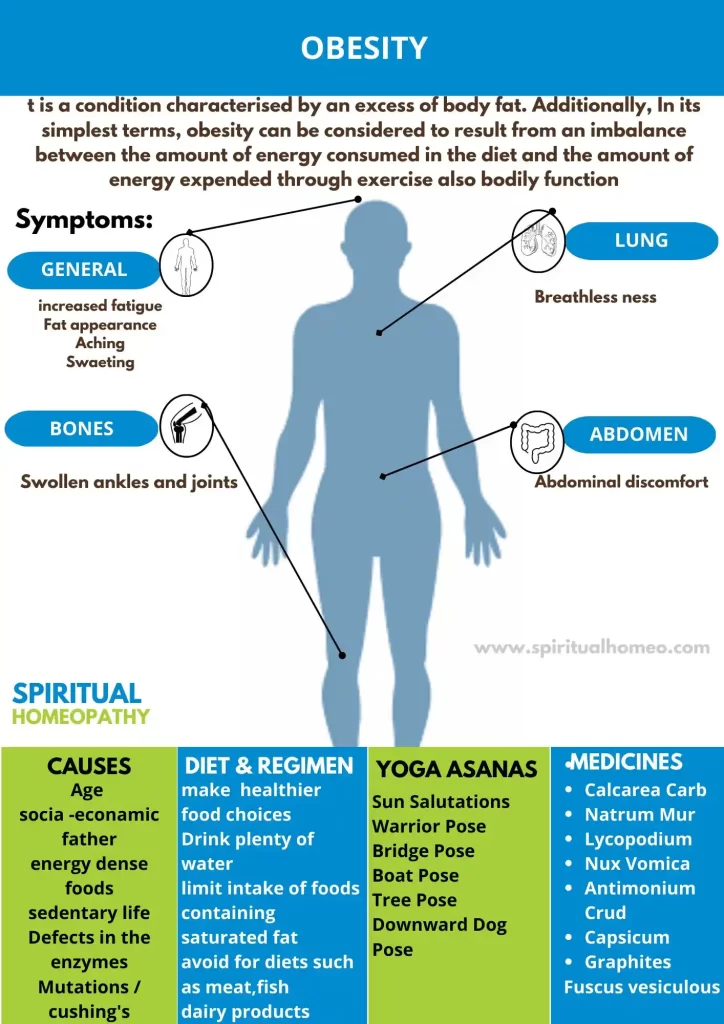
Obesity is commonly described as having a body weight that is about 20% or more above the ideal weight for a person’s height and body frame. While some individuals with excess weight may not notice clear physical symptoms, obesity can still influence overall health in both visible and less obvious ways.
Many individuals living with obesity may experience emotional concerns such as low self-esteem, anxiety, or depressive feelings. Reduced physical stamina, limited mobility, and poor tolerance to physical activity are also frequently reported and may affect daily functioning.
Abdominal Discomfort: A persistent feeling of heaviness or pressure in the abdominal area
Aching: Generalized muscle or joint pain, particularly after routine physical activity
Swollen Ankles and Joints: Increased load on the lower limbs may lead to swelling or discomfort
Breathlessness: Shortness of breath, even with mild exertion
Excessive Sweating: Often related to increased physical strain and altered heat regulation
Increased Fatigue: Ongoing tiredness or low energy levels, sometimes even with minimal effort
Managing obesity involves more than just cutting calories—it focuses on building a sustainable and healthy lifestyle that supports gradual weight reduction and overall wellness. A balanced diet, regular physical activity, adequate sleep, and stress management all play important roles in obesity management and long-term health.
1. Calorie Control
Creating a calorie deficit—consuming fewer calories than you burn—is essential for weight management. A gradual and realistic target is a weight reduction of about 1–2 pounds (0.5–1 kg) per week.
2. High-Fiber Foods
Fiber-rich foods help improve satiety, reduce frequent hunger, support digestion, and assist in maintaining stable blood sugar levels.
3. Protein-Rich Meals
Including adequate protein supports muscle maintenance during weight reduction and helps improve feelings of fullness after meals.
4. Healthy Fats in Moderation
Healthy fats can support heart and brain health and may help reduce cravings when consumed in appropriate portions.
1. Fruits and Vegetables
Naturally low in calories and rich in fiber, vitamins, and minerals.
Examples: Spinach, kale, broccoli, cauliflower, carrots, berries, apples, oranges
2. Whole Grains
Support steady energy levels and help control hunger.
Examples: Brown rice, oats, quinoa, whole wheat pasta, barley
3. Lean Proteins
Support muscle health and overall metabolism.
Examples: Skinless chicken, turkey, fish, eggs, tofu, tempeh, legumes, low-fat dairy
4. Healthy Fats
Aid nutrient absorption and promote satiety.
Examples: Avocados, olive oil, nuts, seeds, fatty fish
5. Low-Fat Dairy
Provides calcium and protein with controlled calorie intake.
Examples: Skim milk, low-fat yogurt, low-fat cheese
6.Legumes and Beans
High in fiber and plant-based protein, suitable for regular meals.
Examples: Chickpeas, lentils, kidney beans, black beans, peas
7. Water
Supports hydration, digestion, and appetite regulation.
💧 Aim: Around 8 cups (2 liters) daily, adjusted for individual needs.
1. Sugary Foods and Beverages
Contribute excess calories and blood sugar fluctuations.
Examples: Sodas, sweetened drinks, candies, baked desserts
2. Processed and Refined Foods
Often high in unhealthy fats, sugar, and sodium.
Examples: Fast food, packaged snacks, white bread, pastries
3. Alcohol
Adds empty calories and may influence food choices.
Note: Moderation is advised where applicable.
4. Unhealthy Fats (Trans and Excess Saturated Fats)
Associated with cardiovascular risks and weight gain.
Examples: Fried foods, processed meats, hydrogenated fats
1. Regular Physical Activity
Cardio (Aerobic Exercise):
Supports calorie expenditure and cardiovascular health.
General guidance: About 150 minutes per week of moderate activity.
Strength Training:
Helps maintain muscle mass and metabolic health.
Guidance: At least 2 sessions per week.
Flexibility and Balance Exercises:
Support mobility and reduce injury risk.
Examples: Yoga, stretching, Pilates
2. Behavioral Changes and Mindful Eating
Eating slowly, avoiding distractions, maintaining regular meal timings, and managing portion sizes may help reduce overeating.
3. Prioritize Sleep Hygiene
Adequate sleep supports hormonal balance related to appetite and metabolism.
General guidance: 7–9 hours of quality sleep per night.
4. Manage Stress Effectively
Long-term stress may influence eating behaviors and fat distribution.
Supportive practices: Meditation, breathing exercises, yoga, journaling.
5. Stay Hydrated
Adequate hydration supports digestion and may help distinguish hunger from thirst.
The following yoga postures are commonly included as part of a supportive lifestyle plan for individuals managing obesity. These practices focus on improving flexibility, strength, digestion, and overall body awareness. Yoga should be practiced under guidance and is not a replacement for medical or nutritional care.
1. Surya Namaskar (Sun Salutation)
One of the most effective full-body yoga sequences.
Benefits: Supports metabolism, improves circulation, and tones multiple muscle groups.
Reps: Begin with 5 rounds daily and increase gradually based on comfort and fitness level.
2. Trikonasana (Triangle Pose)
Benefits: Helps engage the waist and thighs, supports digestion, and strengthens the legs.
Tip: Maintain a straight spine and gently engage the core muscles.
3. Bhujangasana (Cobra Pose)
Benefits: Strengthens abdominal muscles, supports spinal flexibility, and improves posture.
Ideal for: Supporting core strength and relieving mild back stiffness.
4. Dhanurasana (Bow Pose)
Benefits: Stimulates abdominal organs, tones the abdomen, thighs, and chest.
Caution: Avoid if you have hernia, recent surgery, or severe back problems.
5. Paschimottanasana (Seated Forward Bend)
Benefits: Supports digestion, stretches hamstrings, and engages the abdominal region.
Best done: On an empty stomach, preferably in the morning.
6. Ardha Matsyendrasana (Half Spinal Twist)
Benefits: Supports digestion, tones the waistline, and improves spinal mobility.
Tip: Twist gently from the spine, avoiding forceful movements.
7. Naukasana (Boat Pose)
Benefits: Strengthens core muscles, tones the abdomen and thighs, and supports metabolism.
Reps: Hold for 15–30 seconds and repeat 3–5 times as tolerated.
8. Ustrasana (Camel Pose)
Benefits: Stretches the abdominal region, opens the chest, and supports flexibility.
Tip: Keep the neck relaxed and avoid excessive back bending.
9. Setu Bandhasana (Bridge Pose)
Benefits: Supports digestion, engages the lower body, and improves spinal strength.
Ideal for: Strengthening gluteal muscles and supporting core stability.
10. Tadasana (Mountain Pose)
Benefits: Improves posture, strengthens legs and core muscles, and enhances body awareness.
Useful as: A foundational pose before practicing other asanas.
Homeopathy is a gentle system of care that focuses on understanding and addressing the underlying factors of illness, rather than managing symptoms alone. It works alongside the body’s natural healing responses and is commonly used as part of a holistic health approach. Care is individualized and planned based on a person’s physical, emotional, and overall health profile.
Homeopathy may be considered for both chronic conditions and acute concerns, with the aim of supporting long-term health management under professional guidance.
At Spiritual Homeopathy Clinic, the focus is on providing structured, patient-centred care that considers physical health along with emotional and lifestyle factors. Consultations are designed to understand individual health patterns and contributing influences before planning care.
The clinic offers consultations across multiple branches in Hyderabad, along with online and international consultation options for patients who cannot attend in person.
The clinic follows a classical homeopathic framework combined with a holistic understanding of health. Key aspects of the approach include:
Root-Cause Focus: Care plans aim to address contributing factors rather than isolated symptoms.
Personalized Care: Each treatment plan is individualized based on health history, lifestyle, and symptom patterns.
Professional Guidance: Consultations are conducted by trained homeopathy practitioners, available for in-clinic and online consultations.
Generally Well-Tolerated Approach: Homeopathy is commonly used under professional supervision as part of long-term health management.
Mind–Body Consideration: Emotional and lifestyle factors are considered as part of overall care planning.
1. In-Depth Consultation
During the initial consultation, detailed information is gathered regarding medical history, current symptoms, lifestyle habits, and emotional well-being. This assessment helps in forming an individualized care plan.
2. Holistic Care Planning
The homeopathic approach focuses on selecting care strategies aligned with the individual’s overall health status. This may be considered for both short-term concerns and long-standing conditions, depending on individual needs.
3. Ongoing Support and Follow-Up
Regular follow-ups help monitor progress and adjust the care approach when required. This supports continuity and long-term management under professional guidance.
At Spiritual Homeopathy Clinic, patient safety, clarity, and individualized attention remain central. Homeopathy is used as a complementary system of care and is not a substitute for emergency or specialist medical treatment when required.
You should consult a healthcare professional if obesity or weight-related concerns become persistent or begin to affect daily activities, mobility, or overall health. Early evaluation helps identify contributing factors and supports timely, individualized care.
Seek consultation if you experience:
Ongoing or unexplained weight gain
Difficulty performing routine physical activities
Breathlessness or fatigue with mild exertion
Joint pain, back pain, or mobility limitations
Sleep disturbances, such as snoring or poor sleep quality
Emotional distress, low confidence, or stress related to weight
Weight concerns not improving despite diet and lifestyle changes
At Spiritual Homeopathy Clinic, consultations are available at multiple branches in Hyderabad, including Kukatpally, Chandanagar, Dilsukhnagar, and Nallagandla. Online and international consultations are also available for individuals who are unable to visit in person. A professional assessment helps guide an individualized care approach based on symptoms, lifestyle, and overall health status.
For appointments or guidance, contact 9069 176 176.
Overview. Overweight and obesity are defined as abnormal or excessive fat accumulation that presents a risk to health. A body mass index (BMI) over 25 is considered overweight, and over 30 is obese. In 2019, an estimated 5 million noncommunicable disease (NCD) deaths were caused by higher-than-optimal BMI.
Obesity is medically classified as a chronic disease rather than an acute condition that can be definitively "cured". However, it is highly treatable and reversible. Through a combination of lifelong diet changes, behavioral therapy, medications, or bariatric surgery, many individuals achieve significant weight loss and successfully manage the condition.
Liver Disease: Obesity is the major cause for fatty liver and non-alcoholic liver disease. Most people with severe obesity have fatty liver disease. Fatty liver disease can cause scarring of the liver, resulting in worsened liver function, and this can lead to cirrhosis and liver failure.
Fat is not in organs, but rather stored around them as visceral fat (e.g., around the liver, kidneys, and pancreas). When you lose weight, this metabolically active visceral fat is typically the first to shrink. The face and neck often appear to lose weight first externally because these areas have smaller fat cells.
The unhealthiest body shape is the "apple" shape (carrying excess weight around the midsection). This is because it indicates high amounts of visceral fat