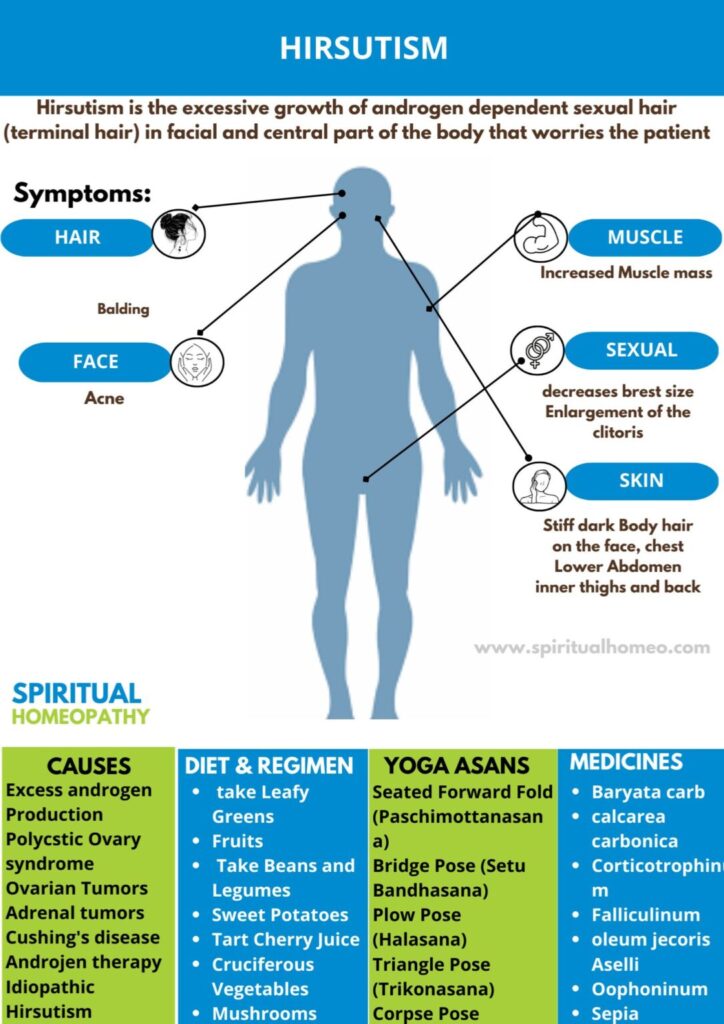
What causes hirsutism in women?
Hirsutism is often due to excess androgens (male hormones) or increased sensitivity of hair follicles to these hormones. Common causes include Polycystic Ovary Syndrome (PCOS), insulin resistance, adrenal disorders, or genetics.
Can diet help reduce hirsutism?
Yes. A hormone-friendly, low-glycemic, anti-inflammatory diet can support insulin balance and hormonal regulation, which may reduce excess hair growth over time.
Which foods should be limited for hirsutism or PCOS?
Limit refined carbs, sugary drinks, processed foods, trans fats, high-dairy or high-soy diets (unless minimal/organic), and excessive caffeine or alcohol.
How does spearmint tea help?
Spearmint tea has anti-androgenic properties and may help reduce testosterone levels, supporting a decrease in unwanted hair growth over time.
Which yoga poses support hormonal balance?
Poses such as Legs-Up-the-Wall (Viparita Karani), Child’s Pose (Balasana), and Cobra Pose (Bhujangasana) can help reduce stress, support reproductive organs, and aid hormone regulation.
How long before diet and lifestyle changes show results?
Results vary; some notice improvements in 3–6 weeks, while others may need 3–6 months of consistent changes in diet, exercise, and stress management.
Is weight loss necessary to reduce hirsutism?
Not always, but for those overweight, even a 5–10% reduction in body weight can improve insulin sensitivity and lower androgen levels, helping reduce symptoms.
Can supplements support natural management of hirsutism?
Yes, with professional guidance. Supplements such as inositol, zinc, vitamin D, omega-3 fatty acids, and magnesium may support hormonal balance.
Does hair removal worsen hirsutism?
No. Shaving, waxing, or laser removal does not make hair thicker, though underlying hormonal factors must be addressed for lasting reduction.
Is hirsutism curable?
Hirsutism is manageable, especially when linked to conditions like PCOS. Lifestyle changes, medical guidance, and natural approaches can significantly improve symptoms.