
“Shoulder pain refers to discomfort or soreness in the shoulder area, which may involve the joint itself or the surrounding muscles, tendons, and ligaments that support shoulder movement and stability.”
This version includes relevant keywords like “shoulder pain,” “discomfort,” “joint,” “muscles,” “tendons,” and “ligaments,” making it suitable for SEO while still sounding natural to readers.
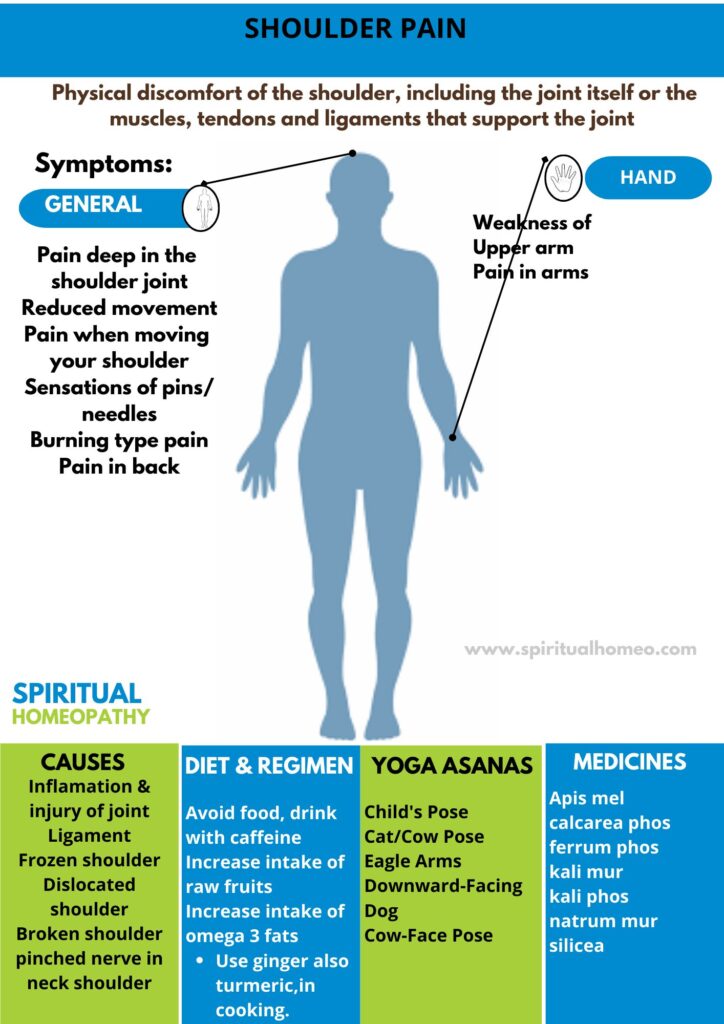
When evaluating shoulder pain or related disorders, it is important for healthcare providers to review the patient’s medical history, including any prior trauma, fibromyalgia, infections, inflammatory conditions, occupational strain, or existing cervical spine issues. Shoulder pain can arise from multiple anatomical sources, such as the glenohumeral or acromioclavicular joints, the subacromial (or subdeltoid) bursa, and surrounding soft tissues, including rotator cuff injuries or tendinitis. In some cases, symptoms may also result from referred pain originating in the cervical spine.
A structured clinical assessment helps in identifying contributing factors and guiding appropriate management. Spiritual Homeopathy Clinic offers consultations for shoulder pain through its multiple branches in Hyderabad, as well as online and international consultation options, allowing patients to seek professional guidance based on convenience and individual needs.
Subacromial bursitis is a frequent cause of shoulder pain, resulting from inflammation in the bursa that cushions the shoulder joint.
Rotator cuff tendinitis or tears are among the most common shoulder issues, especially in older adults. Studies indicate that a significant proportion of older individuals experience shoulder pain, with rotator cuff involvement being a leading cause.
Shoulder impingement syndrome occurs when the rotator cuff tendons become compressed between the acromion and the humeral head, leading to pain and restricted movement.
Osteoarthritis (OA) and rheumatoid arthritis (RA) commonly affect the acromioclavicular joint, while OA of the glenohumeral joint is less frequent and often associated with prior trauma or repetitive occupational strain.
Not all shoulder pain originates in the shoulder itself. In some cases, it may result from conditions affecting other areas, such as the cervical spine or biceps, a phenomenon known as referred pain. This type of pain typically does not worsen with shoulder movement, which helps distinguish it from primary shoulder disorders.
Arthritis (OA or RA)
Torn cartilage
Torn rotator cuff
Swollen bursa sacs or inflamed tendons
Bone spurs (bony growths near the joint)
Pinched nerves in the neck or shoulder
Fractures involving the shoulder or arm
Frozen shoulder (adhesive capsulitis)
Dislocated shoulder
Overuse or repetitive strain injuries
Spinal cord injuries
Heart-related conditions, where shoulder pain may appear as a warning sign
Understanding the underlying cause is essential, as shoulder pain often involves multiple contributing factors; this supports an individualized assessment and care approach based on the patient’s overall health profile.
Shoulder pain is a common complaint that can arise from a range of underlying conditions, including inflammation, injury, degenerative changes, nerve compression, or referred pain from other body systems. Identifying the underlying cause is important for appropriate evaluation and management.
The rotator cuff consists of muscles and tendons that support and stabilize the shoulder joint. Disorders in this area are among the most frequent causes of shoulder pain.
Rotator Cuff Tendonitis: Often related to repetitive overhead activities, leading to inflammation of the tendons.
Rotator Cuff Tear: May be partial or complete, commonly associated with trauma, overuse, or age-related degeneration.
Frozen shoulder is characterized by stiffness, restricted movement, and persistent pain. It develops when the shoulder capsule becomes thickened and tight.
Primary Frozen Shoulder: Develops without an identifiable cause.
Secondary Frozen Shoulder: Occurs following injury, surgery, or in association with conditions such as diabetes.
This condition occurs when rotator cuff tendons are compressed between the shoulder bones, leading to inflammation and pain, especially during overhead movements.
Bursitis refers to inflammation of the subacromial bursa, a fluid-filled sac that cushions the shoulder joint.
Subacromial Bursitis: Commonly causes pain over the outer or upper shoulder and may restrict motion.
Arthritic changes in the shoulder can lead to pain, stiffness, and reduced range of motion.
Osteoarthritis (OA): Degenerative wear of joint cartilage over time.
Rheumatoid Arthritis (RA): An autoimmune condition causing joint inflammation.
A shoulder dislocation occurs when the humeral head moves out of its socket. Repeated episodes may result in chronic instability.
Anterior Dislocation: The most common type, where the humerus moves forward.
Posterior Dislocation: Less common, with backward displacement of the humerus.
Tendonitis involves inflammation of shoulder tendons, often related to overuse or strain.
Supraspinatus Tendonitis: Affects a key rotator cuff tendon.
Biceps Tendonitis: Involves the long head of the biceps tendon near the shoulder.
The labrum is a cartilage rim that stabilizes the shoulder joint. Tears may cause pain, weakness, or a catching sensation.
SLAP Tear: Involves the upper part of the labrum, often seen in athletes.
Bankart Tear: Commonly associated with shoulder dislocations.
This condition occurs due to calcium deposits within rotator cuff tendons, leading to inflammation and difficulty with arm movement.
Compression of nerves or blood vessels between the collarbone and first rib can cause shoulder pain, tingling, or weakness in the arm.
In some cases, shoulder pain originates outside the shoulder joint.
Cardiac-related pain: Left-sided shoulder pain may indicate heart-related conditions and requires urgent medical attention.
Gallbladder-related pain: Right shoulder pain may be associated with gallbladder disorders.
Fractures in the shoulder region can cause significant pain and loss of function.
Clavicle Fracture: Often due to falls or direct trauma.
Proximal Humerus Fracture: More common in older adults after a fall.
A chronic pain condition caused by muscle trigger points, leading to deep, aching discomfort that may worsen with movement or pressure.
Understanding these varied causes helps guide an individualized assessment and care approach, as shoulder pain often involves multiple contributing factors related to health history, activity level, and overall musculoskeletal function.
Shoulder pain can present in many ways, depending on the underlying condition. Symptoms may range from mild discomfort to severe pain and can affect daily activities, work, and sleep. Below is a detailed overview of common signs and symptoms of shoulder pain, organized by condition for clarity and clinical relevance.
Dull ache or tenderness: Constant or intermittent discomfort around the shoulder
Sharp or shooting pain: Often triggered by movements such as lifting or reaching
Radiating pain: Pain extending down the arm, commonly associated with nerve irritation or rotator cuff involvement
Pain during arm movement: Especially with overhead activities or reaching behind
Shoulder weakness: Difficulty lifting or holding objects
Limited mobility: Restricted range of motion due to pain or stiffness
Night pain: Discomfort worsens when lying on the affected side
Stiffness and pain: Gradual onset with progressive limitation
Limited range of motion: Difficulty lifting, rotating, or reaching
Slow progression: Symptoms develop over months and resolve gradually
Daily activity restriction: Difficulty with dressing or overhead tasks
Pain with lifting: Especially when raising the arm or reaching backward
Outer shoulder discomfort: Pain felt on the upper or outer aspect of the shoulder
Tenderness and weakness: Reduced strength during overhead movements
Shoulder swelling: Localized puffiness or inflammation
Movement-related pain: Discomfort during motion, particularly overhead
Localized tenderness: Pain on pressure over the bursa
Joint stiffness: Reduced shoulder flexibility
Pain during activity: Often worse with movement
Stiffness after rest: Notably in the morning or after inactivity
Grinding sensation: Joint noises or friction (crepitus)
Chronic pain and swelling: Persistent inflammation or warmth
Sudden intense pain: Usually following trauma or a fall
Visible deformity: Shoulder may appear out of alignment
Limited arm mobility: Difficulty moving the shoulder
Recurring dislocations: Sensation of the shoulder slipping out
Pain in the front of the shoulder: Especially with overhead use
Shoulder and arm weakness: Reduced endurance
Pain with resistance: Discomfort during lifting or pulling
Deep joint pain: Felt inside the shoulder, worsens with movement
Instability: Shoulder feels loose or insecure
Weakness with overhead activity: Difficulty lifting or reaching
Clicking or popping: Sensations during arm movement
Severe, sudden pain: Commonly after trauma or falls
Swelling and bruising: Around the collarbone or upper arm
Deformity: Visible misalignment in some cases
Restricted movement: Sharp pain limits arm motion
Persistent muscle soreness: Deep, aching discomfort
Trigger points: Painful muscle knots that may radiate pain
Painful movement: Sharp discomfort with specific motions
Reduced range of motion: Due to muscle tightness
Numbness or tingling: In the shoulder, arm, or fingers
Arm weakness: Reduced grip strength or coordination
Cold or discolored hands: Related to altered blood flow
Pain with raised arm positions: Symptoms worsen on elevation
If shoulder pain is frequent, progressively worsening, or significantly limits daily activities or sleep, a professional medical consultation is recommended for proper evaluation.
Shoulder pain can result from injuries, inflammation, poor posture, or underlying health conditions. While medical treatment is often necessary, a supportive diet and daily wellness regimen can play a role in reducing discomfort, supporting joint function, and aiding recovery. Guidance may vary depending on the underlying cause and individual health needs.
This information is commonly discussed during consultations at Spiritual Homeopathy Clinic, which offers in-clinic consultations across Hyderabad as well as online and international consultation options.
A well-balanced, anti-inflammatory diet may help support joint, tendon, and muscle health. Dietary choices are generally aimed at reducing inflammation, supporting tissue repair, and maintaining flexibility.
Inflammation is a common contributor to shoulder pain. Including naturally anti-inflammatory foods in daily meals may help support overall joint comfort.
Omega-3 Fatty Acids
Found in:
Fatty fish (salmon, sardines, mackerel, trout)
Plant-based sources such as flaxseeds, chia seeds, and walnuts
Turmeric & Ginger
Turmeric contains curcumin, known for its anti-inflammatory properties, and is commonly used in cooking
Ginger may support inflammation control when included in teas or meals
Antioxidant-Rich Fruits & Vegetables
Berries such as blueberries, raspberries, and strawberries
Leafy greens like spinach, kale, and Swiss chard
Vitamin C–rich foods including bell peppers and citrus fruits, which support tissue health
Vitamin D & Calcium
Food sources include fatty fish, egg yolks, dairy products, and fortified plant-based alternatives. These nutrients support bone strength and muscle function.
Magnesium
Found in spinach, pumpkin seeds, almonds, and whole grains. Magnesium supports muscle relaxation and normal nerve function.
Collagen-Supporting Foods
Traditional foods such as slow-cooked broths and gelatin-based preparations are commonly included to support connective tissue health.
Adequate water intake helps maintain muscle and joint hydration
Herbal teas, such as chamomile or ginger-based preparations, are commonly used for hydration and comfort
Certain dietary patterns may contribute to inflammation and discomfort. Limiting the following may be helpful:
Refined sugars and sugary beverages
Highly processed and packaged foods
Excess alcohol intake
Frequent consumption of red or processed meats
Along with diet, a consistent daily routine supports mobility, posture, and long-term shoulder health. Recommendations should be adapted to individual tolerance and clinical findings.
Avoid activities that strain or overload the shoulder
Modify daily tasks and maintain ergonomic posture to reduce repetitive stress
Gentle Mobility Practices
Shoulder rolls
Wall-supported movements
Pendulum exercises
Shoulder and Upper Back Strengthening
Controlled resistance-based movements
Scapular stabilization exercises
Posture & Flexibility Training
Upper back and chest stretches
Core-strengthening exercises to support posture
Exercises should be performed under professional guidance, especially in chronic or recurrent pain.
Cold applications may help during acute inflammation
Heat may be useful for stiffness once acute swelling has settled
Duration and frequency should be adjusted based on comfort and response.
A trained professional may design a program to improve range of motion, strength, and posture while minimizing strain on the shoulder joint.
Maintain proper workstation alignment
Avoid prolonged slouching or unsupported arm positions
Avoid sleeping directly on the painful shoulder
Use supportive pillows to maintain neutral alignment
Sleeping on the back or opposite side may reduce pressure
At Spiritual Homeopathy Clinic, shoulder pain is approached through individualized care, focusing on contributing factors such as posture, inflammation patterns, lifestyle habits, and overall health. Homeopathic care is generally well-tolerated when provided under professional guidance and is often used alongside dietary, lifestyle, and exercise-based recommendations for long-term management.
Yoga for shoulder pain is a gentle, supportive approach that may help improve flexibility, ease muscle tension, and support shoulder joint mobility. With regular and appropriate practice, certain yoga poses can assist in strengthening surrounding muscles, improving posture, and supporting functional movement.
Yoga-based guidance is often discussed as part of a broader care plan during consultations at Spiritual Homeopathy Clinic, which offers in-clinic consultations across Hyderabad as well as online and international consultations.
✅ Note: Always consult a healthcare provider or qualified yoga therapist before starting a new routine, especially if shoulder pain is due to injury, inflammation, or restricted movement.
Benefits: Stretches the shoulders, triceps, and chest. Supports posture and shoulder range of motion.
How to do it:
Sit with legs crossed.
Raise your right arm overhead and bend the elbow to reach the upper back.
Bring the left arm behind and gently attempt to clasp the hands.
Hold for 20–30 seconds and switch sides.
Benefits: Gently stretches the shoulders and upper back while promoting relaxation.
How to do it:
Kneel down and sit on your heels.
Extend the arms forward and lower the forehead toward the mat.
Keep shoulders relaxed and breathe slowly for 1–2 minutes.
Benefits: Helps release tension in the upper back and shoulders, particularly after prolonged sitting.
How to do it:
Begin in a tabletop position.
Slide the right arm under the left, resting the shoulder and cheek on the mat.
Keep hips stable. Hold for 30–60 seconds, then repeat on the other side.
Benefits: Opens the upper back and shoulders and supports mobility between the shoulder blades.
How to do it:
Sit or stand upright.
Wrap the right arm under the left and gently bring palms together if comfortable.
Lift elbows slightly and relax the shoulders downward.
Hold for 30 seconds and switch arms.
Benefits: Supports spinal strength and gently opens the chest and shoulders.
How to do it:
Lie on your stomach with palms under the shoulders.
Gently lift the chest while keeping elbows soft.
Keep shoulders relaxed and away from the ears.
Hold for 20–30 seconds.
Benefits: Engages the shoulders, upper back, and neck muscles and supports posture.
How to do it:
Lie on your back with knees bent and feet flat on the floor.
Press through the feet and lift the hips slowly.
Clasp hands beneath the back if comfortable and gently draw shoulder blades together.
Hold for about 30 seconds.
Benefits: Improves flexibility of the spine, shoulders, and neck and is useful as a warm-up.
How to do it:
From tabletop, inhale and arch the back while lifting the chest (cow).
Exhale and round the spine, bringing chin toward chest (cat).
Continue slowly for 1–2 minutes.
Benefits: Promotes relaxation and provides a gentle stretch to the shoulders and back.
How to do it:
Sit sideways against a wall and lie back, lifting legs upward.
Rest arms by the sides or overhead as comfortable.
Remain in the position for 5–10 minutes.
Begin with gentle warm-up movements before deeper stretches.
Maintain proper alignment to reduce strain on the shoulder joint.
Avoid weight-bearing poses during early or painful stages unless advised by a professional.
Focus on slow, controlled breathing to support muscle relaxation.
Use props such as straps or blocks for support when needed.
Yoga practices should be adapted to individual comfort levels and underlying shoulder conditions.
At Spiritual Homeopathy Clinic, yoga is considered a supportive measure, often discussed alongside individualized homeopathic care that addresses contributing factors such as posture, inflammation patterns, and lifestyle habits. Homeopathic care is generally well-tolerated under professional guidance and may be used as part of a long-term management approach.
Homeopathy is a gentle, natural system of healing that focuses on addressing the root cause of illness, rather than only alleviating symptoms. It works in harmony with the body’s inherent ability to restore balance and supports long-term health in a personalized way. Homeopathy is considered generally well-tolerated under professional guidance and can be adapted for individuals of all ages.
Whether managing chronic conditions or seeking relief from acute symptoms, homeopathy provides a holistic and individualized approach to health and wellness.
At Spiritual Homeopathy Clinic, we provide multi-branch consultations across Hyderabad (Kukatpally, Chandanagar, Dilsukhnagar, and Nallagandla) as well as online and international consultations. Our approach focuses on understanding the whole person—physical, emotional, and spiritual—to support natural healing and overall well-being.
We aim to go beyond symptom relief, identifying underlying imbalances and supporting long-term health through carefully individualized care.
Root-Cause Focus: Treatments address the underlying factors contributing to illness, not just surface symptoms.
Personalized Care: Every treatment plan is tailored to your unique body, lifestyle, and emotional health.
Experienced Team: Skilled homeopathy doctors provide in-clinic and online consultations, ensuring continuity of care.
Gentle & Non-Toxic: Remedies are formulated to be safe, generally well-tolerated, and free from harmful chemicals.
Mind-Body-Spirit Integration: We incorporate mental and emotional well-being as part of the healing process.
We take time to assess your complete health profile, including medical history, lifestyle habits, emotional well-being, and current symptoms. This comprehensive understanding allows for a treatment plan tailored to your individual needs.
Our individualized plans support both acute and chronic conditions. The remedies aim to work in coordination with your body’s natural healing mechanisms and may address multiple contributing factors to optimize long-term wellness.
Healing is an ongoing process. Regular follow-ups allow our practitioners to monitor progress, adjust treatment plans, and provide guidance to maintain overall health.
At Spiritual Homeopathy, patient well-being is the central focus. We combine professional expertise, individualized treatment, and supportive lifestyle guidance to help manage health concerns while promoting overall vitality.
You should consult a healthcare professional if shoulder pain becomes frequent, persistent, or begins to interfere with daily activities, work, or sleep. Early evaluation helps identify the underlying cause and reduces the risk of stiffness, reduced mobility, or long-term discomfort.
Seek consultation if you experience:
Ongoing or recurrent shoulder pain
Pain while lifting the arm or performing routine movements
Stiffness, reduced range of motion, or difficulty rotating the shoulder
Pain that worsens at night or disturbs sleep
Swelling, tenderness, or weakness around the shoulder joint
Shoulder pain following an injury or strain
Symptoms not improving with rest, posture correction, or basic lifestyle measures
At Spiritual Homeopathy Clinic, consultations for shoulder pain are available at multiple branches in Hyderabad, including Kukatpally, Chandanagar, Dilsukhnagar, and Nallagandla. Online and international consultations are also available for patients who are unable to visit in person. A professional assessment supports an individualized care approach based on symptoms, activity level, and overall health status.
For appointments or guidance, contact 9069 176 176.
1. What causes shoulder pain?
Shoulder pain may result from injuries (like rotator cuff tears), inflammation (bursitis or tendinitis), arthritis, poor posture, overuse, dislocation, or referred pain from the neck or internal organs. Identifying the cause is essential for individualized care.
2. When should I see a doctor for shoulder pain?
Consult a healthcare provider if your pain is severe, persists for several days, limits movement, follows an injury, or is accompanied by swelling, numbness, or visible deformity.
3. Can shoulder pain be managed at home?
Mild shoulder discomfort may improve with rest, ice or heat therapy, gentle stretching, and over-the-counter pain relief. Persistent or worsening symptoms should always be evaluated by a professional.
4. What are the most common shoulder injuries?
Common injuries include:
Rotator cuff tear or tendinitis
Frozen shoulder (adhesive capsulitis)
Bursitis
Dislocation or instability
Labral tear
Shoulder impingement
5. Is shoulder pain always caused by a shoulder problem?
No. Pain may sometimes originate from other areas, such as the neck, heart (e.g., heart attack), gallbladder, or lungs. This is referred pain, highlighting the need for careful evaluation.
6. What exercises help with shoulder pain?
Gentle stretching and strengthening can reduce pain and improve mobility. Examples include pendulum swings, wall slides, shoulder blade squeezes, and external rotations. Consult a physical therapist before starting new exercises.
7. Can poor posture cause shoulder pain?
Yes. Slouching or forward head posture can strain the neck, upper back, and shoulder muscles, potentially leading to chronic pain or tension.
8. How long does shoulder pain take to heal?
Recovery depends on the cause and severity. Mild discomfort may improve in days to weeks with proper care, while conditions like rotator cuff tears or frozen shoulder can take months and may require guided therapy.
9. What dietary changes support shoulder health?
An anti-inflammatory diet with omega-3 fatty acids, leafy greens, fruits, turmeric, and ginger may help reduce inflammation. Staying hydrated and limiting processed foods, sugar, and red meat supports joint and tendon health.
10. Can yoga help relieve shoulder pain?
Gentle yoga poses, such as Child’s Pose, Cow Face Pose, and Thread the Needle, can improve flexibility, reduce muscle tension, and support recovery. Always practice under guidance if injured.
11. How can homeopathy help with shoulder pain?
Homeopathy provides individualized care, addressing the root causes of shoulder pain—physical, emotional, or systemic. Treatment plans focus on long-term management and are generally well-tolerated under professional guidance. Spiritual Homeopathy Clinic offers in-clinic and online consultations to tailor treatment to each patient.
12. Can shoulder pain indicate a serious medical condition?
Yes. Sudden, severe shoulder pain that radiates to the chest or arm, or is accompanied by shortness of breath, dizziness, or palpitations, may indicate a heart, lung, or nerve issue. Seek immediate medical attention in such cases.
WhatsApp us