
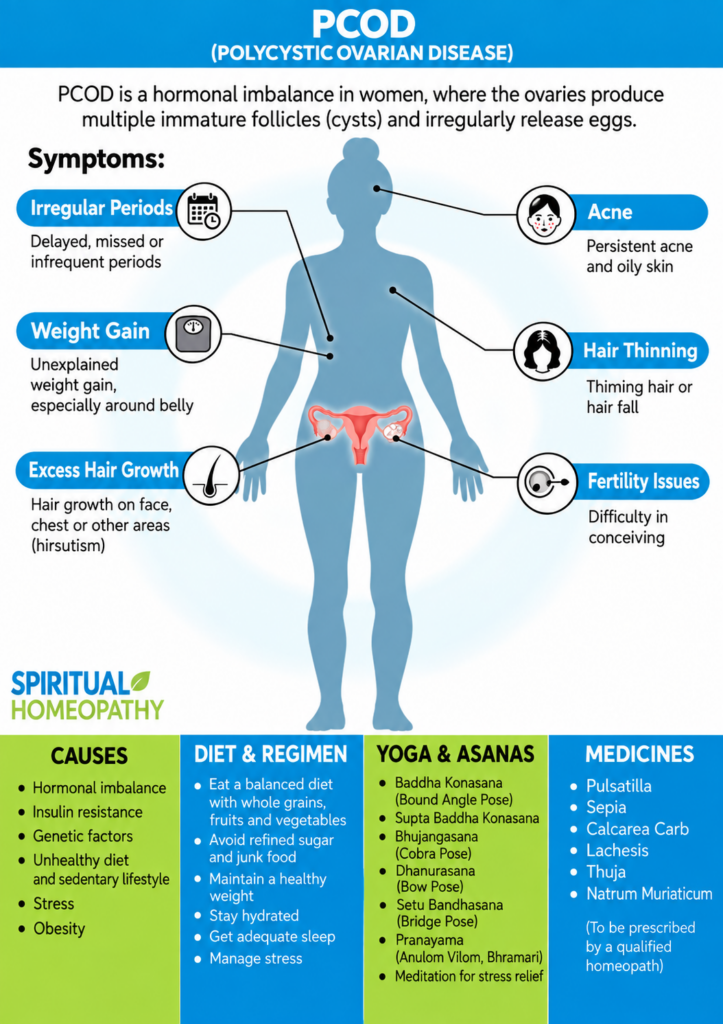
PCOD is a common hormonal condition that may influence menstrual cycles, ovulation, skin, hair growth, weight management, and fertility. People with PCOD may experience irregular or delayed periods, acne, excessive facial or body hair, scalp hair thinning, weight changes, or difficulty conceiving. The symptoms can differ from person to person, and having these symptoms does not necessarily confirm PCOD. Proper evaluation is important to understand the underlying hormonal and metabolic factors.
At Spiritual Homeopathy, we follow an individualized approach to PCOD care. Our experienced homeopathic doctors consider each patient’s menstrual history, symptoms, dietary habits, lifestyle, stress levels, sleep patterns, medical history, and overall health before developing a personalized care plan. Our holistic approach focuses on supporting overall hormonal and metabolic wellness while addressing the individual’s specific concerns. We provide personalized homeopathic consultations for PCOD, along with guidance related to healthy lifestyle and dietary habits.
We offer personalized homeopathy consultations for PCOD in Hyderabad through our clinics, as well as online consultations across India and in more than 100 countries worldwide. If you are experiencing irregular periods, acne, unwanted hair growth, weight-related concerns, or fertility difficulties, professional evaluation can help determine whether PCOD or another hormonal condition may be involved. Spiritual Homeopathy is committed to providing individualized, patient-centered care and ongoing wellness guidance based on each person’s needs.
PCOD: Causes, Symptoms, and Understanding Hormonal Health
PCOD (Polycystic Ovarian Disease) is a hormonal condition that can affect the way the ovaries function and may influence menstrual cycles, ovulation, fertility, skin, hair growth, and weight management. Common concerns include irregular or delayed periods, acne, excessive facial or body hair, scalp hair thinning, and difficulty with conception. The symptoms can vary from one person to another, and not everyone with PCOD experiences the same combination of problems.
PCOD is often associated with changes in reproductive hormones and may occur alongside insulin resistance and other metabolic concerns. Factors such as genetics, lifestyle, body weight, sleep patterns, stress, and dietary habits may contribute to the development or persistence of symptoms. PCOD is not simply an ovarian problem; its effects can involve reproductive, hormonal, and metabolic health.
Managing PCOD generally involves a combination of balanced nutrition, regular physical activity, healthy sleep, stress management, and appropriate medical monitoring. Depending on individual symptoms and reproductive goals, healthcare professionals may recommend hormonal or metabolic evaluation to understand the condition more clearly and guide suitable management.
Spiritual Homeopathy Clinic provides personalized consultation support for individuals experiencing PCOD-related concerns through its branches in Hyderabad, along with online consultations across India and international consultation options. Our approach considers the individual’s symptoms, menstrual history, lifestyle, dietary habits, medical background, and overall wellness when providing personalized guidance.
What Can Contribute to PCOD? Key Factors Behind the Condition
PCOD (Polycystic Ovarian Disease) is generally linked to a combination of hormonal, metabolic, genetic, and lifestyle factors rather than one specific cause. These factors can influence ovulation, menstrual regularity, insulin function, and androgen levels, leading to different symptoms in different individuals.
Common Factors Associated with PCOD:
1. Hormonal Imbalance:
Changes in reproductive hormones can interfere with normal ovulation and menstrual cycles. Increased androgen activity may also contribute to acne and unwanted hair growth.
2. Insulin Resistance:
When the body’s cells respond less effectively to insulin, the pancreas may produce more insulin. Higher insulin levels can influence ovarian hormone production and may contribute to PCOD-related symptoms.
3. Genetic Factors:
A family history of PCOD or related metabolic and hormonal conditions may increase an individual’s likelihood of developing the condition.
4. Weight-Related Factors:
Higher body weight can worsen insulin resistance and hormonal disturbances in some people. However, PCOD can also occur in individuals who are not overweight.
5. Irregular Ovulation:
Disrupted or infrequent ovulation can lead to delayed or missed periods and may contribute to difficulties with conception.
6. Sedentary Lifestyle:
Low levels of regular physical activity may affect insulin sensitivity, metabolic health, and weight regulation, potentially contributing to PCOD symptoms.
7. Dietary Patterns:
A diet frequently high in refined carbohydrates, added sugars, and highly processed foods may make blood sugar and weight management more challenging, particularly in people already prone to insulin resistance.
8. Chronic Stress:
Long-term stress may affect sleep, appetite, physical activity, and overall hormonal regulation. It can also make existing symptoms more difficult to manage.
9. Poor Sleep:
Irregular or inadequate sleep can influence appetite regulation, insulin sensitivity, mood, and metabolic health, which may interact with PCOD symptoms.
10. Associated Metabolic Factors:
PCOD may occur alongside concerns such as insulin resistance, abnormal cholesterol levels, elevated blood pressure, or impaired glucose regulation.
PCOD is a multifactorial condition, so the contributing factors can differ considerably between individuals. A proper evaluation of menstrual history, symptoms, hormonal health, metabolic status, lifestyle, and family history can help healthcare professionals develop an appropriate management plan.
Types of PCOD: Understanding the Different Clinical Patterns
PCOD (Polycystic Ovarian Disease) can appear differently from one individual to another. Some people may mainly experience irregular periods, while others may have concerns related to androgen levels, insulin resistance, weight, skin, hair, or fertility. Rather than having one fixed type, PCOD is often understood according to the dominant features and associated health factors.
Common Presentations of PCOD:
1. Insulin-Resistance Predominant PCOD:
This pattern is associated with reduced insulin sensitivity and may be accompanied by weight-management difficulties, increased hunger, blood sugar fluctuations, or darkened skin around the neck and underarms.
2. Androgen-Dominant PCOD:
Higher androgen activity may be more noticeable in this presentation. Symptoms can include acne, oily skin, excess facial or body hair, and thinning of scalp hair.
3. Ovulatory PCOD:
Irregular or infrequent ovulation is a major feature. This may result in delayed or unpredictable menstrual cycles and can sometimes affect fertility.
4. Metabolic PCOD:
Along with reproductive symptoms, some individuals may have metabolic concerns such as insulin resistance, abnormal cholesterol levels, increased blood pressure, or difficulty maintaining a healthy weight.
5. Fertility-Related PCOD:
For some women, the primary concern is difficulty becoming pregnant due to irregular or absent ovulation. Fertility evaluation can help identify the specific factors involved.
6. Mixed-Symptom PCOD:
Many individuals experience a combination of features, such as irregular periods together with acne, unwanted hair growth, weight concerns, and metabolic changes.
PCOD does not present identically in every individual. Proper evaluation of menstrual patterns, hormonal status, metabolic health, symptoms, and reproductive goals can help determine the individual’s specific concerns and guide appropriate management.
Common Signs of PCOD: Hormonal Changes You Should Pay Attention To
PCOD (Polycystic Ovarian Disease) can affect menstrual health, hormone levels, metabolism, skin, hair, and reproductive function. The symptoms may develop gradually and can be different for every individual. Recognizing ongoing changes can help encourage timely evaluation and appropriate management.
Common Symptoms of PCOD:
1. Irregular Menstrual Cycles
Periods may arrive earlier or later than expected, occur infrequently, or occasionally be missed because of irregular ovulation.
2. Heavy or Prolonged Periods
Changes in ovulation can sometimes cause the uterine lining to build up for longer, resulting in heavier or longer menstrual bleeding.
3. Acne and Oily Skin
Hormonal changes, particularly increased androgen activity, may stimulate oil production and contribute to persistent acne.
4. Excess Facial or Body Hair
Unwanted hair growth may appear on the face, chin, chest, abdomen, or other areas due to increased androgen activity.
5. Hair Thinning or Hair Loss
Some individuals may notice gradual thinning of scalp hair or increased hair shedding associated with hormonal changes.
6. Difficulty With Ovulation
Irregular ovulation can make menstrual cycles unpredictable and may affect the timing of fertility.
7. Difficulty Conceiving
When ovulation occurs irregularly, some individuals may experience challenges when trying to become pregnant.
8. Weight Gain or Difficulty Losing Weight
Some people with PCOD may gain weight or find weight management more difficult, particularly when insulin resistance is present. However, PCOD can also occur in people with normal body weight.
9. Darkened or Thickened Skin
Dark, velvety patches may develop around areas such as the neck, underarms, or groin, particularly in association with insulin resistance.
10. Mood and Energy Changes
Some individuals may experience tiredness, low mood, irritability, or changes in emotional well-being. These symptoms can have several possible causes and should be evaluated accordingly.
PCOD symptoms can vary considerably from person to person. Persistent irregular periods, significant changes in hair growth, recurring acne, unexplained weight changes, or difficulty conceiving should be discussed with a healthcare professional. Proper evaluation can help distinguish PCOD from other hormonal and reproductive conditions.
Diet and Lifestyle for PCOD: Everyday Habits to Support Hormonal and Metabolic Health
PCOD (Polycystic Ovarian Disease) can be influenced by hormonal and metabolic factors, and healthy daily habits may help support overall well-being. A balanced eating pattern, regular movement, adequate sleep, and stress management can be valuable parts of PCOD management. Since nutritional needs differ from person to person, there is no single diet that is suitable for everyone.
Build meals around a combination of fibre, protein, healthy fats, and minimally processed carbohydrates:
Frequent intake of foods high in added sugars and refined carbohydrates may make blood sugar and weight management more difficult, particularly when insulin resistance is present. Consider reducing:
Adding protein to meals can help support muscle health and may improve fullness after eating. Suitable options include eggs, fish, chicken, lentils, beans, tofu, paneer, curd, and other protein-rich foods according to individual dietary preferences.
Fibre-rich foods can support digestive health and help with fullness and blood sugar regulation. Vegetables, legumes, whole grains, seeds, and whole fruits can be included regularly according to individual tolerance.
Rather than following extremely restrictive diets, focus on appropriate portions and balanced meals. If weight management is a concern, gradual and sustainable changes are generally more practical than rapid weight-loss approaches.
Regular exercise can support insulin sensitivity, cardiovascular health, mood, and overall fitness. Depending on your ability and preference, activities may include:
Try to avoid relying heavily on irregular meals, frequent snacking, or long periods of undereating. A consistent eating routine with nutritious meals can make it easier to maintain balanced nutrition and energy levels.
Adequate, consistent sleep supports overall metabolic and hormonal health. Maintain a regular bedtime and wake-up routine and create a relaxing environment before sleep.
Long-term stress may affect sleep, appetite, mood, and daily habits. Helpful relaxation practices may include:
Drink enough water throughout the day and choose water over sugar-sweetened beverages whenever possible. Individual fluid requirements can vary depending on climate, activity level, age, and health status.
Pro Tip: Keep a simple food, menstrual-cycle, exercise, and symptom diary. Tracking your routine may help you notice patterns in periods, appetite, energy, acne, weight changes, and other symptoms that can be discussed with your healthcare professional.
Dietary requirements vary according to individual nutritional needs, weight, metabolic health, medications, lifestyle, and reproductive goals. A qualified healthcare professional or registered dietitian can help develop a suitable plan, particularly when PCOD occurs alongside insulin resistance, diabetes, fertility concerns, or other health conditions.
Yoga for PCOD: Gentle Practices to Support Hormonal and Overall Wellness
Yoga can be a useful addition to a healthy lifestyle for women managing PCOD. Regular practice may support stress reduction, physical activity, flexibility, relaxation, and better sleep. While yoga does not cure PCOD, combining suitable movement with balanced nutrition and appropriate medical care can contribute to overall well-being.
1. Surya Namaskar (Sun Salutation):
This sequence combines several movements and controlled breathing. Practicing it at a comfortable pace can provide physical activity and support flexibility, stamina, and general fitness.
2. Baddha Konasana (Butterfly Pose):
A gentle seated posture that opens the hips and stretches the inner thighs. It can be included in a relaxing routine and encourages mindful breathing and body awareness.
3. Setu Bandhasana (Bridge Pose):
This posture engages the legs, hips, and back while encouraging controlled movement. It can contribute to muscle strength and flexibility when performed correctly.
4. Bhujangasana (Cobra Pose):
A gentle backbend that stretches the front of the body and strengthens the back muscles. It can be incorporated into a balanced yoga session according to individual comfort.
5. Balasana (Child’s Pose):
A restorative position that encourages relaxation and slow breathing. It may be particularly helpful during the calming portion of a yoga routine.
6. Malasana (Garland Pose):
This deep squatting posture works the lower body and promotes hip and ankle mobility. Individuals with knee, hip, or back problems should practice it only with suitable guidance.
7. Pranayama (Breathing Exercises):
Slow and controlled breathing can encourage relaxation and help manage everyday stress. Gentle breathing practices may be included alongside physical yoga exercises.
8. Meditation and Relaxation:
Although not an asana, meditation can complement yoga by promoting mental relaxation and mindful awareness, which may be helpful when stress affects sleep, eating habits, or general well-being.
Yoga should be considered a supportive lifestyle practice rather than a standalone treatment for PCOD. Choose exercises according to your fitness level and health status. If you have significant pain, are pregnant, have recently undergone surgery, or have another medical condition, seek professional advice before beginning a new yoga or exercise routine.
Homeopathic Treatment for PCOD: An Individualized Approach to Hormonal Wellness
PCOD (Polycystic Ovarian Disease) can involve a combination of menstrual, hormonal, metabolic, skin, hair, and reproductive concerns. Symptoms may include irregular periods, acne, unwanted hair growth, weight-related changes, and difficulty with ovulation or conception. Since the presentation differs from one person to another, understanding the individual’s overall health is important when planning care.
Homeopathic consultations generally follow an individualized approach, taking into account the person’s complete symptom pattern rather than concentrating on one complaint alone. During consultation, factors such as menstrual history, lifestyle, dietary habits, stress, sleep, medical history, and reproductive goals may be discussed.
Detailed Symptom Assessment:
A practitioner may review menstrual regularity, acne, hair growth, weight changes, mood, sleep, appetite, and other concerns associated with PCOD.
Individualized Remedy Selection:
In homeopathic practice, remedies are selected according to the individual’s overall symptom picture rather than using the same remedy for every person with PCOD.
Lifestyle and Dietary Guidance:
Healthy nutrition, regular physical activity, adequate sleep, and stress management can be incorporated into an overall wellness plan.
Reproductive Health Considerations:
For individuals planning pregnancy or experiencing difficulty conceiving, appropriate gynecological and fertility evaluation is important to identify factors affecting ovulation and reproductive health.
Homeopathy may be used by some people as a complementary approach to wellness. However, there is currently insufficient reliable scientific evidence to establish homeopathy as an effective treatment for PCOD or to show that it corrects the underlying hormonal and metabolic abnormalities. It should therefore not replace evidence-based medical treatment or recommended health monitoring.
Healthy daily habits can contribute to better overall health while managing PCOD:
Women experiencing persistent irregular periods, excessive hair growth, recurring acne, unexplained weight changes, or difficulty becoming pregnant should seek appropriate medical evaluation. Similar symptoms can occur with thyroid disorders and other hormonal conditions, so identifying the underlying cause is important.
Spiritual Homeopathy Clinic offers personalized consultations through its Hyderabad branches, along with online consultations across India and international consultation options.
Homeopathic consultation may be considered as a complementary wellness option, while appropriate medical evaluation, lifestyle management, and evidence-based care remain important components of PCOD management.
PCOD can affect menstrual health, hormones, metabolism, skin, hair, and reproductive health. While occasional changes in the menstrual cycle may happen for many reasons, ongoing or noticeable symptoms should be properly evaluated. Early assessment can help identify PCOD and rule out other conditions that may produce similar symptoms.
If you experience very heavy bleeding, severe pelvic pain, fainting, sudden severe symptoms, or possible pregnancy-related complications, seek prompt medical attention.
At Spiritual Homeopathy, our experienced homeopathic doctors offer individualized consultations by considering your menstrual history, symptoms, lifestyle, dietary habits, stress levels, medical background, and overall health. Consultations are available at our Hyderabad clinics in Kukatpally (KPHB), Chandanagar, Dilsukhnagar, and Nallagandla, as well as through online consultations across India and more than 100 countries worldwide.
To schedule a consultation, call 9069 176 176.
PCOD (Polycystic Ovarian Disease) is caused by a mix of hormonal imbalances, genetics, and poor lifestyle habits that stop the ovaries from releasing mature eggs normally.
Yes, a woman with PCOD (Polycystic Ovarian Disease, often referred to as PCOS) can definitely get pregnant, though it may sometimes require extra time or medical help.
PCOD (Polycystic Ovarian Disease) is a milder hormonal condition related to lifestyle, while PCOS (Polycystic Ovary Syndrome) is a more severe metabolic and endocrine disorder.
No, Polycystic Ovarian Disease (PCOD) cannot be permanently cured, but it can be managed very effectively.
If you have Polycystic Ovary Syndrome (PCOS), you should avoid foods that spike your blood sugar or cause inflammation, such as refined carbohydrates, sugary drinks, and fried items.
PCOD (Polycystic Ovarian Disease) is a long-term hormonal condition that does not have a permanent cure, but its symptoms can be effectively managed and controlled.