


Hyperthyroidism is a thyroid condition in which the thyroid gland produces more thyroid hormones than the body needs. Because thyroid hormones influence metabolism and many essential body functions, an overactive thyroid can lead to symptoms such as unexplained weight loss, rapid or irregular heartbeat, excessive sweating, increased sensitivity to heat, nervousness, hand tremors, difficulty sleeping, frequent bowel movements, and changes in menstrual cycles. Persistent symptoms require proper medical evaluation to identify the underlying cause and prevent potential complications.
At Spiritual Homeopathy, we take an individualized approach when supporting people with thyroid-related concerns. Our experienced homeopathic doctors review the person’s symptoms, medical history, thyroid reports, lifestyle, dietary habits, sleep patterns, stress levels, and overall health before providing consultation guidance. Homeopathic consultation may be considered as a complementary approach, while appropriate thyroid testing, medical supervision, and evidence-based treatment remain essential for managing hyperthyroidism.
We provide personalized homeopathic consultations for hyperthyroidism in Hyderabad through our clinics in Kukatpally (KPHB), Chandanagar, Dilsukhnagar, and Nallagandla, along with online consultations across India and in more than 100 countries worldwide. If you are experiencing concerns related to overactive thyroid, unexplained weight loss, palpitations, excessive sweating, anxiety, tremors, or other thyroid-related symptoms, Spiritual Homeopathy offers patient-focused consultation based on individual health needs.
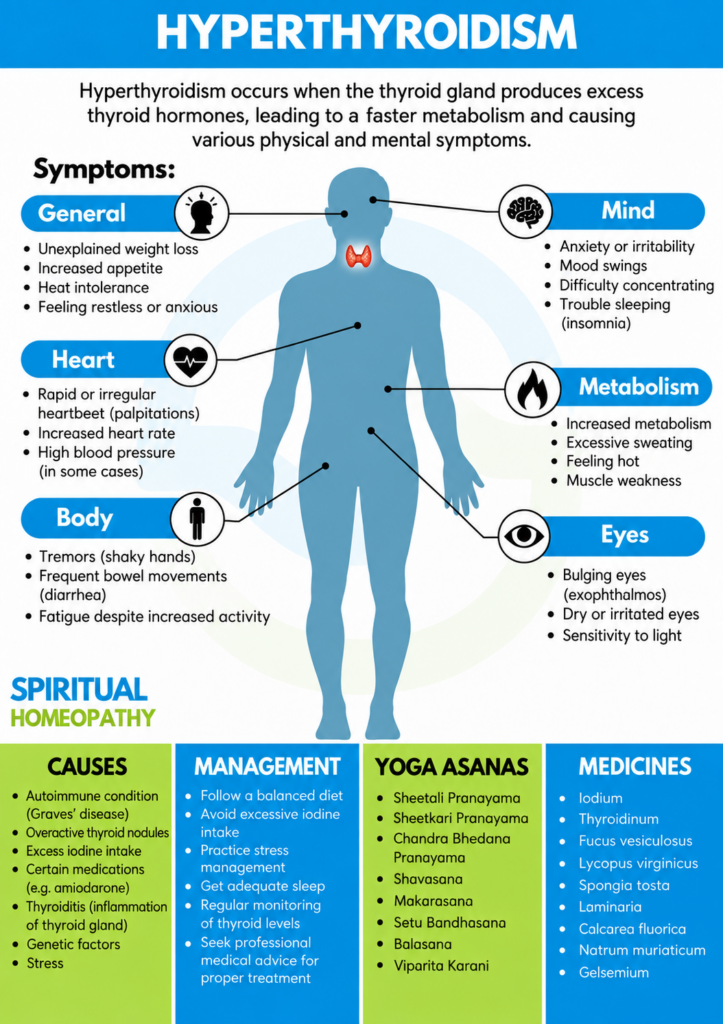
Hyperthyroidism: Understanding an Overactive Thyroid, Symptoms, and Health Impact
Hyperthyroidism is a condition in which the thyroid gland produces an excessive amount of thyroid hormones. These hormones influence metabolism, heart activity, body temperature, digestion, and several other functions. When hormone levels become too high, the body’s processes may speed up, resulting in symptoms such as unintentional weight loss, rapid heartbeat, increased sweating, heat intolerance, nervousness, hand tremors, difficulty sleeping, increased bowel movements, and muscle weakness.
One of the common causes of hyperthyroidism is Graves’ disease, an autoimmune condition that stimulates the thyroid to produce excess hormones. Other possible causes include overactive thyroid nodules, thyroid inflammation (thyroiditis), excessive iodine intake in certain circumstances, and some medications. Identifying the underlying cause is important because treatment and monitoring can vary from person to person.
Hyperthyroidism may affect different areas of health. Some individuals experience changes in menstrual cycles, fertility, mood, energy, or sleep, while others may develop noticeable swelling in the neck or eye-related symptoms, particularly when Graves’ disease is involved. Since several other conditions can produce similar symptoms, hyperthyroidism should be confirmed through appropriate thyroid-function tests such as TSH and free T4, along with additional investigations when required.
Spiritual Homeopathy Clinic provides individualized consultation support for people experiencing thyroid-related concerns through its Hyderabad branches, along with online consultation options for patients across India and internationally. For suspected or confirmed hyperthyroidism, appropriate medical evaluation and ongoing thyroid monitoring remain important.
Why Does Hyperthyroidism Occur? Major Causes and Contributing Factors
Hyperthyroidism can develop when the thyroid gland becomes excessively active and releases more thyroid hormones than the body requires. Different conditions can affect thyroid function, so identifying the underlying cause is important for choosing appropriate evaluation and management.
1. Graves’ Disease:
Graves’ disease is an autoimmune condition in which the immune system stimulates the thyroid gland to produce excessive thyroid hormones. It is one of the most common causes of hyperthyroidism.
2. Overactive Thyroid Nodules:
Certain thyroid nodules can begin producing hormones independently of the body’s normal regulatory signals. When one or more nodules become overactive, they may lead to elevated thyroid hormone levels.
3. Thyroiditis:
Inflammation of the thyroid gland can cause stored thyroid hormones to leak into the bloodstream, resulting in a temporary period of hyperthyroidism. The thyroid may later become underactive in some cases.
4. Excessive Iodine Exposure:
Iodine is necessary for thyroid hormone production, but unusually high iodine intake can trigger hyperthyroidism in susceptible individuals, particularly those with existing thyroid abnormalities.
5. Certain Medications:
Some medicines can influence thyroid function or contain significant amounts of iodine. If thyroid symptoms develop while taking medication, medical advice should be sought rather than stopping the medicine independently.
6. Thyroid Hormone Overreplacement:
Taking more thyroid hormone medication than prescribed can result in excessive thyroid hormone levels. Dosage should only be changed under the supervision of the prescribing healthcare professional.
7. Pregnancy-Related Thyroid Changes:
Pregnancy can produce changes in thyroid function. In some circumstances, particularly during early pregnancy, increased thyroid activity may occur and requires appropriate medical assessment.
8. Pituitary-Related Causes:
Rarely, abnormalities involving the pituitary gland can lead to excessive stimulation of the thyroid and elevated thyroid hormone levels.
9. Previous Thyroid Problems:
People with a history of thyroid disorders may have a greater likelihood of developing changes in thyroid function, depending on the underlying condition and previous treatment.
10. Family History and Autoimmune Conditions:
A family history of thyroid disease or other autoimmune conditions may be associated with an increased risk of autoimmune thyroid disorders such as Graves’ disease.
The cause of hyperthyroidism cannot be determined from symptoms alone. Persistent palpitations, unexplained weight loss, excessive sweating, heat intolerance, trembling, anxiety, or changes in bowel habits should be evaluated by a qualified healthcare professional. Thyroid-function tests such as TSH and free T4, along with additional tests when necessary, can help identify abnormal thyroid activity and its possible cause.
Different Forms of Hyperthyroidism: Understanding Thyroid Overactivity
Hyperthyroidism can occur in several forms depending on the condition affecting the thyroid gland and the way excess thyroid hormones enter the bloodstream. Some forms result from increased hormone production, while others occur temporarily because of inflammation or thyroid hormone release. Understanding the specific type can help guide appropriate testing and medical management.
1. Graves’ Disease:
An autoimmune disorder in which antibodies stimulate the thyroid gland to produce excessive thyroid hormones. It may also be associated with eye symptoms such as irritation, swelling, or prominent eyes.
2. Toxic Multinodular Goiter:
Multiple thyroid nodules become overactive and produce thyroid hormones independently of normal thyroid regulation. This form is more commonly seen in older adults.
3. Toxic Adenoma:
A single thyroid nodule becomes overactive and produces excess thyroid hormone. The remaining thyroid tissue may continue to function normally or become suppressed.
4. Thyroiditis-Related Hyperthyroidism:
Inflammation of the thyroid can cause stored hormones to leak into the bloodstream, producing a temporary hyperthyroid phase. Thyroid function may later return to normal or become temporarily underactive.
5. Subclinical Hyperthyroidism:
In this form, TSH levels are below the usual reference range while free T4 and free T3 remain within their reference ranges. Some individuals may have no noticeable symptoms, while others may experience mild thyroid-related changes.
6. Iodine-Induced Hyperthyroidism:
In susceptible individuals, a significant increase in iodine exposure can trigger excessive thyroid hormone production. This may occur particularly in people with pre-existing thyroid nodules or thyroid disease.
7. Medication-Related Hyperthyroidism:
Excess thyroid hormone medication or certain medicines that affect thyroid function can result in elevated thyroid hormone levels. Medical supervision is important when medication-related thyroid abnormalities are suspected.
8. Pregnancy-Associated Hyperthyroidism:
Changes in thyroid function can occur during pregnancy. Some cases are temporary, while others may be related to an underlying thyroid disorder such as Graves’ disease.
The symptoms and laboratory findings can differ depending on the type and severity of hyperthyroidism. Thyroid-function testing, including TSH and free T4 and sometimes free T3, is important for confirming thyroid overactivity and identifying its possible cause. A qualified healthcare professional can determine the appropriate evaluation and management based on the individual’s condition.
Recognizing Hyperthyroidism: Common Signs of an Overactive Thyroid
When the thyroid produces excessive hormones, many body processes can become faster than usual. The resulting symptoms may develop gradually or appear more noticeably over time. Their intensity can vary depending on the cause and severity of thyroid overactivity.
1. Unexplained Weight Loss
Losing weight without intentionally changing your diet or exercise routine can occur because an overactive thyroid increases the body’s metabolic activity.
2. Rapid or Irregular Heartbeat
A faster heartbeat, pounding sensation in the chest, or an irregular pulse may occur when thyroid hormone levels are elevated.
3. Increased Sweating
People with hyperthyroidism may sweat more than usual, even when the surrounding temperature is comfortable.
4. Heat Intolerance
An increased sensitivity to warm temperatures or feeling unusually hot can develop as metabolism becomes more active.
5. Nervousness or Irritability
Excess thyroid hormone can affect the nervous system and may contribute to restlessness, anxiety, irritability, or difficulty feeling relaxed.
6. Hand Tremors
Fine shaking or trembling of the hands, particularly when holding an object or keeping the hands extended, can be associated with hyperthyroidism.
7. Sleep Difficulties
An overactive thyroid may make it harder to fall asleep or stay asleep, potentially resulting in daytime tiredness.
8. Increased Bowel Movements
Some individuals may notice more frequent bowel movements or loose stools due to increased activity of the digestive system.
9. Muscle Weakness and Fatigue
Despite having increased energy expenditure, a person may experience muscle weakness, tiredness, or reduced exercise tolerance.
10. Menstrual Changes
Women with hyperthyroidism may experience lighter or less frequent periods and, in some cases, changes in fertility.
11. Neck Swelling
An enlarged thyroid gland, known as a goiter, may appear as swelling or fullness at the front of the neck.
12. Eye Changes
People with Graves’ disease may develop dry or irritated eyes, light sensitivity, eye pressure, or prominent-looking eyes.
Symptoms of hyperthyroidism can overlap with other medical conditions, so symptoms alone cannot confirm thyroid overactivity. If you experience persistent palpitations, unexplained weight loss, significant tremors, heat intolerance, or other ongoing changes, consult a qualified healthcare professional. TSH, free T4, and sometimes free T3 testing can help evaluate thyroid function.
Diet and Lifestyle Guidelines for Hyperthyroidism: Supporting Energy, Nutrition & Overall Well-Being
Hyperthyroidism occurs when the thyroid gland produces more thyroid hormones than the body needs. This can increase metabolism and may lead to symptoms such as weight loss, increased appetite, sweating, nervousness, rapid heartbeat, and fatigue. Along with appropriate medical care, thoughtful dietary and lifestyle habits can help support nutritional needs and overall well-being.
Because the body may use energy more quickly during hyperthyroidism, meals should provide adequate calories and essential nutrients.
Iodine is required for thyroid hormone production, but excessive iodine intake can affect thyroid function in some people with thyroid disorders.
Be cautious with:
Do not deliberately follow a low-iodine diet unless your healthcare professional recommends it for your specific situation.
Hyperthyroidism can already contribute to nervousness, tremors, sweating, and a fast heartbeat. Large amounts of caffeine may make these symptoms more noticeable.
Consider reducing:
Uncontrolled hyperthyroidism may contribute to muscle loss and weakness. Including a protein source with regular meals can help support muscle and nutritional requirements.
Suitable choices may include eggs, lentils, beans, dairy products, fish, poultry, tofu, and other protein-rich foods according to individual dietary preferences.
Overactive thyroid function can affect bone health. A balanced intake of calcium and vitamin D is therefore important.
Include foods such as:
Supplementation should be considered only with professional guidance.
Some people with hyperthyroidism experience increased appetite while still losing weight. Instead of relying mainly on sugary or processed foods, choose nourishing meals and snacks that provide calories, protein, vitamins, and minerals.
If significant or unintentional weight loss is occurring, discuss your nutritional requirements with a healthcare professional or registered dietitian.
Increased sweating and heat intolerance can increase fluid requirements. Drink water regularly throughout the day and pay attention to signs of dehydration.
Water should generally be the primary beverage, while highly caffeinated and sugary drinks can be limited.
Changes in thyroid activity can sometimes affect bowel habits. A varied diet containing vegetables, fruits, whole grains, and appropriate amounts of fiber can support regular digestion.
If diarrhea or other digestive symptoms are persistent, medical evaluation is important rather than relying only on dietary changes.
Hyperthyroidism may be accompanied by restlessness, anxiety, difficulty sleeping, or fatigue. A consistent routine may help support overall well-being.
Consider:
If you have significant palpitations, weakness, or other symptoms, discuss exercise intensity with your healthcare professional.
A regular sleep schedule can be particularly helpful when thyroid-related symptoms interfere with rest.
Try to:
Pro Tip: Keep a simple record of your meals, weight changes, sleep, caffeine intake, and symptoms. This can help you and your healthcare professional understand patterns and make appropriate adjustments.
Important: Dietary habits can support nutritional health, but they do not replace evaluation or treatment for hyperthyroidism. Individual requirements vary depending on thyroid hormone levels, medications, age, weight, nutritional status, and other health factors. Any major dietary restriction or supplement should be discussed with a qualified healthcare professional.
Yoga may be included as a supportive wellness practice for people with hyperthyroidism, particularly for relaxation, stress management, flexibility, and maintaining a calm daily routine. Since hyperthyroidism can sometimes cause increased heart rate, tremors, anxiety, and fatigue, gentle practices are generally more appropriate than strenuous routines.
Shavasana (Corpse Pose):
A deeply relaxing posture that encourages physical and mental rest. It can be useful for calming the body and incorporating relaxation into a daily routine.
Sukhasana (Easy Pose):
A simple seated position that can be combined with slow, controlled breathing. It may support relaxation and help create a mindful, comfortable practice.
Balasana (Child’s Pose):
This resting posture gently relaxes the back, shoulders, and hips. It can be incorporated into a gentle yoga routine when comfortable.
Vrikshasana (Tree Pose):
A balancing posture that develops stability, concentration, and body awareness. Practice near a wall or other support if balance is affected.
Marjariasana (Cat-Cow Pose):
Gentle spinal movements can help improve mobility and release muscular tension. Perform the movements slowly and coordinate them with comfortable breathing.
Viparita Karani (Legs-Up-the-Wall Pose):
This restorative posture encourages relaxation while allowing the body to rest. It can be a calming addition to a low-intensity yoga session.
Pranayama and Slow Breathing:
Relaxed breathing techniques may help manage stress and promote a sense of calm. Avoid forceful or rapid breathing exercises, especially if they cause dizziness, breathlessness, or discomfort.
Important: Yoga is a complementary wellness practice and does not replace medical evaluation or treatment for hyperthyroidism. People experiencing significant palpitations, chest discomfort, breathlessness, severe weakness, dizziness, or uncontrolled symptoms should seek medical advice. Exercise intensity should be individualized, particularly when thyroid hormone levels are not well controlled.
Homeopathic Approach to Hyperthyroidism: Individualized Support for Overall Well-Being
Hyperthyroidism is a condition in which the thyroid gland produces an excessive amount of thyroid hormones. It may be associated with symptoms such as unexplained weight loss, increased sweating, heat intolerance, nervousness, tremors, fatigue, and a rapid heartbeat. Proper medical evaluation is important because the underlying cause and severity can vary considerably from person to person.
Homeopathic practice generally takes an individualized approach, considering the person’s complete symptom picture rather than focusing on one symptom alone. A practitioner may review the individual’s health history, lifestyle, emotional well-being, and existing medical conditions while developing a personalized care plan.
Homeopathy should be viewed as a complementary approach, not as a replacement for evidence-based thyroid treatment or prescribed medication.
During a consultation, attention may be given to the overall pattern of symptoms and factors that can influence day-to-day well-being.
Individual Symptom Assessment:
A detailed consultation may consider symptoms such as palpitations, changes in weight, sweating, sleep difficulties, appetite changes, tremors, and sensitivity to heat.
Understanding the Person as a Whole:
Homeopathic consultations commonly explore physical symptoms together with lifestyle, daily routine, stress, sleep patterns, and general health.
Personalized Care Planning:
Homeopathic practitioners select remedies according to their individual assessment of the person’s symptom pattern rather than applying one remedy to everyone with hyperthyroidism.
Emotional and Lifestyle Factors:
Feelings of restlessness, stress, and difficulty sleeping may accompany hyperthyroidism. These aspects can be discussed as part of a broader wellness consultation.
Homeopathy may be considered by some individuals as a complementary wellness approach alongside appropriate medical supervision. However, there is not strong scientific evidence that homeopathy can control excessive thyroid hormone production or replace standard treatment for hyperthyroidism.
Thyroid hormone levels should be monitored through appropriate medical testing, and prescribed treatment should not be stopped or changed without guidance from the treating healthcare professional.
Healthy daily habits can contribute to general well-being while managing hyperthyroidism:
Anyone experiencing persistent symptoms suggestive of hyperthyroidism should undergo appropriate medical evaluation, including thyroid testing when indicated. Symptoms such as a very rapid heartbeat, chest pain, severe breathlessness, confusion, or significant weakness require prompt medical attention.
Spiritual Homeopathy Clinic, with branches in Hyderabad, provides consultations that may include in-clinic and online options.
Homeopathic care can be discussed as a complementary approach to individualized wellness, while proper diagnosis, thyroid monitoring, and medically appropriate treatment remain essential for managing hyperthyroidism safely.
Medical evaluation is important when symptoms suggest that the thyroid may be overactive, particularly when they are persistent, worsening, or affecting your daily routine. Hyperthyroidism can have different causes, and appropriate testing can help determine thyroid hormone levels and guide suitable management.
Seek urgent medical attention for severe or sudden symptoms such as chest pain, significant breathing difficulty, fainting, confusion, or a very fast heartbeat.
At Spiritual Homeopathy, consultations are individualized and may consider your symptoms, health history, lifestyle, and overall well-being. We offer consultations at our Hyderabad clinics in Kukatpally (KPHB), Chandanagar, Dilsukhnagar, and Nallagandla, as well as secure online consultations across India and in more than 100 countries worldwide.
For thyroid-related concerns, proper medical assessment and thyroid-function testing are important. Homeopathic care, if chosen, should be considered complementary to appropriate medical supervision and should not replace prescribed thyroid treatment.
To schedule a consultation, call 9069 176 176.
You can know you have hyperthyroidism by recognizing common physical and emotional signs of a fast metabolism and confirming them with a blood test from a doctor.
The main cause of hyperthyroidism is an autoimmune disorder called Graves' disease, which accounts for the majority of cases.
Controlling hyperthyroidism requires medical treatment from a healthcare provider to lower excess thyroid hormone levels.
People with hyperthyroidism should limit or avoid foods high in iodine, soy, caffeine, and gluten, as these can affect thyroid hormone production and worsen symptoms.
Stress does not directly cause hyperthyroidism, but severe or chronic stress can trigger or worsen underlying autoimmune and thyroid conditions like Graves' disease.
Yes, you can live a normal, long life with hyperthyroidism if you receive proper medical treatment and manage the condition.