
Pyloric stenosis is a condition in which the passage between the stomach and the small intestine becomes narrowed, making it difficult for food and fluids to move normally into the duodenum. In infants, the most common form is infantile hypertrophic pyloric stenosis, where the pyloric muscle becomes abnormally thickened. Typical signs include forceful or projectile vomiting after feeding, persistent hunger after vomiting, poor weight gain, dehydration, and fewer wet diapers. Because repeated vomiting can quickly lead to dehydration and electrolyte disturbances, prompt medical assessment is important.
At Spiritual Homeopathy, we follow an individualized approach by considering the patient’s symptoms, medical history, feeding pattern, nutritional status, and overall wellbeing. However, pyloric stenosis is a structural condition and cannot be corrected through homeopathic medicines or dietary measures. In infants with confirmed pyloric stenosis, medical evaluation and appropriate treatment—most commonly a surgical procedure called pyloromyotomy—are essential. Homeopathic consultation should never delay or replace this care.
We provide personalized consultations through our Hyderabad clinics in KPHB, Chandanagar, Dilsukhnagar, and Nallagandla, along with online consultations for patients across India and internationally. If an infant is experiencing repeated forceful vomiting, poor feeding, reduced urination, unusual sleepiness, or signs of dehydration, urgent pediatric evaluation is recommended.
Spiritual Homeopathy is committed to patient-centered digestive wellness guidance while recognizing when specialized medical care is necessary. For suspected pyloric stenosis, timely diagnosis and appropriate pediatric treatment are the priority.
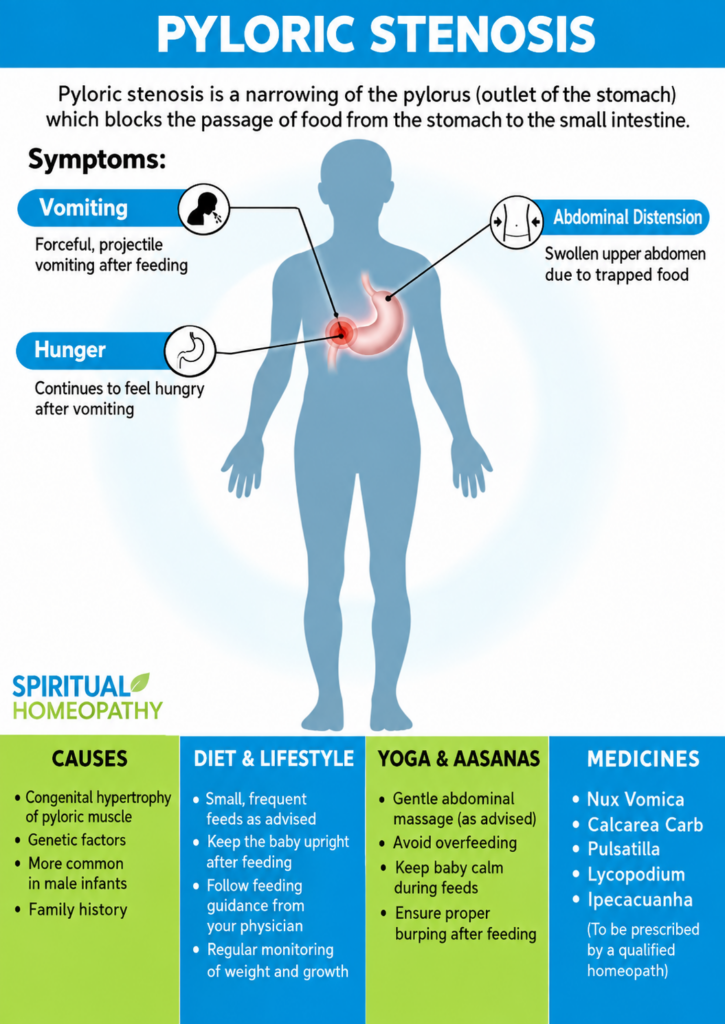
Pyloric Stenosis: Understanding the Condition, Warning Signs, and Treatment
Pyloric stenosis is a condition in which the pylorus, the muscular opening that connects the stomach to the first part of the small intestine, becomes unusually narrow. This narrowing can prevent food and milk from moving normally out of the stomach. It is most commonly seen in young infants as infantile hypertrophic pyloric stenosis, although pyloric narrowing can also occur in adults due to other underlying conditions.
In infants, pyloric stenosis usually develops during the first few weeks of life. As the pyloric muscle becomes thicker, feeding may be followed by forceful or projectile vomiting. Babies may remain hungry after vomiting but can gradually develop dehydration, poor weight gain, constipation, or reduced urination if the condition is not treated.
In adults, pyloric narrowing may be associated with conditions such as peptic ulcers, inflammation, scarring, tumors, or previous stomach surgery. Symptoms can include persistent vomiting, abdominal fullness, early satiety, nausea, and difficulty emptying the stomach.
Diagnosis generally involves a clinical examination and imaging, particularly ultrasound in infants. Blood tests may also be used to assess dehydration and electrolyte abnormalities. Treatment depends on the cause and severity. Confirmed infantile pyloric stenosis usually requires pyloromyotomy, a procedure that relieves the obstruction. Prompt treatment helps restore normal passage of food and prevents complications from ongoing vomiting and dehydration.
At Spiritual Homeopathy Clinic, consultations focus on understanding individual symptoms, medical history, nutrition, and overall wellbeing. Our clinics in KPHB, Chandanagar, Dilsukhnagar, and Nallagandla offer consultation support, along with online consultations for patients across India and internationally.
Important: Pyloric stenosis is a structural obstruction and requires appropriate medical evaluation. Repeated projectile vomiting in an infant, reduced urination, lethargy, or signs of dehydration should be assessed by a pediatrician promptly. Homeopathy should not delay or replace necessary medical or surgical treatment.
What Causes Pyloric Stenosis? Key Causes and Contributing Factors
Pyloric stenosis occurs when the passage between the stomach and small intestine becomes narrowed, making it difficult for stomach contents to move forward. The causes differ between infants and adults, and identifying the underlying reason is important for proper diagnosis and treatment.
Common Causes and Risk Factors of Pyloric Stenosis:
1. Infantile Hypertrophic Pyloric Stenosis:
In young infants, the pyloric muscle can become abnormally thickened, narrowing the stomach outlet. The exact cause is not completely understood, but genetic and environmental factors may play a role.
2. Family History:
A history of pyloric stenosis in close family members may increase the likelihood of the condition, particularly in infants.
3. Male Sex:
Infantile hypertrophic pyloric stenosis occurs more frequently in boys than girls, although it can affect infants of any sex.
4. Premature Birth:
Babies born prematurely may have a different risk pattern for developing pyloric stenosis, and symptoms may appear according to their corrected age.
5. Certain Early-Life Factors:
Some studies have found associations between infantile pyloric stenosis and factors such as early exposure to certain antibiotics, although these associations do not mean that antibiotics directly cause the condition in every infant.
6. Peptic Ulcer Disease:
In adults, repeated inflammation or ulceration near the stomach outlet can result in scarring and narrowing of the pylorus, potentially causing gastric outlet obstruction.
7. Chronic Gastritis:
Long-standing inflammation of the stomach may contribute to swelling or scarring around the pyloric region and interfere with normal stomach emptying.
8. Tumors or Growths:
Certain benign or malignant growths affecting the stomach or nearby structures can narrow or obstruct the pyloric passage.
9. Previous Stomach Surgery:
Changes or complications following gastric surgery may occasionally affect the normal movement of stomach contents through the pylorus.
10. Other Causes of Gastric Outlet Obstruction:
Inflammation, swelling, scarring, or other structural abnormalities around the stomach outlet can produce symptoms similar to pyloric stenosis.
The underlying cause can vary considerably, especially between infants and adults. Repeated projectile vomiting in a baby, poor weight gain, reduced urination, persistent vomiting in an adult, or signs of dehydration require prompt medical evaluation. Pyloric stenosis is a structural condition, so appropriate diagnostic testing is important before deciding on treatment.
Types of Pyloric Stenosis: Understanding the Different Forms
Pyloric stenosis can be categorized according to when it develops, where the narrowing occurs, and what causes the obstruction. Although the condition is most commonly recognized in infants, pyloric narrowing can also occur in adults because of several underlying disorders.
1. Infantile Hypertrophic Pyloric Stenosis:
This is the most recognized form in babies. The pyloric muscle becomes abnormally thickened, narrowing the opening between the stomach and duodenum. It typically presents during the first few weeks of life with forceful vomiting after feeds.
2. Acquired Pyloric Stenosis:
This form develops later in life due to another condition affecting the pyloric region. In adults, inflammation, ulcers, scarring, or other structural changes may gradually restrict the stomach outlet.
3. Peptic Ulcer-Related Pyloric Stenosis:
Long-standing peptic ulcer disease near the pylorus can cause swelling or scar formation. This may narrow the passage and interfere with the normal emptying of the stomach.
4. Pyloric Stenosis Associated With Gastritis:
Persistent inflammation around the stomach outlet can produce swelling and, in some cases, contribute to narrowing. The severity depends on the underlying condition.
5. Pyloric Obstruction Due to Growths:
Tumors or other abnormal growths involving the stomach or nearby tissues may physically restrict the pyloric passage and produce symptoms of gastric outlet obstruction.
6. Post-Surgical Pyloric Narrowing:
Changes following certain stomach procedures or surgery may occasionally affect the pyloric region and interfere with the movement of stomach contents.
Recognizing the type and underlying cause of pyloric narrowing is important because treatment differs between infantile and acquired forms. Infants with suspected pyloric stenosis require prompt pediatric assessment, while adults with persistent vomiting or symptoms of gastric outlet obstruction need appropriate diagnostic evaluation.
Pyloric Stenosis: Important Signs and Symptoms to Recognize Early
The symptoms of pyloric stenosis are mainly related to difficulty passing food from the stomach into the small intestine. The presentation can differ between infants and adults. In babies, symptoms often develop during the first few weeks of life and can progress quickly if untreated.
Common Signs and Symptoms of Pyloric Stenosis:
1. Projectile Vomiting
A characteristic feature in infants is forceful vomiting after feeding, which may become increasingly powerful over time. The vomit is usually not green because the obstruction occurs before bile enters the digestive tract.
2. Persistent Hunger After Vomiting
An affected baby may remain hungry and want to feed again soon after vomiting because much of the feed has been expelled.
3. Increasing Feeding Difficulty
Babies may develop difficulty completing feeds, become unsettled during feeding, or repeatedly vomit after eating.
4. Poor Weight Gain
Continued vomiting can prevent adequate nutrition from being absorbed, potentially resulting in inadequate weight gain or weight loss.
5. Dehydration
Repeated vomiting can cause fluid loss. Signs may include fewer wet diapers, a dry mouth, reduced tears, or unusual sleepiness.
6. Reduced Bowel Movements
Because less food reaches the intestine, some infants may have fewer stools or constipation.
7. Visible Stomach Contractions
In some babies, wave-like movements may be visible across the upper abdomen shortly after feeding as the stomach attempts to push its contents through the narrowed pylorus.
8. Upper Abdominal Discomfort or Fullness
Adults with acquired pyloric narrowing may experience abdominal fullness, discomfort, nausea, or a sensation that food remains in the stomach for an unusually long time.
9. Recurrent Vomiting in Adults
Persistent or repeated vomiting, particularly of food consumed several hours earlier, may occur when stomach emptying is significantly impaired.
10. Weakness and Electrolyte Imbalance
Prolonged vomiting can lead to dehydration, weakness, and changes in the body’s electrolyte levels. Severe cases may cause marked lethargy or other concerning symptoms.
Symptoms can vary according to the person’s age and the underlying cause. Projectile vomiting in an infant, persistent vomiting, poor weight gain, reduced urination, or signs of dehydration require prompt medical assessment. Sudden severe symptoms or significant weakness should be treated as an urgent medical concern.
Diet and Regimen for Pyloric Stenosis: Supporting Nutrition and Digestive Care
Pyloric stenosis is a structural narrowing of the stomach outlet, so diet alone cannot open or correct the narrowed passage. In infants, suspected or confirmed pyloric stenosis requires prompt pediatric assessment and definitive medical treatment. Dietary measures may be used only as supportive care according to medical advice.
For infants, feeding should be guided by the pediatrician, particularly when vomiting is frequent. Do not introduce thickened feeds, special formulas, or feeding changes without professional advice.
Once treatment has been provided and feeding is medically permitted, the baby’s nutrition should be gradually restored according to the healthcare team’s instructions. Breast milk or appropriately prepared infant formula may be resumed based on individual circumstances.
Repeated vomiting can cause significant fluid loss. Watch for warning signs such as:
Any signs of dehydration require prompt medical attention.
Do not give infants herbal preparations, digestive remedies, or other home treatments to control vomiting unless specifically recommended by a healthcare professional.
After treatment for infantile pyloric stenosis, feeding is usually restarted carefully and increased according to the baby’s tolerance and the treating team’s instructions.
Regular weight monitoring is important because repeated vomiting can interfere with adequate nutrition. Pediatric follow-up helps determine whether feeding and growth are progressing appropriately.
Adults with pyloric narrowing may experience early fullness, nausea, or vomiting. If a doctor permits oral feeding, smaller meals and easily tolerated foods may be more comfortable than large, heavy meals.
For adults with delayed stomach emptying, dividing food into smaller portions may reduce the feeling of excessive fullness. Dietary adjustments should be based on the underlying cause and medical recommendations.
Adults should maintain hydration when able to keep fluids down. Persistent vomiting or inability to drink adequately requires medical assessment rather than relying solely on dietary changes.
Adult pyloric narrowing may result from peptic ulcer disease, scarring, inflammation, tumors, or other structural problems. Treating the underlying condition is essential; diet cannot correct a physical obstruction.
Pro Tip: Keep track of vomiting episodes, feeding amounts, wet diapers in infants, weight changes, and foods that cause discomfort. This information can help the healthcare professional assess the condition.
Important: Pyloric stenosis is not simply a digestive sensitivity. Projectile vomiting in an infant, repeated vomiting, poor feeding, reduced urination, severe weakness, or signs of dehydration require prompt medical evaluation. Do not delay recommended pediatric or surgical treatment in favor of dietary or alternative approaches.
Yoga and Pyloric Stenosis: Gentle Practices for Overall Wellbeing
Pyloric stenosis is a structural narrowing of the stomach outlet, so yoga cannot widen the pylorus or correct the underlying obstruction. In infants, yoga is not an appropriate treatment for pyloric stenosis. After medical treatment and with professional approval, gentle relaxation practices may support general wellbeing.
Sukhasana (Easy Pose):
A comfortable seated posture that can be paired with slow breathing. It may encourage relaxation without placing significant pressure on the abdomen.
Tadasana (Mountain Pose):
This simple standing posture promotes upright alignment, balance, and body awareness while keeping abdominal movement gentle.
Vajrasana (Thunderbolt Pose):
A stable seated position that encourages calm breathing and relaxation. It should only be practiced when comfortable and when there is no abdominal pain or vomiting.
Balasana (Child’s Pose):
A restorative posture that can promote relaxation. It should be avoided if bending forward causes abdominal pressure, discomfort, nausea, or pain.
Marjaryasana-Bitilasana (Cat-Cow Pose):
These gentle movements encourage spinal mobility and controlled breathing. They should be performed slowly without straining or compressing the abdomen.
Shavasana (Corpse Pose):
A relaxation posture that allows the body to rest and may help reduce physical tension. It is generally gentle when performed comfortably.
Yoga should not be used to manage or delay treatment for pyloric stenosis. Infants with projectile or repeated vomiting require prompt pediatric assessment, as dehydration and electrolyte abnormalities can develop quickly. Adults with persistent vomiting or suspected gastric outlet obstruction should also receive medical evaluation.
Avoid strenuous abdominal exercises, deep twists, intense backbends, or any posture that worsens symptoms. For confirmed pyloric stenosis, appropriate medical or surgical treatment is essential.
Homeopathic Treatment for Pyloric Stenosis: Understanding Its Role in Digestive Care
Pyloric stenosis is a structural narrowing of the passage between the stomach and small intestine. Because the problem involves physical thickening, scarring, or obstruction of the pyloric region, it requires proper medical diagnosis and treatment. In infants, infantile hypertrophic pyloric stenosis can cause repeated projectile vomiting, dehydration, and poor weight gain.
Homeopathy may be considered by some individuals as a complementary wellness approach, but there is currently no reliable scientific evidence that homeopathic medicines can reverse the structural narrowing associated with pyloric stenosis.
For confirmed infantile pyloric stenosis, medical treatment—usually pyloromyotomy—is the established treatment. Homeopathic care should never be used instead of, or to postpone, recommended pediatric or surgical treatment.
If someone chooses complementary homeopathic care alongside appropriate medical management, the consultation may consider:
Individual Health Assessment:
The practitioner may review symptoms, medical history, feeding patterns, nutritional status, and general wellbeing.
Digestive Wellness Guidance:
Dietary and lifestyle recommendations may be discussed where appropriate, particularly for adults with digestive conditions contributing to pyloric narrowing.
Recovery Support:
After appropriate medical treatment, general wellness measures such as balanced nutrition, hydration, adequate rest, and stress management may support overall recovery.
Whole-Person Consideration:
Homeopathic consultations may take broader lifestyle and wellbeing factors into account rather than focusing on a single symptom.
The role of homeopathy should be clearly understood: it cannot remove a physical obstruction or replace surgery when surgery is required. The underlying cause must first be identified and appropriately managed by a qualified medical professional.
Depending on age, diagnosis, and medical advice, supportive measures may include:
Anyone experiencing persistent vomiting or difficulty with stomach emptying should receive appropriate medical evaluation. Infants with projectile vomiting, poor feeding, reduced urination, unusual sleepiness, or signs of dehydration require prompt pediatric attention.
Spiritual Homeopathy Clinic offers individualized consultations through its branches in KPHB, Chandanagar, Dilsukhnagar, and Nallagandla, along with online consultations across India and internationally.
Important: Pyloric stenosis is a structural condition. Homeopathy should not delay diagnosis, pediatric care, or necessary surgical treatment. For confirmed pyloric stenosis, follow the treatment plan provided by the appropriate medical specialist.
Pyloric stenosis can interfere with the normal movement of food from the stomach into the small intestine. Because it involves a physical narrowing of the pyloric passage, symptoms should not be managed only with diet or home remedies. Early medical assessment is particularly important in infants, where repeated vomiting can quickly result in dehydration and nutritional problems.
Blood in vomit, severe or sudden abdominal pain, fainting, marked weakness, or significant dehydration requires urgent medical care.
At Spiritual Homeopathy, our practitioners provide individualized consultations by considering symptoms, medical history, feeding or dietary patterns, lifestyle, and overall wellbeing. Consultations are available at our Hyderabad clinics in Kukatpally (KPHB), Chandanagar, Dilsukhnagar, and Nallagandla, as well as online consultations for patients across India and in more than 100 countries worldwide.
Important: Confirmed pyloric stenosis requires appropriate medical management. In infants with infantile hypertrophic pyloric stenosis, surgical treatment such as pyloromyotomy is commonly required. Homeopathy or dietary measures should not delay necessary pediatric or surgical care.
To schedule a consultation, call 9069 176 176.
You can tell if a baby has pyloric stenosis by watching for forceful, projectile vomiting after feeding, usually starting when they are 3 to 5 weeks old.
No, pyloric stenosis does not go away on its own.
The primary diagnostic criteria for hypertrophic pyloric stenosis are visualized on an abdominal ultrasound, showing a pyloric muscle thickness greater than 3 mm and a pyloric channel length greater than 15 mm.
Pyloric stenosis is most common in infants between 3 and 6 weeks of age.
Pyloric stenosis is usually diagnosed within the first 3 to 12 weeks of life, though rare late-onset cases can be found up to 6 months of age or older.
Pyloric stenosis—a condition that blocks food from entering the small intestine in infants—is influenced by several genetic, demographic, and environmental risk factors.