
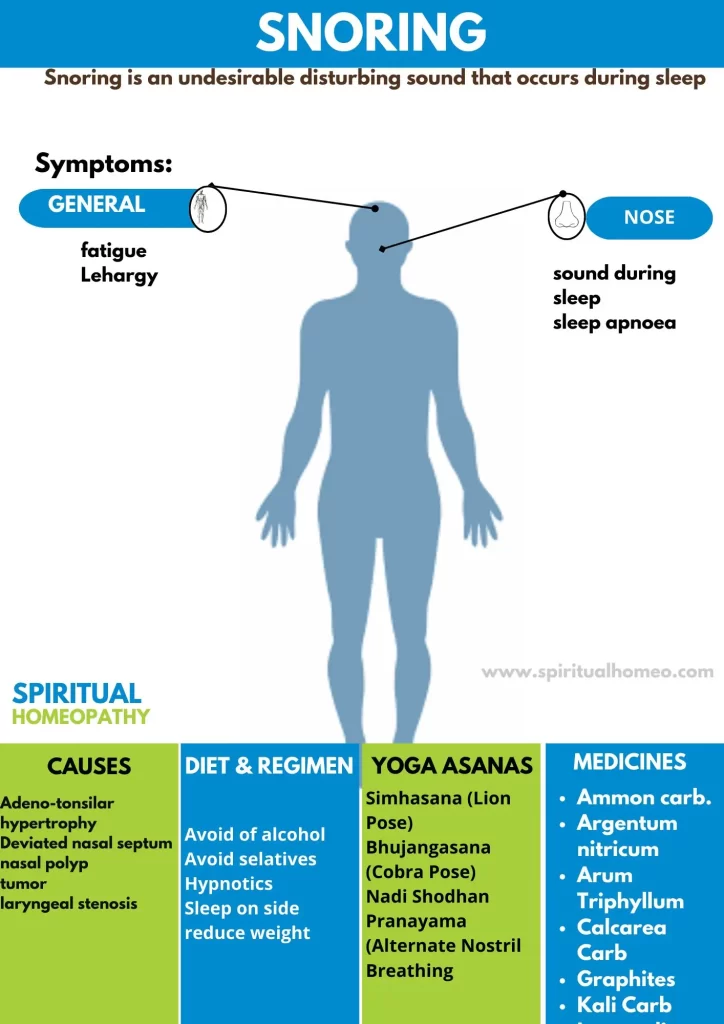
Snoring is a common sleep-related condition that occurs when airflow through the mouth and nose is partially blocked during sleep, causing the relaxed tissues of the throat to vibrate and produce a harsh or hoarse sound. It may be associated with symptoms such as noisy breathing during sleep, restless sleep, daytime fatigue, morning headaches, dry mouth, and poor sleep quality. Snoring can result from factors such as obesity, nasal congestion, allergies, enlarged tonsils, poor sleeping posture, alcohol consumption, or structural abnormalities of the airway. While occasional snoring is common, persistent or loud snoring should not be ignored, as it may be a sign of an underlying sleep disorder such as obstructive sleep apnea (OSA). Seeking early evaluation and appropriate treatment can help improve sleep quality, overall health, and reduce the risk of long-term complications.
At Spiritual Homeopathy, we believe in treating the root cause rather than simply suppressing symptoms. Our experienced homeopathic doctors carefully evaluate each patient’s symptoms, medical history, sleep patterns, respiratory health, allergy history, lifestyle, weight, and overall health before preparing an individualized treatment plan. Our holistic approach focuses on providing natural support for snoring, improving airway health, reducing recurrent symptoms, enhancing sleep quality, and promoting long-term respiratory wellness through safe and personalized homeopathic care. We specialize in homeopathic treatment for snoring, obstructive sleep apnea support, allergic rhinitis, nasal congestion, and other chronic respiratory and sleep-related conditions.
We provide personalized homeopathic treatment for snoring in Hyderabad to patients of all age groups through our clinics in Hyderabad, as well as online homeopathy consultations for patients across India and in more than 100 countries worldwide. If you are looking for the best homeopathy doctor for snoring, natural support for sleep-related breathing problems, homeopathic care for chronic snoring, or long-term sleep wellness, Spiritual Homeopathy is committed to delivering expert, patient-centered care wherever you are.
Sleep-related breathing disorders are assessed using specific clinical indices that evaluate breathing patterns, sleep quality, and disturbances during sleep. These measurements are commonly used in sleep studies to understand the severity of conditions such as sleep apnea. Evaluation and guidance are available through in-clinic consultations at Spiritual Homeopathy Clinic branches in Hyderabad, as well as online and international consultations, based on individual needs.
The Apnea Index refers to the number of complete breathing stoppages occurring per hour of sleep. Higher values indicate more frequent interruptions that may affect oxygen levels and sleep quality.
Hypopnea is a partial reduction in airflow, typically defined as a 50% or greater decrease, often associated with a drop in blood oxygen levels or sleep arousal. Repeated episodes may lead to fragmented sleep.
RDI includes the total number of apnea and hypopnea events per hour of sleep and helps classify sleep apnea severity:
Normal: < 5
Mild: 5–14
Moderate: 15–29
Severe: ≥ 30
These classifications assist in individualized care planning.
An arousal is a brief shift to lighter sleep, often caused by breathing disturbances. Frequent arousals can reduce sleep quality.
This measures the number of arousals per hour of sleep. A normal arousal index is fewer than 4 events per hour.
Sleep efficiency indicates how effectively time in bed is converted into sleep and is an important marker of overall sleep quality.
The MSLT, or nap study, evaluates excessive daytime sleepiness. It involves multiple scheduled naps to measure sleep onset time and REM sleep, with results interpreted alongside clinical findings.
Persistent daytime sleepiness or disturbed sleep patterns should be professionally evaluated. Consultations are available at Spiritual Homeopathy Clinic through Hyderabad branches, as well as online and international consultation options.
In adults, snoring can result from structural abnormalities in different parts of the airway. These factors may narrow the airway during sleep and contribute to vibration of soft tissues, leading to snoring.
Deviated nasal septum
Turbinate hypertrophy (enlarged nasal turbinates)
Nasal valve collapse
Nasal polyps
Tumors in the nasal or nasopharyngeal region
These conditions may increase nasal resistance and affect airflow during sleep.
Elongated soft palate and uvula
Enlarged tonsils
Macroglossia (enlarged tongue)
Retrognathia (receding jaw)
Enlarged tongue base
Tumors of the oral cavity or pharynx
Structural variations in this region can contribute to airway narrowing, especially in a relaxed sleep state.
Laryngeal stenosis (narrowing of the laryngeal airway)
Omega-shaped epiglottis
Such anatomical factors may influence airflow dynamics during breathing in sleep.
Description:
Mild snoring is the most common and least concerning type. It typically occurs occasionally and does not significantly affect overall sleep quality.
Characteristics:
Soft, intermittent snoring
Often occurs in specific positions, such as lying on the back
Usually does not wake the person or their partner
Common Causes:
Sleep position
Nasal congestion
Alcohol consumption before bedtime
Description:
Chronic snoring occurs regularly, often every night, and may disturb sleep for both the individual and their partner.
Characteristics:
Loud and persistent snoring
May contribute to poor sleep quality and daytime fatigue
Can be an early indicator of sleep apnea
Common Causes:
Obesity
Nasal blockages
Weak throat muscles
Poor sleep posture
Sleep apnea (in some cases)
Description:
Positional snoring depends on sleeping posture. It commonly occurs when lying on the back, as gravity allows the tongue and soft palate to move backward and narrow the airway.
Characteristics:
Snoring worsens when lying flat on the back
Improves or stops when sleeping on the side
Common Causes:
Airway relaxation during sleep
Improper sleeping posture
Description:
Nasal snoring results from narrowing or blockage of the nasal passages, making nasal breathing difficult during sleep.
Characteristics:
Congested or blocked nasal sound
Often associated with mouth breathing
Common Causes:
Deviated nasal septum
Nasal polyps
Allergies or sinus infections
Chronic nasal congestion
Description:
Throat snoring occurs due to vibration of soft tissues at the back of the throat, including the soft palate and uvula.
Characteristics:
Deep, loud snoring sounds
May include gasping, choking, or snorting
Can be a warning sign of obstructive sleep apnea (OSA)
Common Causes:
Relaxation of throat muscles
Enlarged tonsils or adenoids
Obesity (fat deposition around the neck)
Structural abnormalities
Description:
This is a more serious form of snoring associated with obstructive sleep apnea, a condition marked by repeated pauses in breathing during sleep.
Characteristics:
Loud, irregular snoring
Breathing pauses lasting 10 seconds or longer
Gasping or choking sounds during sleep
Daytime sleepiness and morning headaches
Common Causes:
Throat muscle relaxation
Obesity
Smoking
Enlarged tonsils or soft palate
Anatomical airway obstruction.
Description:
Snoring can also occur in children and is often related to different causes compared to adults.
Characteristics:
Frequent or loud snoring
May be associated with mouth breathing or restless sleep
Common Causes:
Enlarged tonsils or adenoids
Allergies or upper respiratory infections
Nasal congestion
Pediatric sleep apnea (in some cases)
Description:
Habitual snoring occurs on most nights and may not always be linked to an underlying medical condition such as sleep apnea.
Characteristics:
Consistent, nightly snoring
Loudness and intensity may vary
May not cause obvious health issues
Common Causes:
Smoking
Alcohol use
Use of sedative substances
Poor sleep habits
Obesity
Snoring is a common sleep-related occurrence that can vary widely in severity. It happens when airflow through the mouth and nose is partially obstructed, causing vibration of throat tissues that produces sound. While snoring is often harmless, it can sometimes indicate an underlying condition such as sleep apnea, which may require medical evaluation.
Below are the key signs and symptoms of snoring:
Primary Symptom:
The most noticeable sign of snoring is noise during sleep. Snoring may range from soft, intermittent sounds to loud, continuous noises caused by air passing through relaxed throat tissues.
Impact on Sleep:
Snoring can disturb both the individual and their bed partner. Even without full awakenings, sleep may feel unrefreshing, leading to morning grogginess and reduced sleep quality.
Warning Sign for Sleep Apnea:
Temporary pauses in breathing, known as apneas, may occur during snoring episodes. These pauses often last 10–20 seconds and may be followed by gasping or snorting sounds. This is a key feature of obstructive sleep apnea (OSA).
Caused by Mouth Breathing:
Snoring is frequently associated with mouth breathing, which can result in dry mouth or throat irritation on waking. Repeated dryness may cause discomfort or inflammation.
Sign of Disturbed Sleep or Oxygen Changes:
Morning headaches may occur due to disrupted sleep or reduced oxygen levels during the night, particularly in individuals with more severe snoring patterns.
Lack of Restorative Sleep:
Ongoing snoring may interfere with deep sleep, leading to persistent daytime tiredness, reduced alertness, and difficulty managing daily activities.
Cognitive Effects:
Frequent sleep interruptions can affect attention, memory, and focus. Reduced sleep quality may lead to mental fatigue and decreased productivity.
Impact on Emotional Well-being:
Poor sleep quality associated with snoring may contribute to mood swings, irritability, or emotional sensitivity over time.
Unconscious Sleep Movements:
Restless sleep or frequent position changes may occur as the body attempts to maintain a clear airway during sleep.
Important Warning Sign:
Gasping or choking episodes during sleep may indicate significant airway obstruction and are commonly associated with obstructive sleep apnea. Professional assessment is recommended if these symptoms are observed.
Including anti-inflammatory foods may help reduce swelling in the nasal passages and throat, which can contribute to snoring.
Examples of Anti-Inflammatory Foods:
Leafy greens (spinach, kale)
Berries (blueberries, strawberries)
Tomatoes, carrots, sweet potatoes
These foods are rich in antioxidants and nutrients that support healthier airways.
Omega-3 fatty acids may help reduce inflammation and support smoother airflow, especially when snoring is linked to nasal or throat congestion.
Examples of Omega-3–Rich Foods:
Fatty fish (salmon, mackerel, sardines)
Flaxseeds, chia seeds, walnuts
Regular intake may help reduce throat irritation and nasal blockage.
Adequate hydration helps keep mucus thin in the nasal passages and throat, reducing airway blockage that can worsen snoring.
Hydration Tips:
Aim for around 8 cups of water daily
Include hydrating foods such as watermelon, cucumber, oranges, and celery
Proper hydration supports smoother breathing during sleep.
Certain foods support muscle relaxation and sleep regulation, which may indirectly reduce snoring.
Magnesium-Rich Foods:
Spinach, almonds, cashews, bananas, pumpkin seeds
Tryptophan-Rich Foods:
Turkey, chicken, eggs, cheese, pumpkin seeds
Magnesium supports muscle relaxation, while tryptophan contributes to sleep-regulating processes.
When nasal congestion contributes to snoring, certain foods may help temporarily improve airflow.
Helpful Foods:
Spicy foods such as chili peppers, mustard, horseradish, and wasabi
Garlic and onions, known for decongestant properties
These may assist in opening nasal passages for easier breathing.
Some foods may worsen congestion or relax throat muscles, increasing snoring.
Foods to Avoid:
Dairy products (in some individuals)
Alcohol and caffeine, especially in the evening
Limiting these close to bedtime may help reduce snoring intensity.
Excess weight, particularly around the neck, can increase pressure on the airway. Maintaining a healthy weight may help improve airflow during sleep.
Tips:
Engage in regular physical activity
Follow a balanced, nutrient-rich diet
Sleeping on the back can cause airway narrowing due to tissue relaxation.
Helpful Measures:
Sleep on your side using a supportive pillow
Slightly elevate the head of the bed to improve airflow
Consistent sleep habits support better sleep quality and may reduce snoring.
Sleep Hygiene Tips:
Maintain regular sleep and wake times
Follow a calming bedtime routine
Avoid heavy meals close to bedtime
Keeping nasal passages clear can reduce resistance to airflow.
Supportive Measures:
Use saline sprays or a humidifier
Steam inhalation may help ease congestion
Alcohol and sedatives can overly relax throat muscles, increasing the likelihood of snoring. Avoid their use several hours before sleep.
Adequate fluid intake throughout the day helps reduce mucus buildup and throat dryness.
Consistent sleep timing supports stable sleep cycles and may help reduce snoring.
In cases where snoring is related to obstructive sleep apnea, devices such as CPAP may be advised by a qualified medical professional following appropriate evaluation.
Yoga and breathing practices may support better airflow, muscle tone, and relaxation. These practices are supportive measures and should not replace medical evaluation, especially in cases of persistent or severe snoring.
How It Helps:
Bhujangasana helps open the chest and support better breathing. It stretches the throat and strengthens chest and abdominal muscles, which may encourage improved airflow during sleep.
How to Do It:
Lie flat on your stomach with hands placed under the shoulders
Press palms into the floor and gently lift the chest and head
Keep elbows slightly bent and shoulders relaxed
Hold for 20–30 seconds, then slowly lower down
How It Helps:
This breathing technique supports nasal airflow and relaxation, which may help reduce snoring linked to nasal congestion and disturbed sleep.
How to Do It:
Sit comfortably in a relaxed position
Inhale and exhale slowly through the nose, creating a soft, ocean-like sound
Maintain gentle throat contraction
Practice for 5–10 minutes
How It Helps:
This posture opens the chest and throat, supports airflow, and strengthens the back and abdominal muscles, contributing to better posture and airway support.
How to Do It:
Lie on your back with knees bent and feet hip-width apart
Press feet into the floor and lift hips upward
Keep thighs parallel and shoulders relaxed
Hold for 20–30 seconds, then slowly lower
How It Helps:
Lying on the stomach may reduce snoring associated with back sleeping. This posture supports chest expansion and relaxed breathing.
How to Do It:
Lie flat on your stomach with arms at your sides
Rest forehead gently and focus on steady breathing
Remain in this position for 5–10 minutes
How It Helps:
Jivha Bandha supports strengthening of the tongue and throat muscles, which may help reduce airway obstruction during sleep.
How to Do It:
Sit comfortably in a meditative posture
Extend the tongue and curl it backward toward the roof of the mouth
Hold for 10–20 seconds while breathing calmly
Repeat for several cycles
How It Helps:
This pranayama technique helps clear nasal passages, improve airflow, and promote relaxation, which may support better sleep.
How to Do It:
Sit upright with relaxed shoulders
Inhale through the left nostril, exhale through the right
Alternate nostrils in a steady rhythm
Practice for 5–10 minutes
How It Helps:
Halasana supports chest opening and neck flexibility, which may help relieve muscle tension affecting breathing during sleep.
How to Do It:
Lie on your back and lift legs overhead
Lower feet toward the floor behind the head (as comfortable)
Keep arms pressed into the floor for support
Hold for 20–30 seconds, then return slowly
How It Helps:
Dhanurasana stretches the chest, neck, and throat muscles and supports lung expansion, which may help reduce snoring related to muscle tension.
How to Do It:
Lie on your stomach and hold ankles with hands
Lift chest and thighs gently
Breathe steadily and hold for 20–30 seconds
Release slowly
How It Helps:
This restorative pose promotes circulation, reduces neck and shoulder tension, and encourages relaxation before sleep.
How to Do It:
Lie on your back with legs supported against a wall
Keep arms relaxed and spine aligned
Stay for 5–10 minutes with calm breathing
Homeopathy is a natural system of healthcare that focuses on understanding the underlying causes of illness rather than addressing symptoms alone. It works in alignment with the body’s natural regulatory processes and emphasizes individualized care based on a person’s physical, emotional, and lifestyle factors.
Homeopathy is commonly used for both acute and chronic conditions and aims to support long-term health under professional guidance.
At Spiritual Homeopathy Clinic, care is centered on a comprehensive understanding of each individual’s health concerns. The clinical approach integrates classical homeopathic principles with structured case analysis to support physical and emotional balance.
Consultations are available across multiple branches in Hyderabad, as well as through online and international consultation services, allowing continuity of care for patients regardless of location.
The homeopathic approach focuses on individualized assessment and long-term health support. Key aspects include:
Root-cause–oriented evaluation: Emphasis on identifying contributing factors rather than isolated symptoms.
Individualized care plans: Management strategies are tailored to the person’s health history, lifestyle, and symptom pattern.
Clinical guidance: Care is provided by trained homeopathy doctors with experience in outpatient and online consultations.
Generally well-tolerated approach: When followed under professional supervision, homeopathic care is commonly used across different age groups.
Mind–body consideration: Emotional and stress-related factors are taken into account as part of overall health assessment.
Each consultation involves a detailed discussion of medical history, current symptoms, lifestyle patterns, and emotional well-being. This helps in forming a clear clinical picture for individualized care planning.
Follow-up consultations are used to assess progress, symptom changes, and overall response. Management plans may be adjusted over time based on clinical evaluation and patient feedback.
Spiritual Homeopathy Clinic follows a patient-centered, medically responsible approach to care. The focus remains on safety, clarity, and continuity, with guidance provided throughout the course of management.
Patients may choose in-clinic consultations at Hyderabad branches or opt for online or international consultations as appropriate.
You should consult a healthcare professional if snoring becomes frequent, persistent, or starts affecting sleep quality, daily functioning, or overall well-being. Early evaluation helps identify possible contributing factors and reduces the risk of related sleep or breathing problems.
Seek consultation if you experience:
Loud or regular snoring occurring most nights
Snoring associated with disturbed or unrefreshing sleep
Pauses in breathing, choking, or gasping during sleep
Excessive daytime sleepiness, fatigue, or poor concentration
Snoring that worsens when lying on the back or at night
Snoring associated with weight changes or nasal blockage
Symptoms not improving despite lifestyle or positional changes
At Spiritual Homeopathy Clinic, consultations are available at multiple branches in Hyderabad, including Kukatpally, Chandanagar, Dilsukhnagar, and Nallagandla. Online and international consultations are also available for individuals who are unable to visit in person. Professional assessment helps guide an individualized care approach based on symptoms, sleep patterns, and overall health status.
For appointments or guidance, contact 9069 176 176.
To stop snoring, start by changing your sleep position to your side, elevating your head, and avoiding alcohol before bed. If that doesn’t work, clear nasal passages with a humidifier or nasal strips, and consider trying throat-strengthening exercises.
Snoring happens when airflow through the nose and throat is partially blocked during sleep. As muscles relax, the soft palate, tongue, and throat sag, causing these tissues to vibrate against one another as you breathe.
Snoring is largely treatable and manageable, though "curing" it depends entirely on the underlying cause. While occasional snoring from a cold can be easily resolved, chronic snoring often requires targeted lifestyle changes, medical devices (like CPAP machines or oral appliances), or minor surgical interventions.
Mild, occasional snoring is usually harmless, but loud, disruptive snoring can be dangerous. It is often the primary warning sign for Obstructive Sleep Apnea (OSA). OSA causes repeated breathing pauses during the night, which drop blood oxygen levels and force the heart to strain, significantly increasing the risk of high blood pressure, heart disease, and stroke.
While no single method guarantees 100% results, the most effective strategy combines lifestyle changes with medical devices. Key steps include maintaining a healthy weight, avoiding alcohol before bed, and using a side-sleeping position. If these fail, consulting a specialist for custom oral appliances or CPAP therapy provides near-perfect relief.
Children 3 years or older tend to snore during the deeper stages of sleep. Mild snoring is common in children and may not require medical help.